

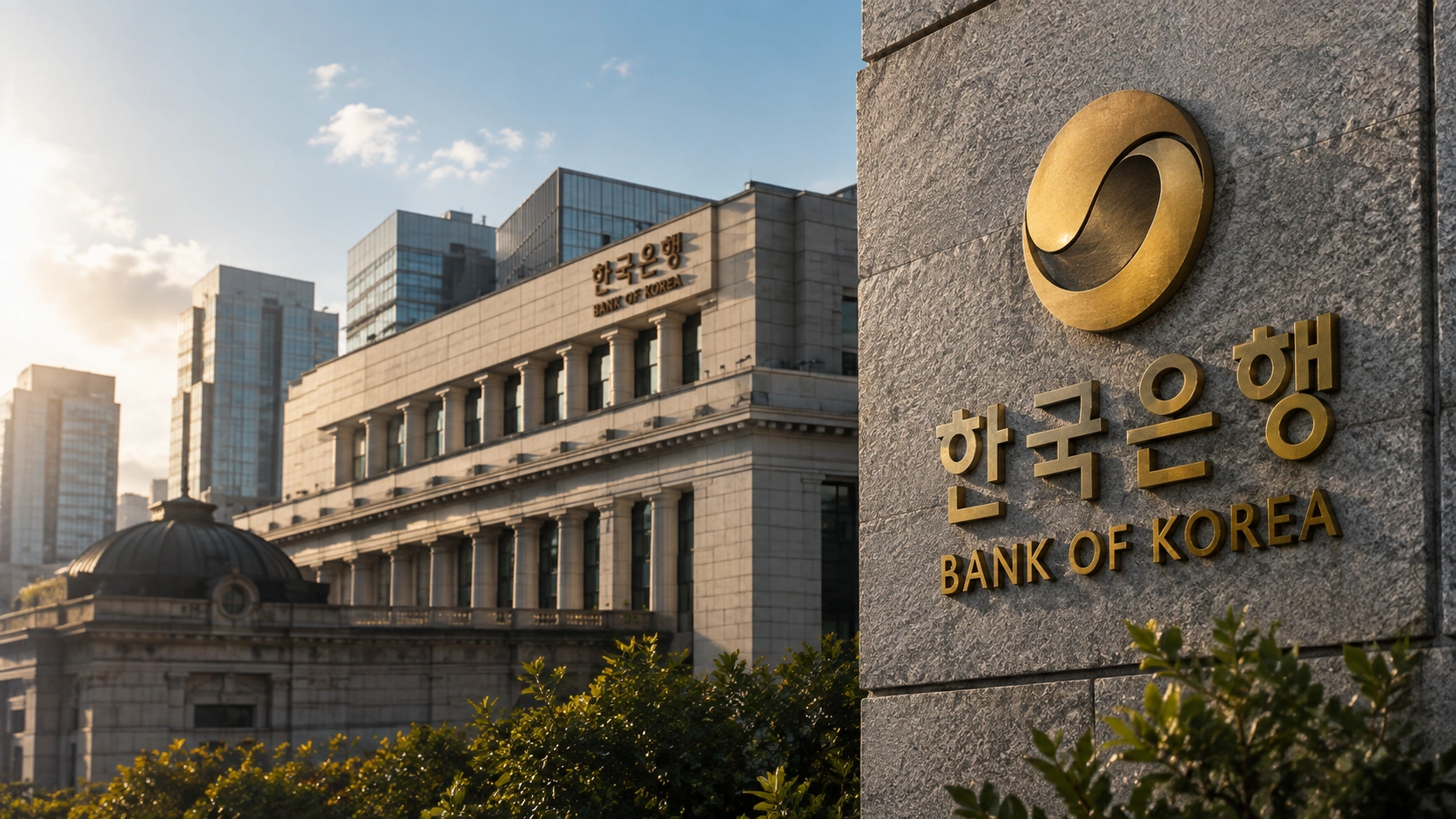
The Bank of Korea raised its base rate by 0.25 percentage point to 3.00% on Thursday, delivering a second consecutive increase and reinforcing a shift toward tighter monetary policy. The decision came after July’s hike and was approved by six of the seven members of the Monetary Policy Board, according to Korean reporting on the meeting.
The move is unusual in the current cycle because the central bank did not pause between increases. Korean outlets described it as the first immediate back-to-back increase since the Bank of Korea began tightening again, and the first such sequence since the long run of increases that ended in early 2023. The message is that policymakers now see more risk in leaving policy too loose than in adding another increment of borrowing pressure.
Inflation and debt changed the calculation
The Bank of Korea’s case rests on a combination of inflation, stronger growth and financial stability. It now expects South Korea’s economy to expand 3.3% this year, up from a previous 2.6% forecast, while consumer inflation is projected at 2.7%, above the central bank’s 2% target. Household debt has also passed 2,000 trillion won, increasing concern that easier financial conditions could feed borrowing and asset-market demand.
For households and businesses, the practical effect is straightforward: a higher policy rate tends to make credit more expensive and raises the hurdle for new borrowing or refinancing. That matters most for borrowers already carrying large debts, including households exposed to housing-related loans and small businesses operating with thin cash buffers. The effect will not be identical across every loan or deposit product, but the direction of pressure is toward higher financing costs as banks reprice funding and lending.
The Bank is trying to act before pressure builds
Bank of Korea Governor Shin Hyun-song said a pre-emptive response can reduce both the intensity and the duration of later tightening, which in turn can lessen the burden on growth. That is the central trade-off behind the decision. Waiting could allow inflation expectations, household borrowing or asset prices to become harder to contain, but acting now transfers part of the adjustment to borrowers through higher interest costs.
The central bank is also signaling that Thursday’s decision may not be the end of the cycle. Korean reporting on the policy guidance said a gradual increase in rates is expected over the next six months. That does not lock in a fixed path, but it places more weight on incoming inflation data, household-credit trends and whether stronger growth persists without creating additional price pressure.
One uncertainty is how quickly tighter policy will cool borrowing and demand. The Bank of Korea is trying to slow financial excess without unnecessarily weakening an economy whose growth outlook has just improved. If inflation remains elevated and household debt keeps expanding, the case for another hike will strengthen. If price pressure eases and financing stress rises sharply, policymakers will have more reason to slow the pace.