

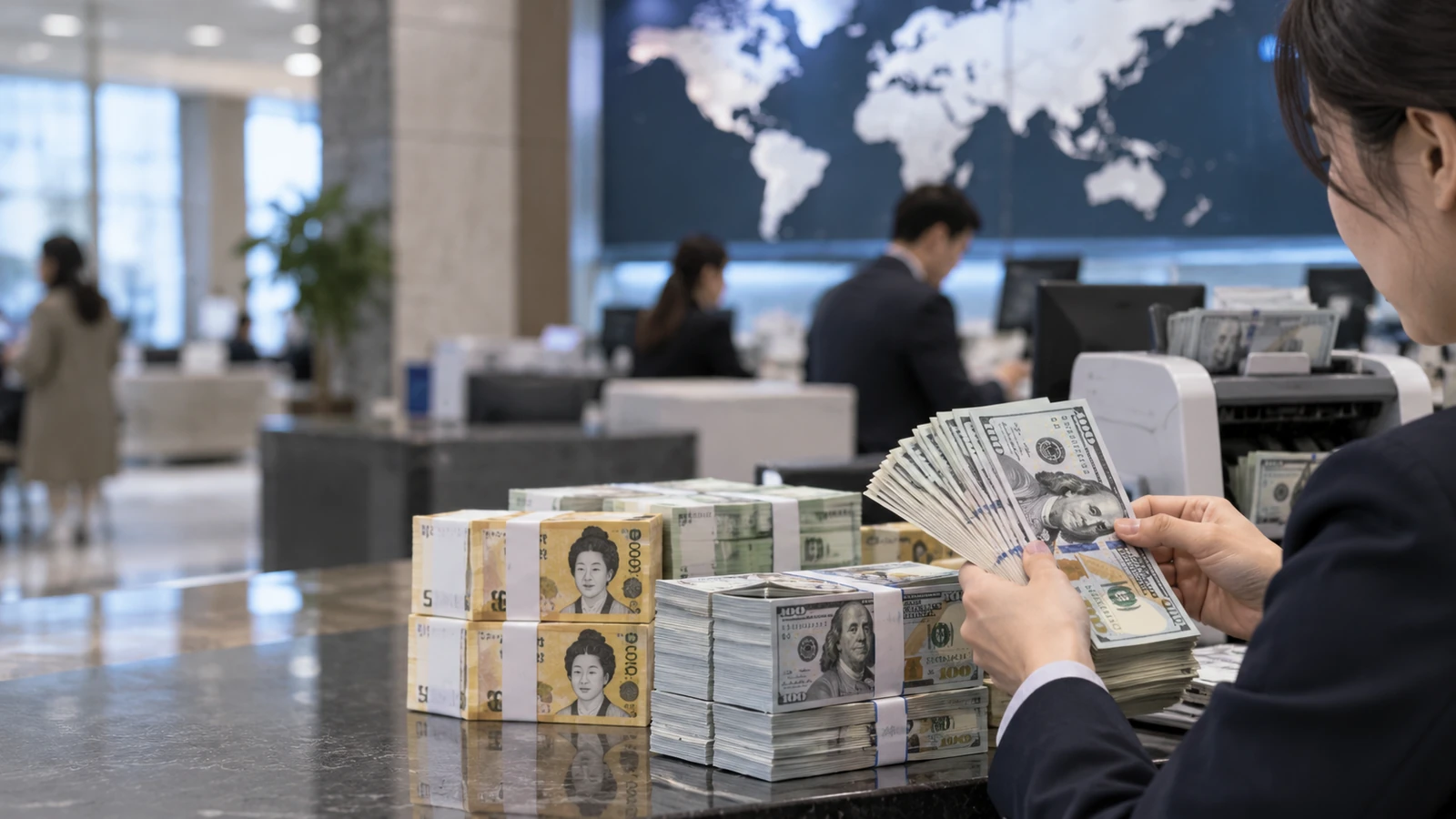
The Korean won has strengthened by about 250 won against the US dollar over the past two months, while dollar deposits held in Korea have climbed to a record level. The two moves may appear contradictory at first. A stronger won usually reduces the urgency to hold dollars, yet the latest pattern suggests that households and companies are still keeping substantial foreign-currency buffers even as the exchange rate moves in their favor. That tension makes the deposit figure as important as the headline currency move itself.
The shift matters because the exchange rate feeds directly into import costs, overseas travel, foreign investment and corporate funding. A stronger won can reduce the local-currency cost of energy and other imports, easing some pressure on prices. It can also change the timing of decisions by individuals who plan to buy foreign assets or companies that need dollars for trade and debt payments. For firms with recurring dollar obligations, the recent move can improve near-term cash planning even if they remain cautious about future volatility.
A stronger won, but dollars still in demand
The persistence of record dollar deposits shows that the exchange-rate move has not fully reversed the demand for foreign-currency liquidity. Some depositors may be waiting for a better conversion point, while companies may be holding dollars for operational needs rather than speculation. That means the deposit balance is also a measure of caution, not simply a bet on the dollar rising again. Large balances can remain in place for months when businesses prefer certainty over trying to time every shift in the foreign-exchange market.
For policymakers, the combination is a useful reminder that currency stability and currency demand are not the same thing. A stronger won can improve financial sentiment, but large foreign-currency balances can remain in place if businesses still see external risks or if investors expect volatility to return. The durability of the won's gains will therefore matter more than the size of the recent move alone. If global rates, trade tensions or risk sentiment shift again, the same dollar balances could quickly become a source of renewed demand rather than passive savings.
The near-term effect is likely to be uneven across the economy. Importers gain from a stronger won because dollar-denominated inputs become cheaper in local terms. Exporters, by contrast, can face pressure on won-converted revenue if the currency strengthens too quickly. Households with overseas expenses may welcome the move, while savers holding dollars must decide whether to keep earning interest in foreign currency or convert back into won. The balance between those decisions will help determine whether the currency recovery feeds into broader spending and investment behavior.
The next signal will come from whether dollar deposits remain near record levels as the exchange rate settles. If deposits begin to fall while the won stays firm, that would suggest confidence in the currency move is spreading. If they remain elevated, it would point to continued demand for protection against external uncertainty despite the won's recent recovery. Either way, the combination of a stronger currency and record dollar cash shows that Korea's foreign-exchange story is no longer only about the spot rate; it is also about how households and companies choose to hold liquidity.