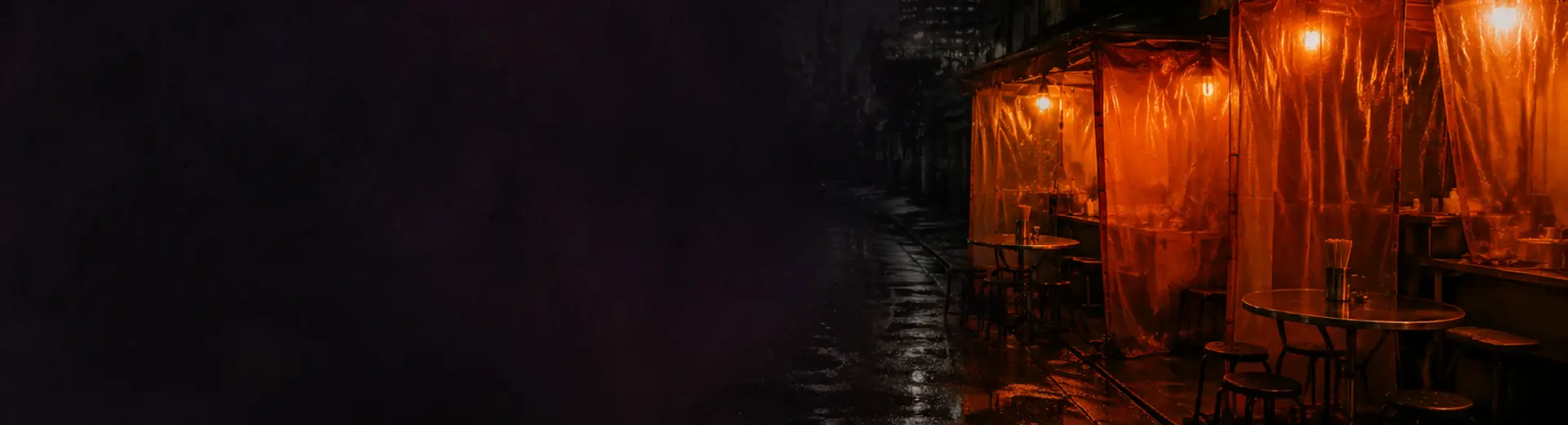

Jangchung-dong Jokbal Street
A Seoul food alley where Pyeongan-born cooks, cheap 1970s pork cuts and Jangchung Arena crowds turned soy-braised pig trotters into a district identity
Shared jokbal platters, old Seoul food history, evening meals after Jangchung Arena or the National Theater, and comparing long-running family restaurants
A compact cluster of jokbal restaurants along Jangchungdan-ro and adjoining side lanes, with several long-running family businesses packed within a few minutes’ walk
Jangchung-dong preserves a unusually clear piece of postwar Seoul food history: a regional home preparation became mass urban nightlife food because the cut was cheap and the arena next door supplied the diners
Two women changed the recipe
In the early 1960s, two women from Pyeongan Province opened a shop in Jangchung-dong and changed the pig-trotter cooking they knew from home. The northern version used doenjang; in Seoul they shifted toward a soy-based braise. One woman later opened a second shop, and the pair became the starting point for the cluster
The timing mattered. During the 1970s, Korea exported pork while trotters remained a cheap cut at home. Jangchung’s cooks could turn an inexpensive piece of meat into a large sliced platter for several people, served with garlic, salted shrimp and side dishes. Jokbal became affordable drinking food at exactly the moment the neighborhood was gaining a much larger evening audience
Jangchung Arena supplied the crowd
Jangchung Arena opened in 1963 and became a major venue for professional wrestling, boxing, basketball and concerts. When events ended, spectators spilled into a district that already had jokbal shops. The restaurants became a natural second stop: hot or room-temperature sliced pork, alcohol and enough food for a group to keep talking after the match
The location still explains the alley better than a generic “food street” label. Jangchung Arena, Dongguk University, Jangchungdan Park and the National Theater all sit within the same small pocket of Seoul. By the late 1970s and early 1980s, more jokbal restaurants had filled the main road and side lanes, turning an after-event habit into a named district
The first generation still has addresses
Pyeongandojip remains at 174-6 Jangchungdan-ro, only a few doors from the street’s main address. The restaurant still prepares a limited quantity each day and serves its jokbal with dishes such as mung-bean pancake and buckwheat noodles
Wonjo 1ho Jangchungdong Halmeonijip at No. 174 carries another early family line. The founder’s son later took over the business; the restaurant was rebuilt after a fire in the 1980s and now fills several floors, with bean-sprout soup and Pyeongyang-style noodles alongside the jokbal. The alley’s history survives as competing family businesses rather than one uncontested “original” sign
Before you go
The useful comparison is between the old houses themselves: texture, braising style, side dishes and family lineage vary even though the central order is the same sliced jokbal platter. The street is compact enough to walk first, read the menus and choose one table rather than treating every “original” claim as a hierarchy
- Hours
- The street has no unified opening hours; individual restaurants keep separate schedules
- Admission
- The alley is a public commercial street with no admission system
- Access
- Each restaurant handles its own seating, waiting and take-out
- Transit
- Dongguk University Station on Line 3, Exit 3, is about 150 metres from the jokbal alley