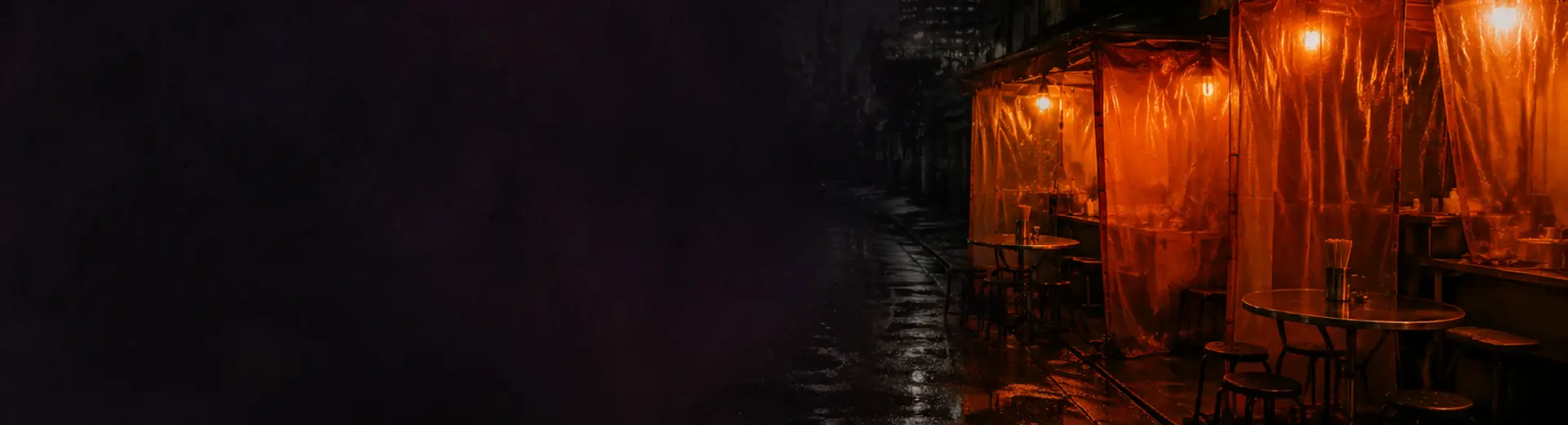

Masan Odong-dong Agujjim Street
A compact food street in Masan’s old port center where 1960s cooks turned low-value monkfish into the city’s signature spicy dish
Shared spicy seafood meals, comparing dried and fresh agujjim, old-port food history and trying monkfish preparations beyond the standard braise
A short old-downtown street around Agujjim-gil with roughly twenty independent monkfish restaurants, several long-running family businesses and multiple “original” claims
The street still rewards attention to method: dried monkfish, fresh monkfish and competing “original” claims preserve a more complicated food history than the nationwide dish suggests
The dish began with a fish nobody valued
In early-1960s Masan, monkfish was cheap enough to be treated as a problem catch. The best-known origin story starts with a woman remembered as Hokburi Halmeoni, who steamed it with doenjang, gochujang, bean sprouts, minari and green onion for fishermen around the port
The combination caught on quickly. More restaurants opened through Odong-dong, and by the 1970s and 1980s Masan agujjim had become a city name far beyond the harbor. The street that survives today grew from that cluster of small kitchens, not from one planned food complex
Dried monkfish is the local fork in the recipe
The older Masan style often uses dried monkfish. In the older method, monkfish was hung in winter air before cooking, which firms the flesh and produces a chewier bite than fresh agujjim. Traditional versions also lean less on the glossy starch-thickened finish familiar in many restaurants elsewhere
Odong-dong Agu Halmaejip at Agujjim-gil 13 gives that difference a fixed address. The restaurant dates to 1965 and has continued across generations, with dried-monkfish agujjim still part of its old Masan line. Fresh agujjim is also served around the district, so the ingredient choice is now one of the clearest ways restaurants distinguish their version
The word “original” became part of the street
The 1960s port origin is well established, but no single first restaurant holds an uncontested claim. Jinjjachaogajip, Gugang Halmae and other early houses each appear in competing origin stories, while Odong-dong Agu Halmaejip belongs to the same first generation of restaurants without owning the story by itself
That uncertainty is visible in the language of the businesses. As the dish became famous, “wonjo” — original — and even “jjinjja,” real or genuine, began appearing in restaurant names. The repeated claims tell a useful truth: Masan agujjim became a street culture through several families cooking variations of the same new port dish
Before you go
The practical choice is dried versus fresh monkfish. The street still includes dried-agujjim specialists, while current restaurants also serve fresh versions and related dishes such as monkfish suyuk or soup. The older dried style gives the most direct comparison with the Masan method that made the alley famous
- Hours
- Operating hours and closing days vary by restaurant