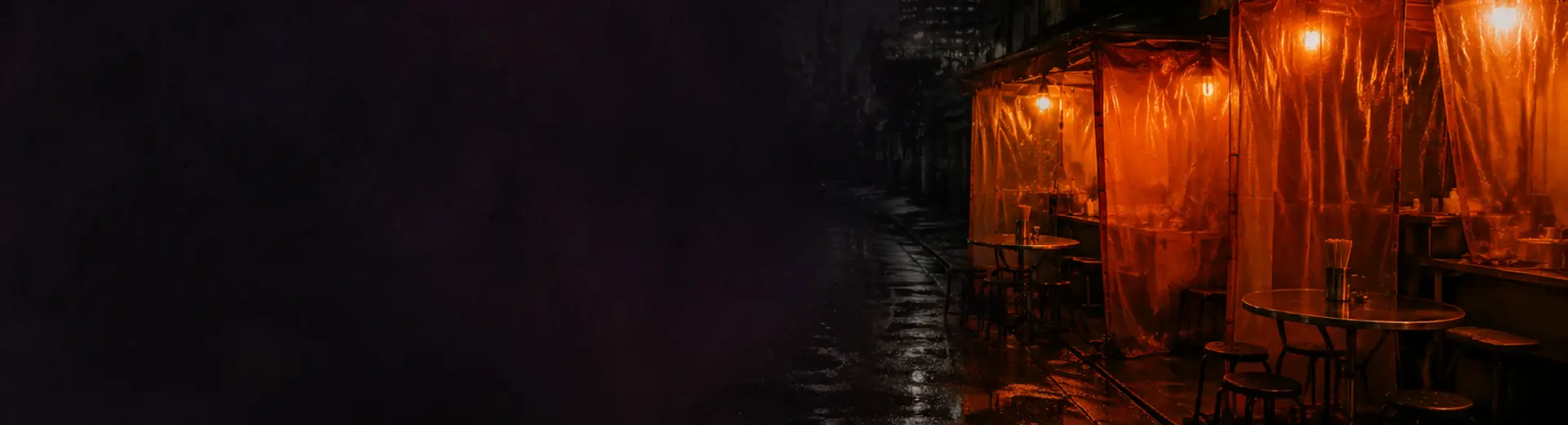

Samcheon-dong Makgeolli Street
Jeonju’s original makgeolli alley, where a roughly 200-metre cluster of drinking houses serves rice wine through meal-sized tables of side dishes
Jeonju-style makgeolli tables, shared side dishes, traditional drinking culture, evening meals with groups and a neighborhood-scale nightlife experience outside the main tourist core
A roughly 200-metre neighborhood commercial strip along Geomasan-ro with around twenty independently run makgeolli houses rather than one managed food hall
Samcheon-dong preserves a specific social dining format: the unit of ordering is a kettle, but the competition between houses is expressed through the changing table of food around it
One kettle orders the table
In Samcheon-dong, ordering makgeolli traditionally brings a meal-sized spread with it. A kettle arrives with multiple side dishes rather than a single snack, and further orders can bring additional dishes. The exact sequence varies by house, but the table-setting system is the defining habit of Jeonju’s oldest makgeolli alley
The classic format was progressive: more kettles could bring more dishes until the table filled with overlapping plates. Current houses are less standardized. Many now sell named couple, family or larger set tables, so the old escalation should not be assumed everywhere. One recent family set at Jeonju Makgeolli, 16-1 Geomasan-ro, included whole steamed squid, yukjeon, grilled flounder and soy-marinated-crab fried rice — a concrete example of how one house builds its own version of the spread
The present alley took shape in the 1990s
Makgeolli houses gathered along Geomasan-ro as the drink regained attention in the 1990s. The main cluster now runs for roughly 200 metres, with around twenty establishments concentrated in Samcheon-dong. Jeonju recognizes the area as a Future Heritage site and describes it as the original makgeolli alley among several that later formed across the city
That designation protects a living commercial custom rather than a preserved streetscape. Restaurants continue to operate independently, with different table sets, opening hours and closing days. Evening queues still form at individual houses, a reminder that the street does not move uniformly even when the district as a whole faces pressure
A 2023 warning changed the city response
Jeonju had already refurbished signs across a broader 450-metre commercial section in 2020. In December 2023, however, city council member Han Seung-woo argued that heavy tourist commercialization had pushed prices up enough for residents and visitors to turn away, and criticized the city and local community for doing too little to sustain the alley
The response became more visible after that criticism. Jeonju launched its first city-run Makgeolli Festival in 2024, drawing about 70,000 visits over two days; the 2025 edition drew about 20,000, with Samcheon-dong businesses among the participants. Those festival totals do not prove the alley itself recovered, but they do show that official support moved beyond small community events. The current picture is therefore uneven: a documented price-and-patronage problem prompted stronger city promotion, while individual houses still depend on their own food, pricing and repeat demand
Before you go
The core makgeolli cluster is concentrated along Geomasan-ro and is short enough to compare several houses on foot before choosing one. Current set structures differ by establishment, so the most useful comparison is the actual table offered by each house rather than assuming one district-wide kettle sequence
- Hours
- There is no alley-wide schedule; operating hours and closing days vary by makgeolli house
- Transit
- Jeonju bus route 810 currently serves the Samcheon Samik Apartment · Makgeolli Alley stop on its route through Samcheon-dong