
Sindang-dong Tteokbokki Town
A short Seoul food alley where Ma Bok-rim’s 1953 tteokbokki evolved into the table-cooked jeukseok style and a shared-meal culture of its own
Table-cooked tteokbokki, late-night group meals, old-school Seoul snack culture, DJ-booth nostalgia and comparing long-running specialist restaurants
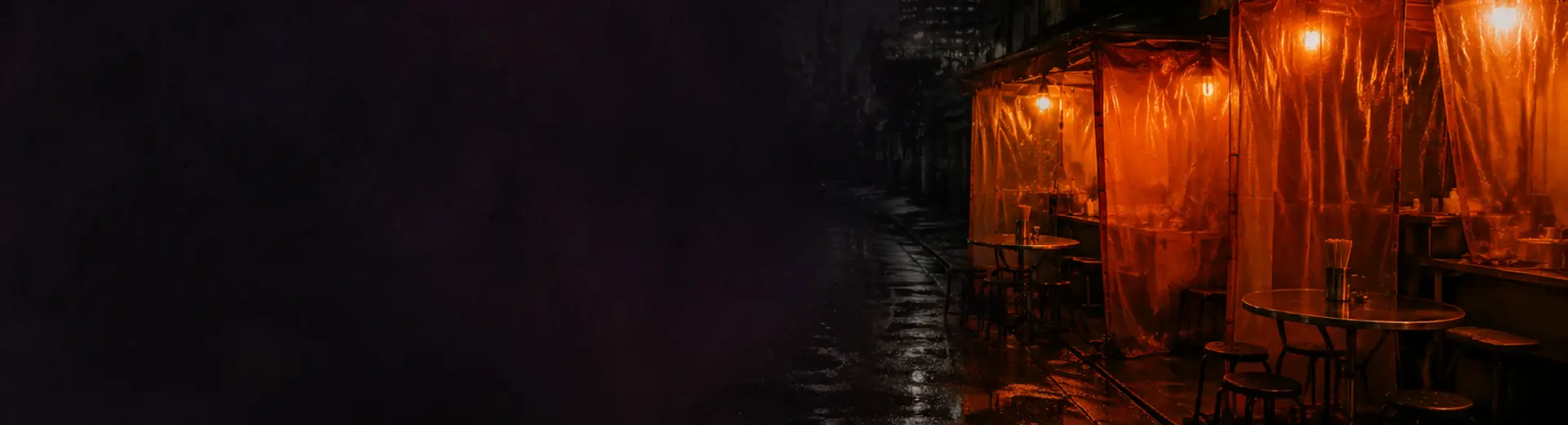
A roughly 100-metre food alley near Sindang Station with specialist tteokbokki restaurants on both sides and most meals cooked in wide pans directly at the table
The alley’s real distinction is temporal as much as culinary: the food makes a group sit still together long enough for a snack street to function as social space
The food stays on the table
Sindang tteokbokki reaches the table as a pan still cooking. Rice cakes, fish cakes, noodles, egg and add-ons thicken together over the burner while everyone sits around it. That extra time is the point: a snack becomes a shared meal, with the group adjusting the pot as it cooks
Ma Bok-rim’s original restaurant still uses that jeukseok — cooked on the spot — format. Add ramyeon, jjolmyeon or cheese, let the sauce reduce, then use the remaining sauce for fried rice. The meal has stages, and the table stays occupied much longer than it would for a paper cup of street tteokbokki
One 1953 vendor became a food alley
Ma Bok-rim began selling tteokbokki in Sindang-dong in 1953, first serving theatergoers near the old Donga Theater. Her sauce mixed gochujang with chunjang, the black-bean paste used in jjajang, and the dish gradually grew from rice cakes in red sauce into a pan loaded with noodles, fish cakes, egg and other ingredients
The recognizable alley came later. After stream-covering work in the mid-1970s, more tteokbokki shops gathered along the street; by the 1980s, dozens were operating. Ma Bok-rim Tteokbokki remains at 5 Dasan-ro 35-gil. I Love Sindang-dong and Samdae Halmeonne are among the other long-running names still clustered within the short food street
DJ booths gave the waiting time a soundtrack
In the 1980s, restaurants began installing DJ booths. Customers sent song requests and stories to the DJ while their pans simmered. The old setup has not vanished entirely: I Love Sindang-dong still keeps a DJ booth in active use, so the music survives in at least one restaurant as part of the meal rather than as décor
Nearby Dongdaemun Stadium added another audience. High-school baseball games drew students from schools such as Duksoo Commercial High and Sunrin Commercial High, and crowds flowed into Sindang after matches. Many of those students later returned as older regulars, giving the alley a nostalgia that belongs to a specific Seoul youth culture rather than to tteokbokki in general
The trendy neighborhood moved across the station
Sindang’s newer “Hipdang-dong” scene grew north of the station around the old grain-trading streets. Simsejeong occupies a rice store built in the 1950s, keeping the old exterior and exposed timber beams while operating as a bakery café. Visitor numbers in Tteokbokki Town have declined in recent years even while the alley remains one of the city’s best-known snack-food districts
That shift makes the old street easier to understand. The fashionable queue may now form elsewhere in Sindang, but Tteokbokki Town still offers a social format the newer cafés do not reproduce: a group sits around one pan and waits for dinner to become ready together
Before you go
The alley is compact, so choosing a restaurant matters more than covering every storefront. Ma Bok-rim Tteokbokki is the historical anchor; I Love Sindang-dong offers a broader side-menu and late-night format. The useful question is how you want the table to work — classic jeukseok tteokbokki, extra noodles and toppings, or a larger meal with side dishes
- Hours
- Hours and closing days vary by restaurant; several long-running shops operate late and some are open 24 hours
- Admission
- There is no district admission fee; meals are purchased from individual restaurants
- Access
- The alley is an open commercial street; each restaurant handles its own seating and waiting
- Transit
- From Sindang Station on Lines 2 and 6, Exit 8 is about 242 metres from Tteokbokki Town