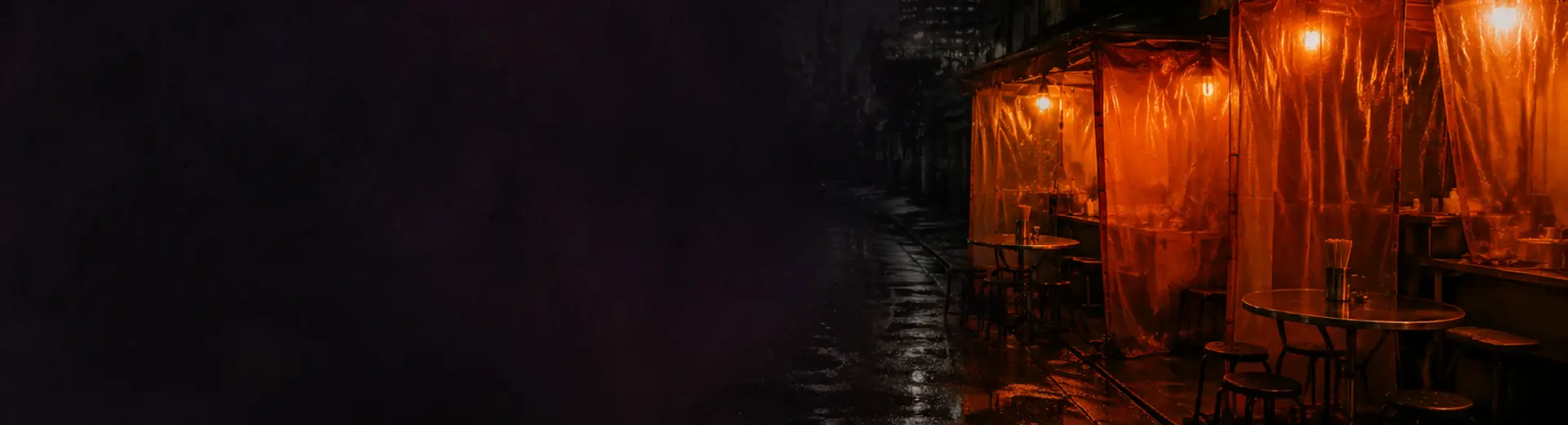

Songjeong-dong Tteokgalbi Street
A station-side Gwangju food street where minced grilled patties grew from a cattle-market district and later evolved into the city’s beef-and-pork tteokgalbi style
Tteokgalbi meals, comparing mixed beef-and-pork with all-beef hanu patties, pork-bone broth and an easy food stop around Gwangju Songjeong Station
A roughly 200-metre specialist restaurant lane on Gwangsan-ro 29beon-gil near Gwangju Songjeong Station and the five-day market
Songjeong is a rare food district where local transport, meat supply and a national economic crisis are still visible in the recipe served today
The dish began with a knife
In the 1950s, Choi Cheo-ja ran a restaurant near Songjeong’s five-day market and minced beef so elderly family members could eat it more easily. She seasoned the meat and grilled it into a thin, broad patty. That practical household solution became the starting point for Songjeong tteokgalbi
In the dish’s early decades, the neighborhood made beef unusually accessible. Songjeong had grown around its railway station and regional roads, while a cattle market covering more than 2,000 square metres operated near today’s five-day-market parking area. A slaughterhouse also stood nearby, putting fresh meat into the same commercial district where the first tteokgalbi shops grew
The cattle market became a food street
Choi Cheo-ja’s restaurant drew customers, and people who had worked there opened shops of their own nearby. Those restaurants clustered around Gwangsan-ro 29beon-gil, close to Gwangju Songjeong Station
Songjeong Tteokgalbi 1hojeom gives that history a current address. Opened in 1976, it still serves the local style on the same street. Its basic tteokgalbi uses a beef-and-pork mixture, while an all-beef hanu version remains a separate order
The IMF crisis changed the meat
The next major change came decades later, during the late-1990s financial crisis. Beef prices rose sharply, and Songjeong restaurants faced a simple choice: raise menu prices or change the patty. Many added pork to beef instead
That cost decision altered the dish itself. Pork added fat and softness while allowing restaurants to keep tteokgalbi within reach of regular customers. What began as a response to an economic shock became the default Songjeong style rather than a temporary substitute
Another local habit arrives beside the patty. Restaurants commonly serve a clear pork-bone broth made by simmering bones with radish and other ingredients for hours. At Songjeong Tteokgalbi 1hojeom, the broth is still served with the meal, tying the grilled patty to a second long-running kitchen routine
Before you go
“Songjeong tteokgalbi” usually means the beef-and-pork blend that emerged from the late-1990s price shock. Diners who want an all-beef patty should distinguish the hanu tteokgalbi option on the menu. The accompanying bone broth is part of the local meal format, not a separate soup course that needs its own order
- Hours
- Operating hours and regular closing days vary by restaurant
- Admission
- The street is a public commercial lane with no admission system; diners pay individual restaurants
- Access
- There is no unified reservation or entry system; each restaurant manages its own seating and waiting
- Transit
- Gwangju Songjeong Station is the main arrival anchor; the roughly 200-metre tteokgalbi street runs nearby on Gwangsan-ro 29beon-gil