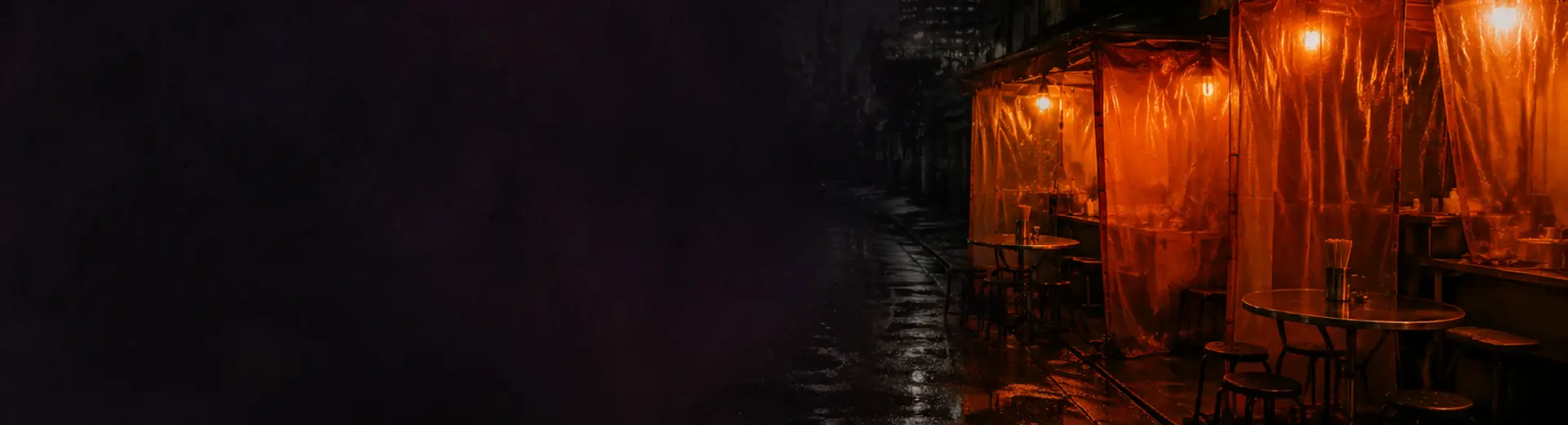

Yeosu Bongsan Gejang Baekban Street
A harbor-side Yeosu food street built around gejang baekban: stone crab marinated in soy or spicy seasoning and served as the center of a full Korean set meal
Stone-crab gejang baekban, soy and spicy crab, flower-crab sets, hairtail dishes and comparing different full-table side-dish spreads
A compact restaurant cluster in Bongsan-dong, with the city-designated businesses concentrated on Bongsannam 3-gil, Bongsannam 4-gil and Eohang-ro near Yeosu’s harbor-side commercial area
Bongsan matters less as a collection of “famous crab restaurants” than as the place where an everyday baekban side dish was turned into a durable Yeosu destination format
Gejang moved to the center of the table
Hwangso Sikdang began as a small baekban restaurant, with gejang among the side dishes. Customers responded strongly to the crab, so the restaurant eventually made gejang the main draw. By the early 2000s, Bongsan-dong had a growing cluster of shops known collectively as Yeosu’s gejang alley
Bongsan faced a working waterfront where boats brought in seafood throughout the year. As more restaurants specialized in stone-crab baekban and more visitors came specifically to eat it, Yeosu formalized the existing concentration as Bongsan-dong Gejang Baekban Street in 2009
Stone crab changes the kind of crab meal
Yeosu’s “stone crab” is the small crab locally called dolge or banjangge, identified as the species minkkotge. It carries less meat than the larger flower crab but has a rich, nutty flavor that suits marinating. Its shell and claws are hard enough that restaurants may crack them in advance or provide a dedicated tool
That crab sits inside a baekban structure rather than arriving alone as a luxury centerpiece. Soy-marinated and spicy crab come with rice, soup and a spread of banchan. At Deungga Gejang, for example, one current set combines flower-crab soy gejang, spicy gejang, stone-crab gejang, braised hairtail and more than ten side dishes. Other restaurants shift the balance toward grilled fish, hairtail or different crab preparations
The official street is smaller than the alley
Yeosu’s current designated-street registry lists ten gejang-baekban businesses, concentrated on Bongsannam 3-gil, Bongsannam 4-gil and Eohang-ro. Beyond the ten designated businesses, recent food reporting counts roughly twenty gejang restaurants across Bongsan-dong
Hwangso remains on the city’s official list, as do Dookkeobi Gejang, Kkaebi Gejang, Deungga Gejang and six other businesses. Menus, side dishes and refill policies differ by restaurant, so “unlimited gejang” is not a street-wide rule even though some individual businesses promote repeat servings
Before you go
The most useful distinction is between stone-crab baekban and the larger flower-crab sets sold by some restaurants. Stone crab gives the street its everyday Yeosu identity; flower crab usually means a different portion, shell size and menu tier. Refill policies belong to the individual restaurant and can change independently of the street
- Hours
- The public street is always accessible; individual restaurant hours and closing days vary
- Admission
- The street is a public dining district with no admission system; diners pay individual restaurants
- Access
- There is no unified reservation or entry system; each restaurant manages its own seating, queues and table rules