

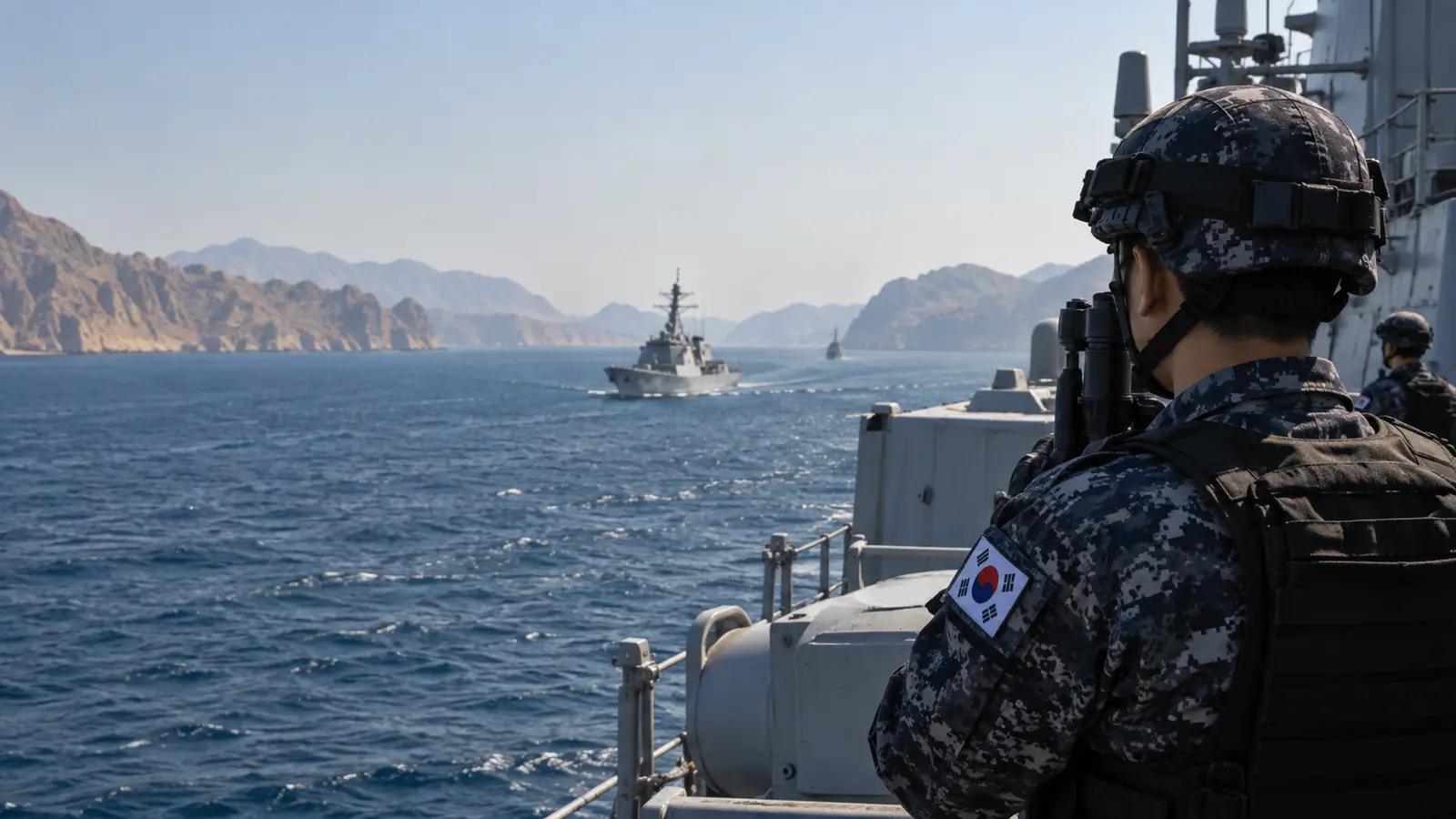
South Korea is weighing whether to contribute military assets to efforts around the Strait of Hormuz, moving a question that had been discussed largely in diplomatic terms into a concrete defense-policy review. The Blue House said the options under examination include military contributions, but officials stressed that no deployment decision has been made and that any step would have to preserve readiness on the Korean Peninsula. The review comes as pressure builds on U.S. partners to help secure one of the world's most important energy shipping routes. The stakes are unusually high because the decision touches foreign policy, defense planning and the cost of imported energy at the same time.
The range of options matters because a contribution does not automatically mean combat operations. Officials have described possibilities that include noncombat missions and search support, while also acknowledging that military assets are part of the discussion. A senior Blue House official said Seoul has room to act only to the extent that doing so would not materially weaken Korea's own defense posture. President Lee Jae Myung has also described the issue as difficult and still under consideration.
A choice with several forms
The Strait of Hormuz is a narrow passage connecting the Persian Gulf with the Gulf of Oman, and disruptions there can quickly affect oil and shipping markets far beyond the region. For South Korea, a major energy importer and a U.S. treaty ally, the choice therefore combines alliance expectations, energy security and force-readiness concerns. The government has not said that a parliamentary deployment motion is imminent, and officials have repeatedly framed the current stage as a review rather than a settled plan.
Domestic politics are already becoming part of that calculation. Some governing-camp figures have voiced opposition to sending forces into a conflict area, while other voices argue that Seoul should make a visible contribution to protecting maritime traffic and supporting its alliance. Those disagreements are likely to sharpen if the government moves from reviewing options to naming a specific mission, unit or duration.
The constraint Seoul cannot ignore
The evidence so far points to a government trying to preserve flexibility. It is signaling to Washington and other partners that Korea is considering practical support, but it is also setting a clear constraint: any mission must not undermine deterrence and readiness at home. That constraint could shape both the size of a possible contribution and the type of assets Seoul is willing to make available.
The next decisive step will be whether the government turns this review into a formal proposal. A concrete plan would need to clarify the mission, legal basis, command structure, risk to personnel and impact on Korean force readiness. Until then, the important development is that Hormuz support has moved from an abstract alliance question to an active policy choice being examined at the highest level in Seoul.