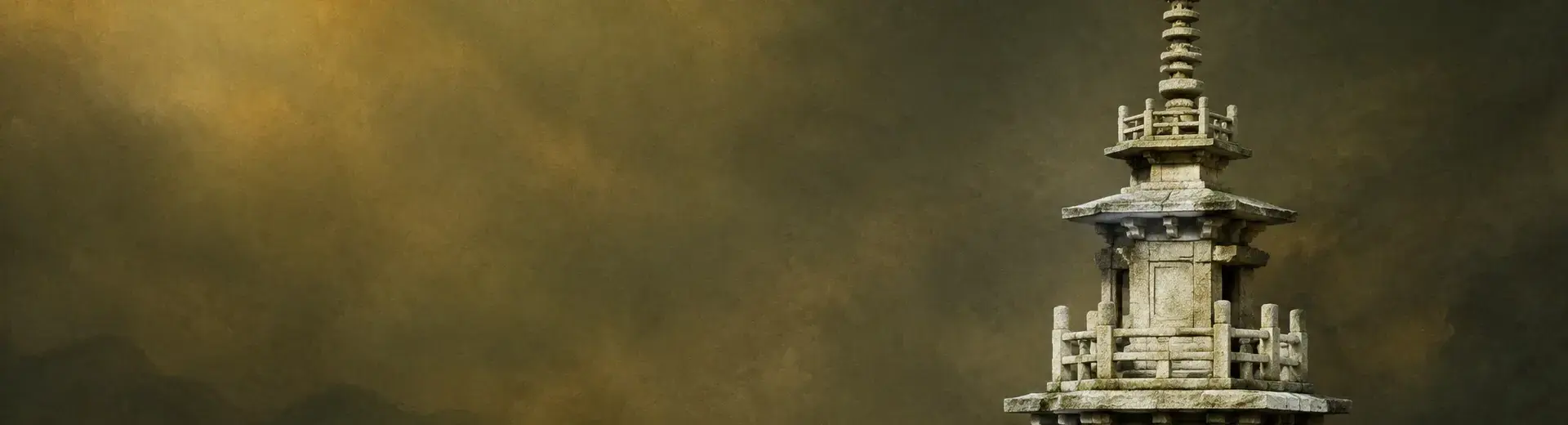


Suwon Hwaseong Fortress
An eighteenth-century UNESCO-listed urban fortress whose 5.74-kilometre wall crosses mountain slopes, streams, gates and the living centre of Suwon
Full or partial wall walks, military architecture, city panoramas, gate and pavilion photography, palace history and point-to-point urban exploration
A linear circuit with four cardinal gates, flat eastern stretches, a steep western climb over Paldalsan, Suwoncheon floodgates and frequent street-level entry and exit points
Hwaseong matters as a rare surviving plan for an entire reform-minded city: defense, royal authority, commerce and public works remain readable in one continuous route
Character
Suwon Hwaseong is a 5.74-kilometre urban fortress where walls, gates, command posts and floodgates still organize the centre of a working modern city
Its character comes from constant changes of level and purpose. The wall crosses the flat eastern city, climbs the wooded slope of Paldalsan, meets busy roads at monumental gates and follows Suwoncheon through stone waterworks. Defensive architecture stays legible, yet the route also behaves like a civic promenade used for walks, exercise and views over tiled roofs and apartment districts
The experience
Choose the length and terrain before choosing a starting point. A full circuit takes roughly two to three hours and rewards continuity: each bastion, sentry post and command platform explains the next stretch of wall. A shorter route can still carry the fortress’s main argument. The northwestern arc from Hwaseomun through Janganmun toward Yeonmudae combines intact masonry, broad views and easier exits; the western ascent to Seojangdae adds the steepest stairs and the strongest panorama
The four cardinal gates provide the clearest orientation. Janganmun is the grand north gate and Paldalmun marks the south, now isolated within a traffic roundabout. Changnyongmun opens the east near Yeonmudae, while Hwaseomun anchors the west below Paldalsan. Between them, Hwahongmun carries Suwoncheon through seven arches, Banghwasuryujeong turns defense into a refined pavilion landscape, and brick watchtowers reveal how carefully different firing positions were designed
The wall and city share the same ground. Markets continue near Paldalmun, cafés press close to the northern and western sections, and ordinary streets pass through the old defensive line. This mixture makes a point-to-point walk more useful than treating the fortress as one enclosed monument. Hwaseong Haenggung can be added as a separate interior visit, but the wall itself supplies the larger spatial story
History
Hwaseong began with King Jeongjo’s attempt to remake Suwon. After moving the tomb of his father, Crown Prince Sado, in 1789, the king relocated the local administrative centre to the foot of Paldalsan and developed a new city with roads, markets, government facilities and a temporary palace. The fortress served defense, royal travel and a wider political plan to establish a strong base beyond the factional pressures of the capital
Construction ran from January 1794 to September 1796. Jeong Yak-yong’s planning drew on Korean practice and military knowledge circulating from China and the West; stone, brick and specialized structures were adapted to both mountain and flat ground. Workers received wages, while cranes and pulleys helped move heavy materials. The project’s detailed accounts recorded designs, materials, costs, schedules and even individual workers in the Hwaseong Seongyeok Uigwe
That record later became part of the fortress’s survival. Sections and associated buildings were damaged or lost through the Japanese colonial period and the Korean War. A major restoration from 1975 to 1979 used the Uigwe as a technical guide, allowing lost structures to be reconstructed from unusually precise eighteenth-century documentation. The result asks visitors to read original fabric and documented restoration together
UNESCO inscribed Hwaseong in 1997, recognizing the integration of East Asian and Western military ideas, its response to topography and the survival of its major defensive system. The designation also protects an urban plan whose gates and road axes still shape central Suwon
Before you go
Build the visit around energy rather than a checklist. The western mountain section gives the widest views and the greatest stair load; the eastern and northern stretches are easier to divide into shorter walks. Starting at one gate and finishing at another avoids unnecessary retracing
Footwear with grip matters on stone, slopes and stairs, especially after rain or in winter. Add Haenggung only when palace interiors are a priority, and leave time for the wall’s smaller structures: the differences between an artillery bastion, a secret gate, a command post and a floodgate are where Hwaseong’s design becomes most convincing
- Hours
- Official fortress viewing hours are 09:00–18:00 year-round. Hwaseong Haenggung and visitor experiences inside the wider fortress area keep separate operating hours and last-admission rules
- Admission
- Fortress viewing is free. Hwaseong Haenggung is separate: adults ₩2,000, youth and military ₩1,500, children ₩1,000. Seniors aged 65+, hanbok wearers and visitors on Culture Day—the last Wednesday monthly—enter Haenggung free
- Access
- Choose route length and terrain first. The full circuit takes about 2–3 hours. From Paldalmun, the western approach climbs steep stairs toward Paldalsan; the eastern approach starts more gently. Hwaseomun–Yeonmudae offers a shorter route with convenient exits
- Transit
- Use Suwon Station as the rail gateway, then choose the wall starting point. From Exit 4, the official directions list buses 11, 13 or 13-4 to Hwaseong Haenggung, Suwon Seongji, a practical central start near the palace and Paldalmun