

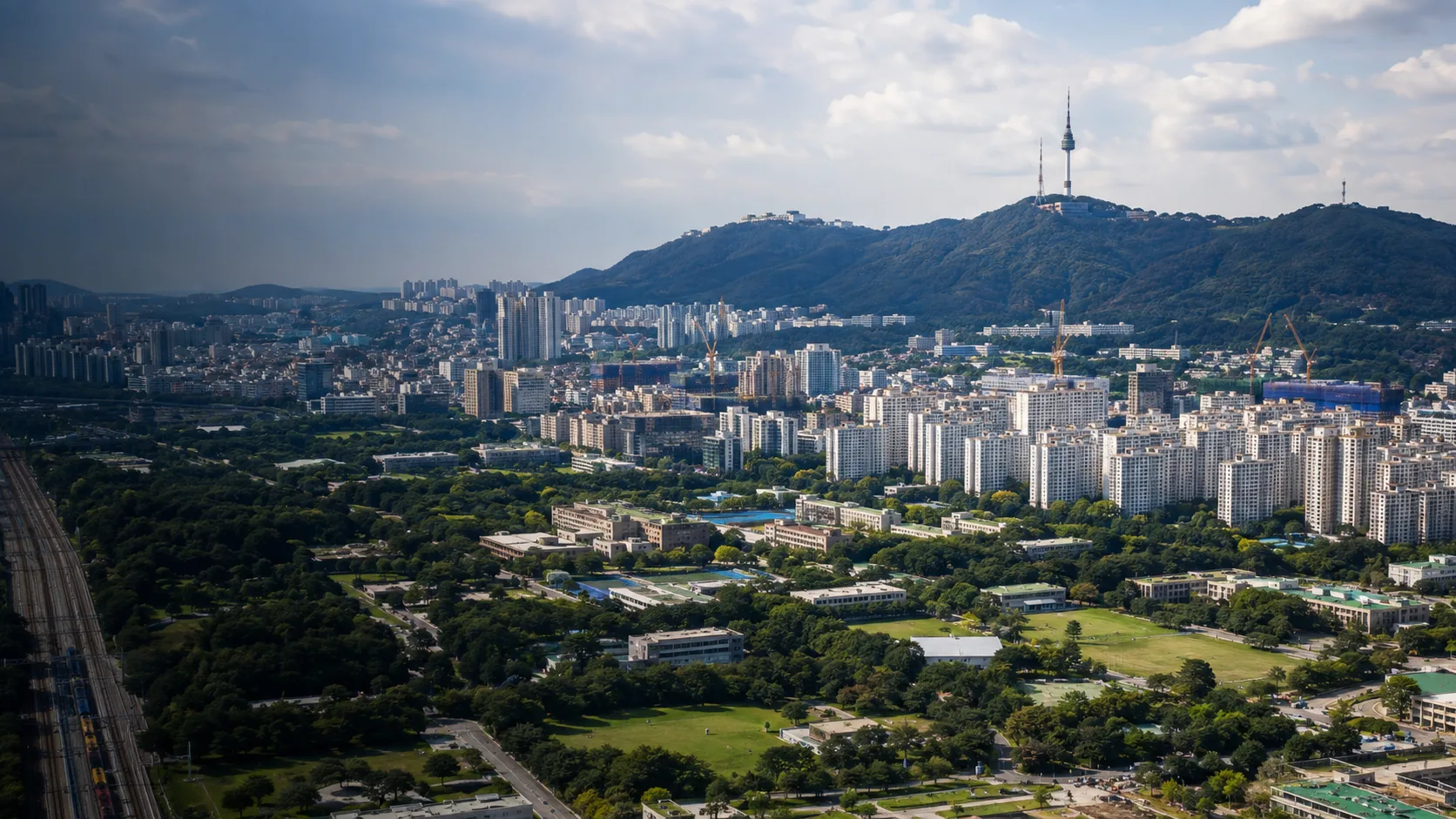
South Korea's housing drive has reached one of Seoul's most politically sensitive pieces of land. The government is pursuing rental housing for young people in the Yongsan Park area, including land now used for the Yongsan Children's Garden, while the ruling Democratic Party considers changing the law that currently protects the site from non-park development. Korean reporting has put the possible scale at up to 20,000 homes, although that figure is still part of the policy debate rather than a final construction commitment.
The significance is larger than one housing site. Yongsan sits at the center of Seoul, where new supply is difficult to create and land-use decisions carry unusually high economic and symbolic costs. The plan turns the government's broader promise to accelerate housing supply into a concrete test: whether it is willing to trade some protected park space for homes aimed at younger households, and whether that trade can survive political and legal scrutiny.
The law is the first real gate
The first obstacle is statutory. SBS reported that the 2007 Yongsan Park Special Act would need to be amended because the law restricts conversion of the park land to other uses. The Democratic Party is considering action on an amendment as early as Aug. 20. That means the project is not simply an administrative decision that ministries can execute on their own. Its legal basis has to move through the National Assembly.
Seoul Mayor Oh Se-hoon has opposed using the park for housing, arguing that the site should be preserved for future generations. The dispute overlaps with a broader argument between Seoul City and the central government over how to add homes. Oh has pressed for faster redevelopment and reconstruction through regulatory easing, while President Lee Jae Myung has warned that supply measures should not increase the risk of another surge in home prices.
The disagreement is moving from speeches toward negotiation. Korean outlets reported that Land Minister Kim Yoon-deok and Oh are due to meet as the government and Seoul try to resolve competing views on Yongsan and other supply sites. A ruling party-government meeting on housing is also part of the next decision window, even as officials have cautioned against describing every discussion as a Yongsan-only meeting.
For residents and prospective renters, the key point is that 20,000 homes are not yet approved units with a construction timetable. The number illustrates the size of the option under consideration. The decisive steps are the wording of any Special Act amendment, the amount of land actually opened to housing, the eligibility and tenure rules for the rental units, and the balance between housing, green space and infrastructure.
KORInform covered the government's broader housing-supply push on Aug. 14. Yongsan is a material development of that story because the debate has moved from financing and general supply targets to a named central-Seoul site, a specific legal barrier and an immediate political confrontation over land use. The next few days should show whether Yongsan becomes a real component of the supply strategy or remains a negotiating position.