

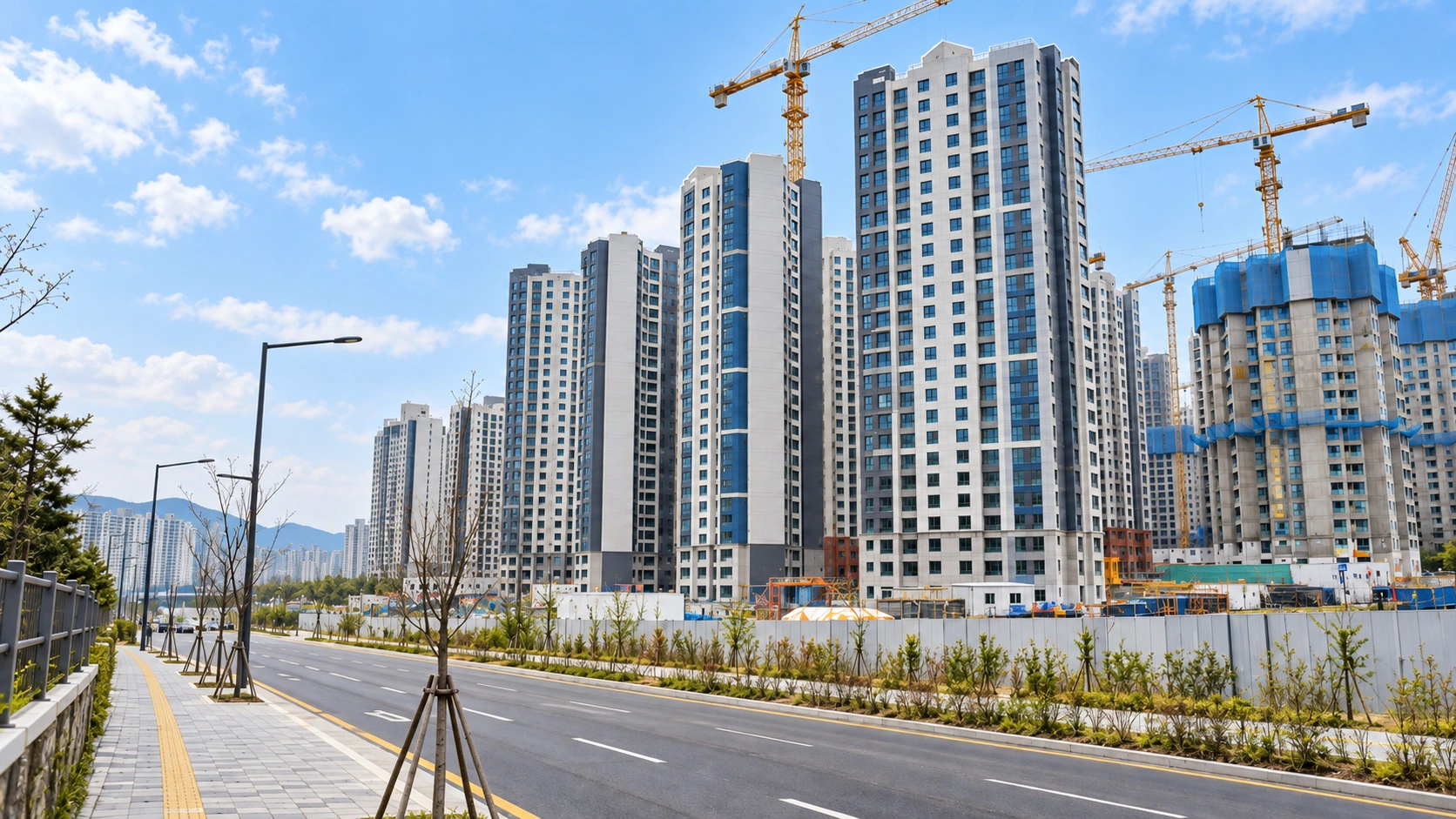
South Korea's government has set a target of supplying 1.19 million public-sector homes by 2030, combining public-sale and public-rental housing in a plan that puts most of the new supply where demand is strongest. About 920,000 homes, or 77% of the total, are planned for the capital region, according to Korean reporting on the Housing Ministry's new housing-stability plan. The government says the overall program works out to roughly 240,000 homes a year through 2030.
The scale is significant because the plan is designed to expand both the amount of public housing and the range of households able to use it. One report said the government wants to raise the long-term public-rental stock to 2.5 million homes and lift the public-rental stock ratio into the 10% range, above the cited OECD average of 7.1%. The 1.19 million figure covers several supply channels rather than one single construction program, so the headline target will be delivered across multiple types of public housing over several years.
Access broadens beyond traditional eligibility
The plan also broadens part of the rental system beyond the lowest-income segment. The government is seeking to provide 190,000 public-rental homes by 2030 under a more widely accessible model, including homes intended for middle-income households and priority access for young people in urban locations. Korean reporting says income and asset eligibility standards will be relaxed for this segment. That could make public rental housing relevant to households that previously sat outside the traditional eligibility boundary.
For applicants, however, a national target is not the same thing as an immediately available home. Households will feel the policy through where projects are built, when they open for applications and how eligibility rules are applied. The concentration of roughly three quarters of the planned supply in the capital region reflects the pressure around Seoul and surrounding cities, but it also means the delivery schedule there will carry much of the plan's weight.
Delivery turns the target into housing people can use
The Housing Ministry has framed the policy around changing housing needs as Korea ages and household structures diversify. A ministry official said support needs to become more tailored to different life stages and regional conditions. At the same time, Kyunghyang Shinmun reported criticism that the plan may still be insufficient for the most vulnerable households, highlighting a tension between widening access and maintaining strong support for people with the least housing security.
Implementation now moves the policy from national targets to specific housing projects. The government has announced the overall scale, the capital-region share and a larger public-rental-stock target, but households will encounter the program through application windows and completed homes. Progress can be judged by project-level delivery and by the number of homes that actually become available under the broader eligibility model, alongside the 2030 target.