

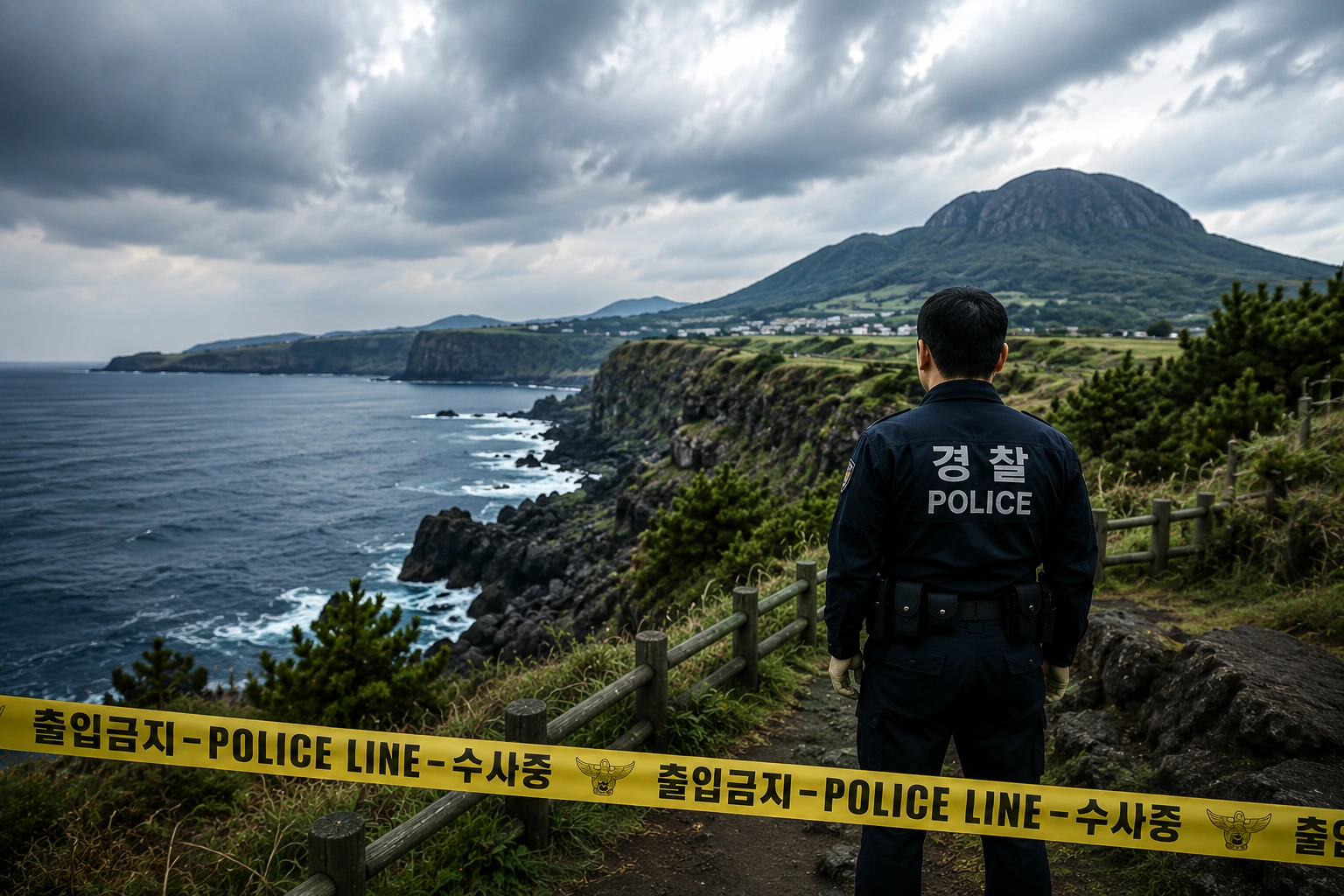
A body believed to be that of 37-year-old Jang Mi-ran, who disappeared in Jeju in May, was found on August 24 after 104 days. The discovery has turned a disputed missing-person investigation into a broader accountability test for South Korean police, with authorities now reviewing cases that officers closed on their own.
Jeju police found the body during a joint search near Hallim-eup. Police said clothing, slippers and a mobile phone were consistent with Jang's belongings, although formal identification had not yet been completed. The acting national police chief told lawmakers that there were no signs of homicide identified so far and that the National Forensic Service had been asked to confirm the identity and cause of death.
The location has sharpened criticism of the original response. SBS reported that the body was discovered only a short walk from the accommodation where Jang had been staying. The central issue is therefore not simply that a missing person was found dead, but whether a timely and properly documented search could have located her earlier.
Why the police response is under scrutiny
The investigation is already focused on an officer accused of falsely closing the case. Police allege that the officer told the person who filed the report that contact had been made with Jang, then ended the case and removed her from the missing-person profiling system. Authorities sought the officer's detention on allegations including dereliction of duty and falsification of official electronic records. A court later ordered the officer released after finding that the legal requirements for an emergency arrest had not been met; that decision concerns the arrest procedure, not the underlying allegations.
The family's efforts to raise the alarm also add to the scrutiny. Seoul's Nowon Police Station said Jang's cousin visited on July 19 and completed a missing-person report that was transferred to Jeju police later that day. Korean reporting says the relative had been trying to find Jang after weeks without contact.
The practical consequence is that the case is no longer being treated as an isolated failure by one officer. Senior government and police officials have called for a review of missing-person cases that were closed internally, looking for similar cases where closure decisions may not have been adequately verified. If the review finds a broader pattern, the response could extend from individual discipline to changes in how police document contact, close cases and escalate long-running disappearances.
What to watch next
- Formal forensic identification and autopsy findings
- The criminal and disciplinary investigation into the officer
- The scope and results of the nationwide review of internally closed cases
- Whether police tighten proof and documentation requirements before a missing-person case can be closed
Several facts still require caution. Formal forensic identification was pending in the latest evidence available to KORInform, and police had not completed an autopsy. Authorities have said they currently see a low likelihood of criminal violence, but the official cause of death has not been established.
What matters next is therefore two-track: the forensic process will establish what happened to Jang, while the institutional investigation will determine how her case was handled and whether the same weakness exists elsewhere. The most consequential outcome may be a new standard for when a missing-person case can be closed and what proof an officer must record before removing someone from active search systems.