

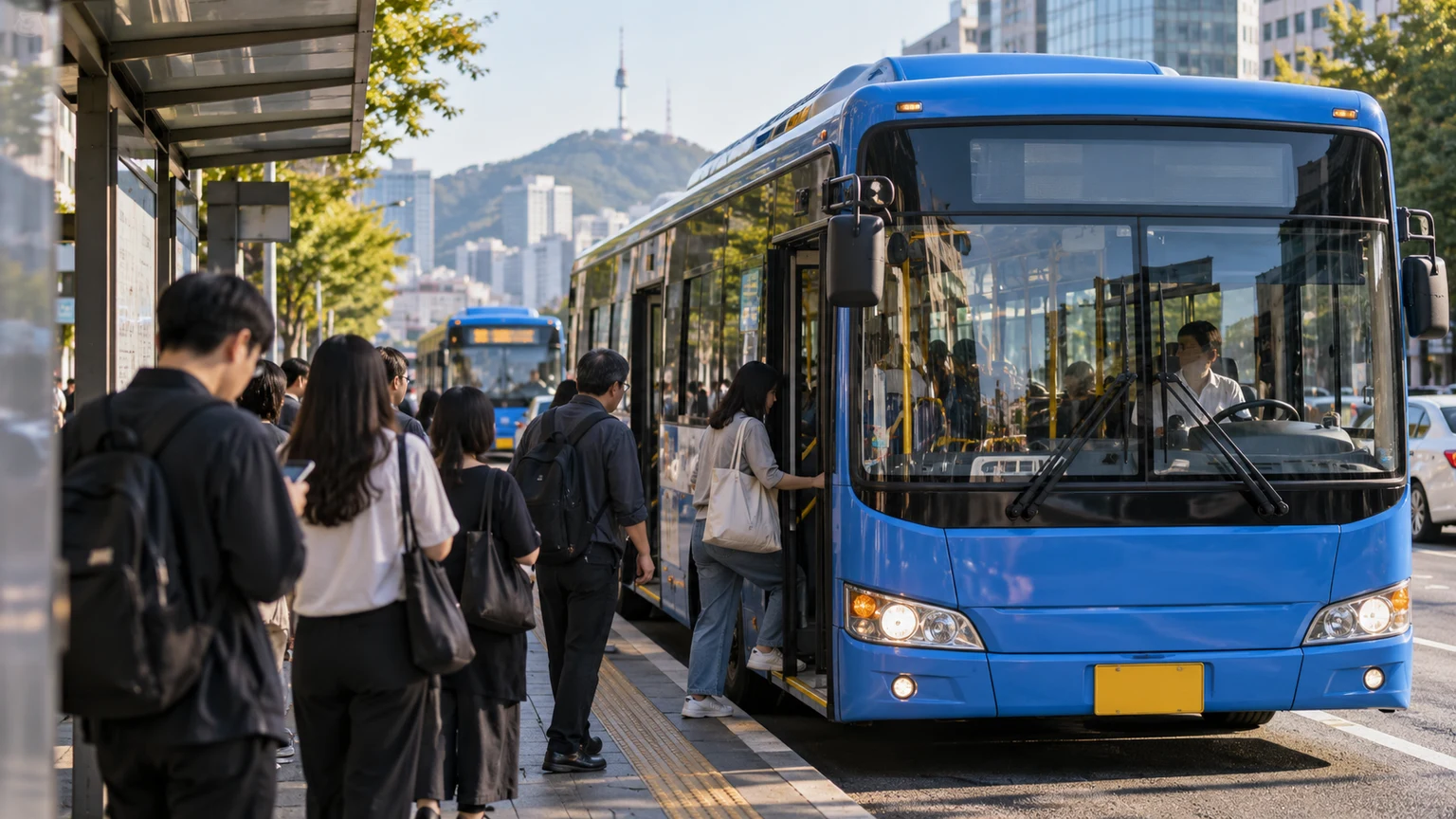
Seoul's city buses are running normally on September 16 after unions and operators reached an overnight wage agreement only hours before a planned strike. The deal removed an immediate risk to the morning commute across the capital, where the city had prepared emergency transport measures in case bus services stopped. The agreement followed almost 12 hours of mediation at the Seoul Regional Labor Relations Commission and was finalized at about 1:50 a.m.
The settlement raises wages by 3.2% for 2026. In practical terms, the most visible result is what did not happen: the union withdrew its plan to stop work from the first buses of the morning, and Seoul cancelled the emergency measures it had prepared, including shuttle-bus arrangements and extended subway operations. Regular bus routes, subway schedules and the wider public-transport network can therefore operate on their normal timetable.
The pay formula is still unsettled
The agreement does not close the dispute that made the negotiations so difficult. The central argument concerns how many monthly hours should be used when calculating ordinary wages after court decisions expanded the role of regular bonuses in that calculation. The union had argued for a 176-hour basis, while management and Seoul had defended a higher figure. Management had also discussed 209 hours as an alternative. Instead of forcing a final answer during the overnight talks, the parties agreed to revisit the issue after an expected Supreme Court ruling later this year.
That distinction matters because the 3.2% settlement solves the immediate service problem without fixing the cost structure behind it. A different ordinary-wage formula can materially change hourly pay, overtime and related labor costs across the bus system. Seoul's semi-public bus model means those costs do not stay only inside individual operators: they can feed into the financial burden of maintaining citywide service. The next round of negotiations may therefore have implications for both workers' pay and the public money required to support the network.
The path to the deal was unusually close to a shutdown. Talks had appeared to collapse late on September 15, and the union publicly prepared to strike. Negotiations continued, however, as the legal mediation window closed and management returned with a revised proposal. The final compromise separated the issue that could be settled immediately, the annual wage increase, from the ordinary-wage question that depends partly on the courts.
For commuters, the short-term outcome is straightforward: buses are operating as usual and no alternative travel plan is needed this morning. For the city, operators and the union, the harder issue has been deferred rather than eliminated. The next important date will be the court decision that clarifies the ordinary-wage calculation and the negotiations that follow it. If that ruling materially changes the cost base, Seoul could face another round of difficult bargaining even though today's strike was avoided.