

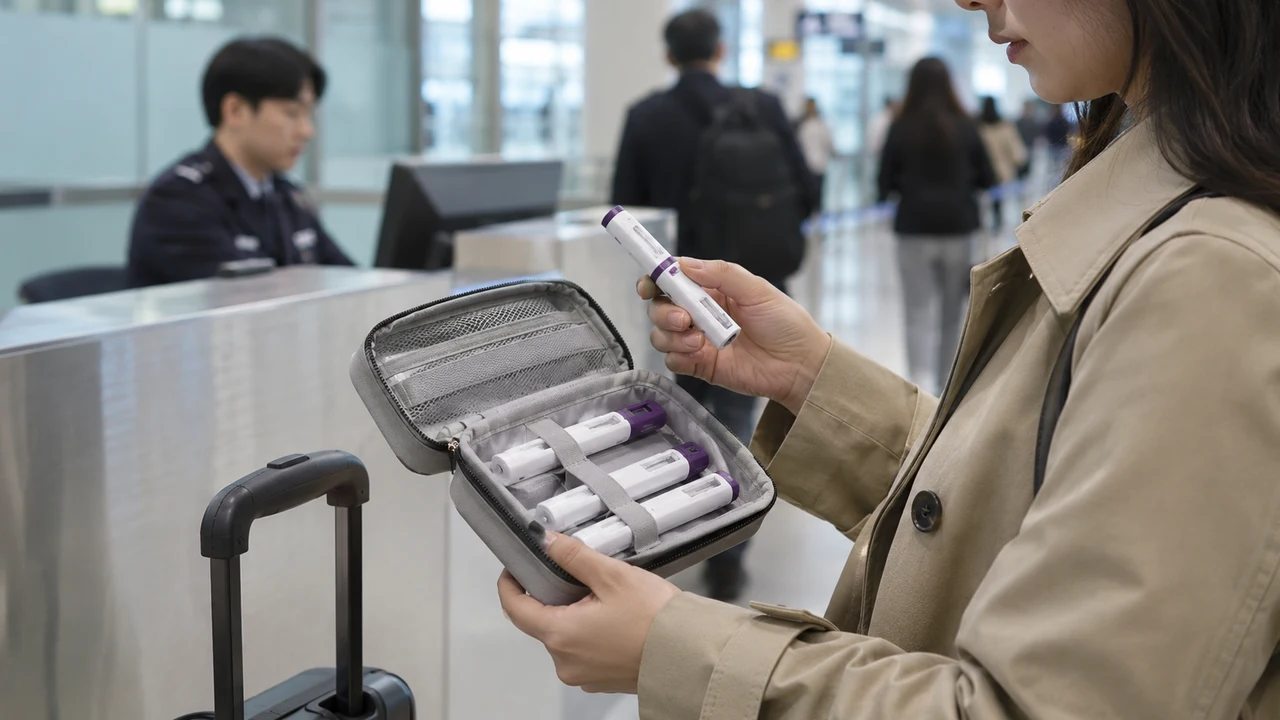
South Korea will allow travelers to carry prescribed obesity drugs and other medicines for personal treatment into the country from November 12, easing a restriction that had often left legitimately purchased medication held at customs. The revised standard covers medicines obtained through a valid prescription in the country where they were purchased, according to the Ministry of Food and Drug Safety and the Korea Customs Service.
The change is particularly relevant to patients using weekly GLP-1 medicines such as Mounjaro and Wegovy. A traveler may carry up to 12 single-use weekly injections, corresponding to a three-month treatment supply. The broader rule generally permits up to six bottles of medicine, while quantities above six bottles may still be accepted when they do not exceed the patient’s prescribed needs for three months.
A three-month limit for personal treatment
The policy addresses cases in which medicines purchased through normal medical channels were nevertheless stopped during entry procedures. Patients traveling abroad could face an interruption even when the medicine was intended only for their own continued treatment. Under the new approach, a valid overseas prescription and a quantity consistent with personal use become central to whether the medicine can be carried through customs.
- Effective date
- November 12, 2026
- Weekly injection limit
- Up to 12 single-use doses
- General standard
- Six bottles, or up to three months when the prescribed quantity is larger
- Purchase route
- Personal carriage is permitted; overseas direct ordering remains prohibited
The permission applies to medicines physically carried into South Korea by the patient. It does not open a route for overseas direct purchasing or delivery by mail. That distinction limits the change to accompanied personal medication rather than creating a general import channel for weight-loss drugs sold abroad.
Interest has focused on Mounjaro purchased in Japan, sometimes nicknamed “Sushijaro” in South Korea because travelers have sought it at lower prices than those available domestically. The revised rule means price differences may influence where some patients obtain treatment, but the evidence supplied for the policy change does not establish how many travelers will use the new allowance or how domestic prices may respond.
Personal carriage remains distinct from direct importing
Travelers still need to remain within the personal-treatment limit. For a weekly injectable drug, the stated ceiling of 12 units reflects three months of dosing rather than an unrestricted numerical allowance. For other medicines, the six-bottle standard and the separate three-month provision should be read together: exceeding six bottles is not automatically disqualifying when the amount can be shown to represent no more than three months of prescribed use.
The revision removes a customs obstacle, but it does not turn foreign purchases into unregulated imports. The medicine must have been lawfully prescribed in the country of purchase, must be intended for the traveler’s own treatment and must be carried in a limited quantity. Reports announcing the change do not provide a complete checklist of documents that customs officers may request in individual cases, so travelers should not assume that possession of the medicine alone will demonstrate eligibility.
The first days of implementation will show how consistently the revised limits are applied at ports and airports, especially when packaging formats do not align neatly with a bottle count or when travelers carry more than six containers. The key policy boundary is already clear: prescribed medicine carried personally for up to three months is being permitted, while overseas direct ordering remains prohibited.