

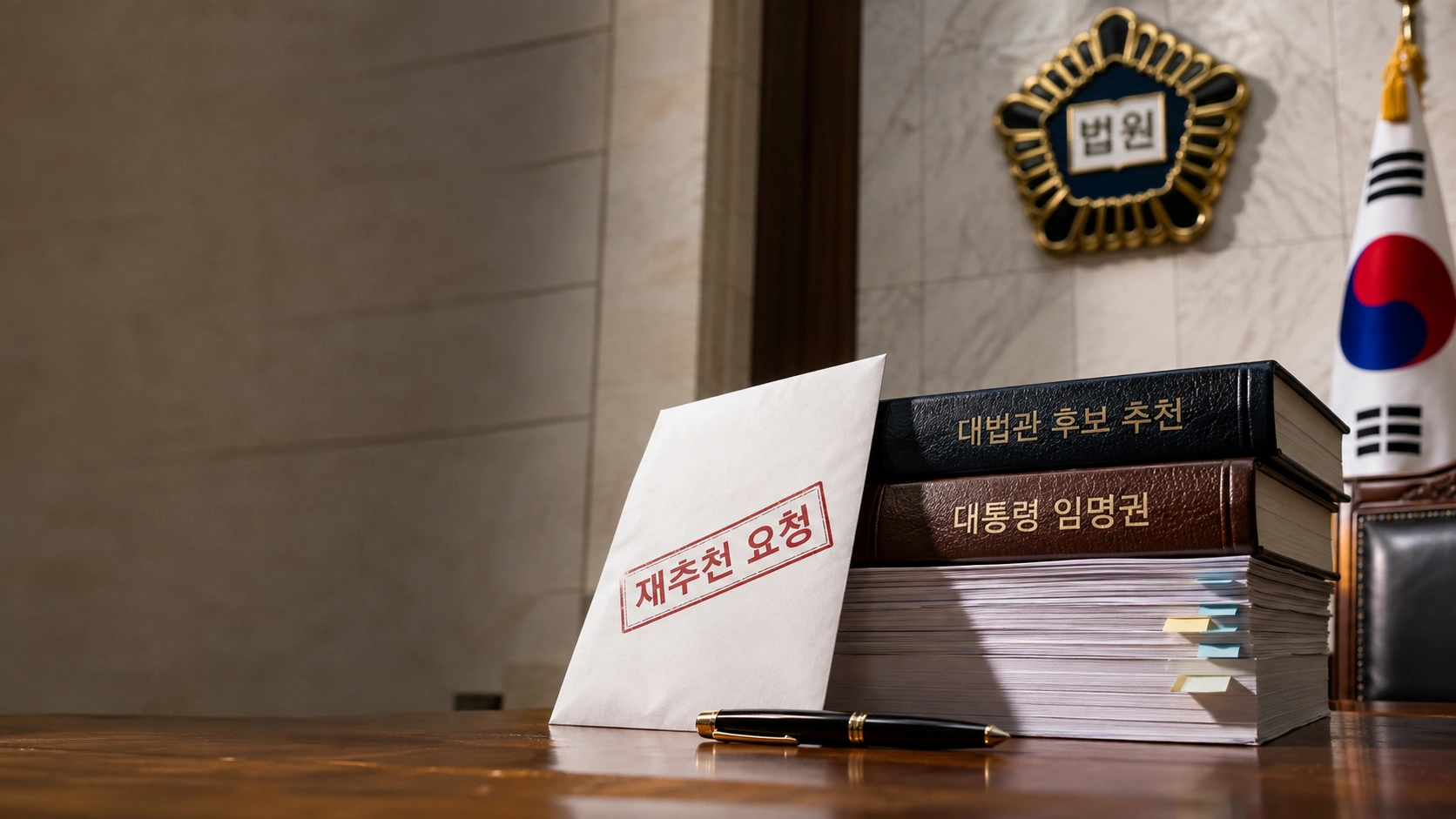
South Korea’s presidential office has declined to send one Supreme Court nominee to the National Assembly and asked Chief Justice Cho Hee-dae to make a new recommendation, creating an unusually direct clash over how the country’s top court is staffed. The decision concerns Son Bong-gi, a senior judge who had been recommended to replace former Justice Roh Tae-ak. Cheong Wa Dae said it would still submit another nominee, Kim Sung-soo, for parliamentary consent.
The presidential office framed the problem as one of process. It said Son’s recommendation had been made without sufficient consultation and described the nomination as lacking procedural completeness. That matters because the Constitution divides the appointment process across institutions: the chief justice recommends candidates, the president formally appoints them, and the National Assembly must consent. The current dispute is therefore not simply about whether one judge is acceptable. It is about how much practical discretion each institution can exercise before a nomination reaches lawmakers.
The next move belongs to the chief justice
Chief Justice Cho has not yet given a full response. Speaking to reporters as he left the Supreme Court, he apologized for causing public concern and said he was reviewing the issue, adding that he expected to give an official explanation next week. He also declined to say whether a new candidate recommendation committee would be convened. That leaves the next procedural step unresolved.
The confrontation is politically sensitive because it comes amid wider tension between the judiciary and the governing camp. Cho has also told the National Assembly’s Legislation and Judiciary Committee that he does not plan to attend a scheduled questioning session, arguing that testimony about the chief justice’s recommendation power could conflict with judicial independence and the separation of powers. Governing-party lawmakers have warned of legal action if he does not appear.
For the public, the immediate consequence is not a change in court rulings but uncertainty over the timetable for filling the Supreme Court vacancy. A prolonged dispute could delay the appointment and force both sides to clarify practices that had previously relied more heavily on institutional convention than open confrontation. Because Supreme Court justices participate in the final interpretation of major civil, criminal and administrative cases, a vacancy can also affect the court’s workload and internal balance.
The most important next signal will be Cho’s formal response. If he submits a new recommendation, the conflict may remain a one-off procedural dispute. If he insists that the original recommendation must stand, the issue could develop into a broader constitutional argument over whether a president can effectively reject a chief justice’s nominee before parliamentary consent is sought. Either way, the episode has already exposed a point of friction in the appointment system that had rarely been tested so publicly.