

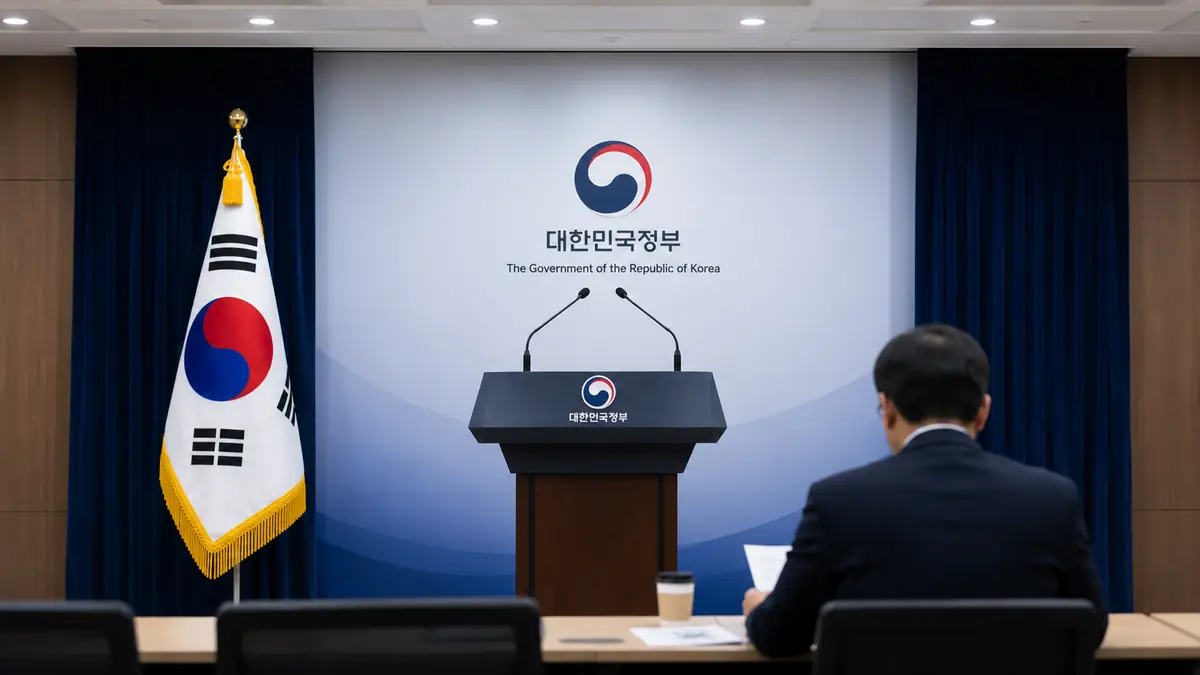
President Lee Jae-myung has widened his second-term personnel reset, naming new candidates to lead six ministries at once rather than filling only the vacancies that had been expected. The August 30 reshuffle reaches into the core of economic management, justice, defense and housing policy, giving the administration a new set of ministers to carry some of its most politically and practically consequential work.
- Finance
- Lee Hyung-il
- Justice
- Kim Seung-won
- Defense
- Kang Shin-chul
- Land
- Hong Ji-sun
- SMEs
- Lee So-young
- Gender equality
- Yong Hye-in
Lee tapped First Vice Finance Minister Lee Hyung-il for deputy prime minister and finance minister, Democratic Party lawmaker Kim Seung-won for justice minister, former Combined Forces Command deputy commander Kang Shin-chul for defense minister, and Vice Land Minister Hong Ji-sun for land minister. Democratic Party lawmaker Lee So-young was named for the SMEs and Startups Ministry, while Basic Income Party lawmaker Yong Hye-in was chosen for the Ministry of Gender Equality and Family. The presidential office also announced changes among senior aides, including a new AI planning post.
A wider governing reset
The breadth of the move is the important part. Reporting before the announcement had pointed toward a narrower, vacancy-driven reshuffle. Replacing six ministers instead puts fresh leadership across several policy areas where the administration is under pressure to show execution, from macroeconomic management and housing supply to defense and the justice system. The presidential office described the appointments as leadership for a broad social transformation and emphasized dynamism and expertise. That stated rationale makes the reshuffle less about routine personnel maintenance and more about how Lee wants the next phase of his administration to operate.
There is also a political trade-off in the choices. Half of the six ministerial nominees are sitting lawmakers, according to regional reporting, while several others come from the bureaucracy or military. That mix can give the government people with political or institutional experience, but it also opens a new round of scrutiny over qualifications, partisan alignment and the direction each ministry will take. The governing party welcomed the reshuffle as a combination of competence, younger leadership and broader progressive cooperation. The opposition cast it in sharply different terms, arguing that the changes neglect economic and security priorities. Those reactions are partisan claims, not evidence by themselves about how the ministries will perform, but they show where the confirmation and policy fights are likely to concentrate.
Regional balance adds pressure
Regional representation is another point of attention. Chungbuk Ilbo noted that no nominee came from North Chungcheong, while the six-person slate included people associated with several other regions. The significance of that criticism will depend on whether regional balance becomes a sustained political issue or remains secondary to questions about policy competence.
For people outside politics, the practical consequence will come from what these nominees do rather than from the reshuffle itself. The finance and land portfolios will shape decisions affecting growth, public finances and housing. Justice and defense will carry institutional and security responsibilities that can generate immediate political conflict. The SMEs and gender-equality ministries have their own program and budget priorities. Changing the people at the top can alter how quickly existing plans are executed and which issues receive attention, but the evidence available now does not establish any specific policy reversal simply because the nominees changed.
Parliamentary scrutiny comes first
Implementation will show what kind of reset this becomes. Parliamentary scrutiny of the nominees, any additional personnel changes, and the first policy directives from the new team will indicate whether this was mainly a political reset or a substantive shift in governing priorities. The administration has framed the reshuffle around visible results. The useful measure will be whether the new leadership produces them.