

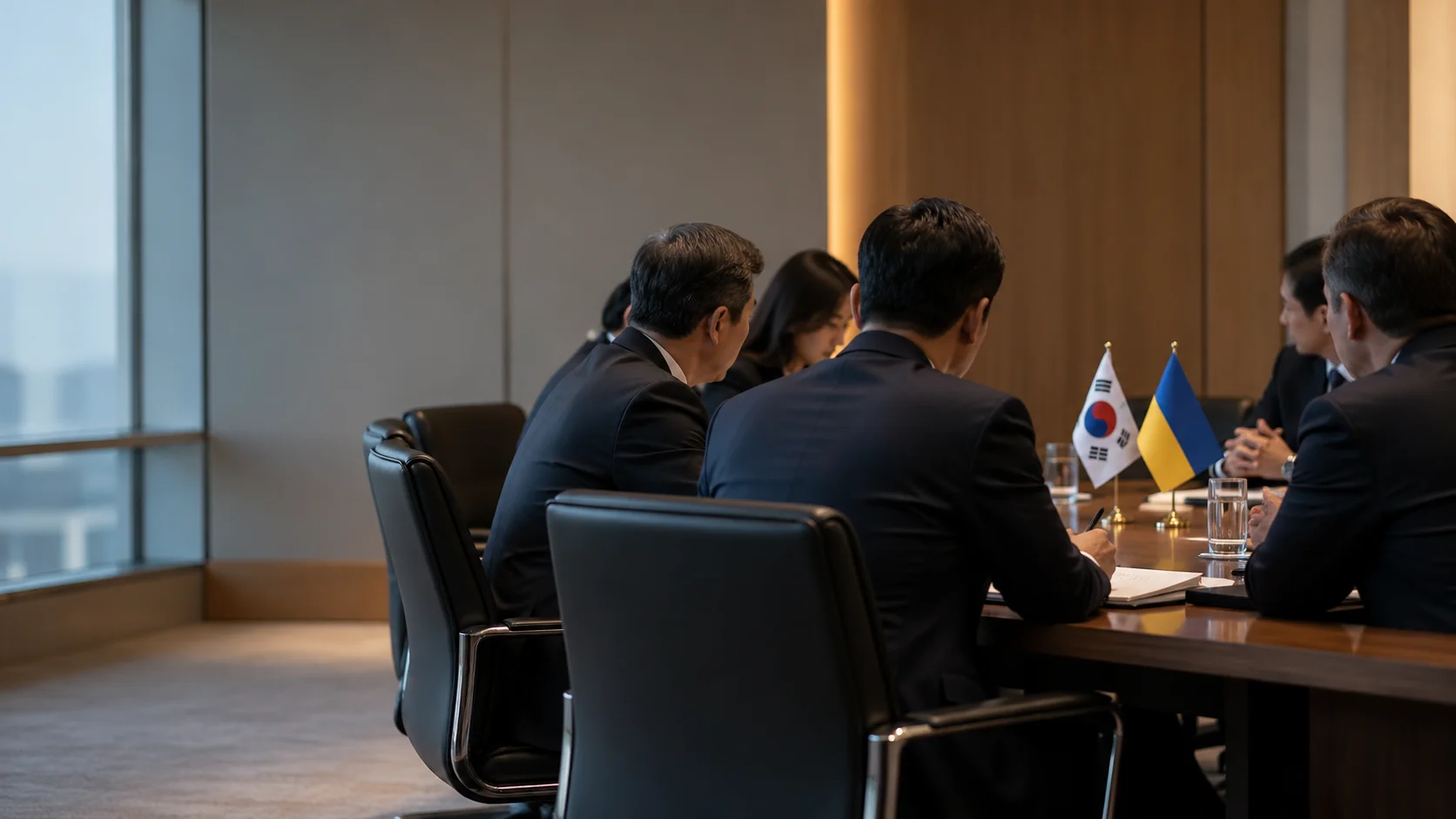
Seoul wanted the transfer of two North Korean prisoners captured by Ukraine to stay quiet until they were safely in South Korea. That plan broke into public view when Ukrainian President Volodymyr Zelenskyy disclosed the transfer during a United Nations speech. South Korea's presidential office says Kyiv had warned Seoul that the prisoners would be mentioned, but that Ukraine's position on identifying South Korea as their destination changed from an earlier understanding. The disagreement has turned an already sensitive humanitarian operation into a test of how Seoul protects the men while managing relations with Ukraine and the wider security consequences on the Korean Peninsula.
The South Korean government says its approach has been guided by the prisoners' own wishes, domestic law, international law and humanitarian principles. President Lee Jae-myung publicly expressed disappointment that the transfer was disclosed despite an understanding that it would remain confidential. Korean officials have stressed that the issue touches not only diplomacy but also the men's personal safety, the security of relatives who may remain in North Korea and the potential effect of publicity on a case involving Pyongyang and Moscow.
The dispute is larger than a disagreement over diplomatic etiquette. Public identification can change the security environment around the transferred men and can complicate decisions about protection, legal processing and future communication with Kyiv. A senior presidential-office official said Seoul had preferred quiet handling because the case was complex and because growing attention could expose the men to greater risk. The same official said people seeking to obstruct an orderly transfer had become more active as the case drew attention, although the government did not publicly identify those actors in the material available.
The broken disclosure understanding
South Korean accounts describe a sequence in which Ukraine initially understood Seoul's objection to publicly naming South Korea as the destination. The presidential office later said Ukraine's position changed before Zelenskyy's speech. Seoul has not presented the episode as a reason to abandon cooperation with Ukraine, and the available reports do not establish why Kyiv altered its position. The documented disagreement is narrower: the two governments had coordinated on confidentiality, and the public disclosure did not match the arrangement Seoul says it expected.
The issue has also moved into domestic politics. The governing Democratic Party said the disclosure damaged trust between the two countries and argued that the safety of the prisoners and their families should be considered. The presidential office has emphasized that the transfer itself should still be handled through legal and humanitarian principles rather than partisan calculations. That distinction matters because the men are no longer an abstract part of the Russia-Ukraine war. They are now physically in South Korea and under the responsibility of South Korean institutions.
The transfer becomes a protection test
Attention now turns to the operational handling of the case. Seoul must determine how the two men are protected, how their legal and immigration status is handled and how much information can safely be released about them. The government will also have to decide how to manage future coordination with Ukraine after the disclosure dispute. Because officials have tied the case to personal safety, national security and inter-Korean conditions, the handling of the men after arrival may matter more than the public argument over who disclosed the transfer first.