

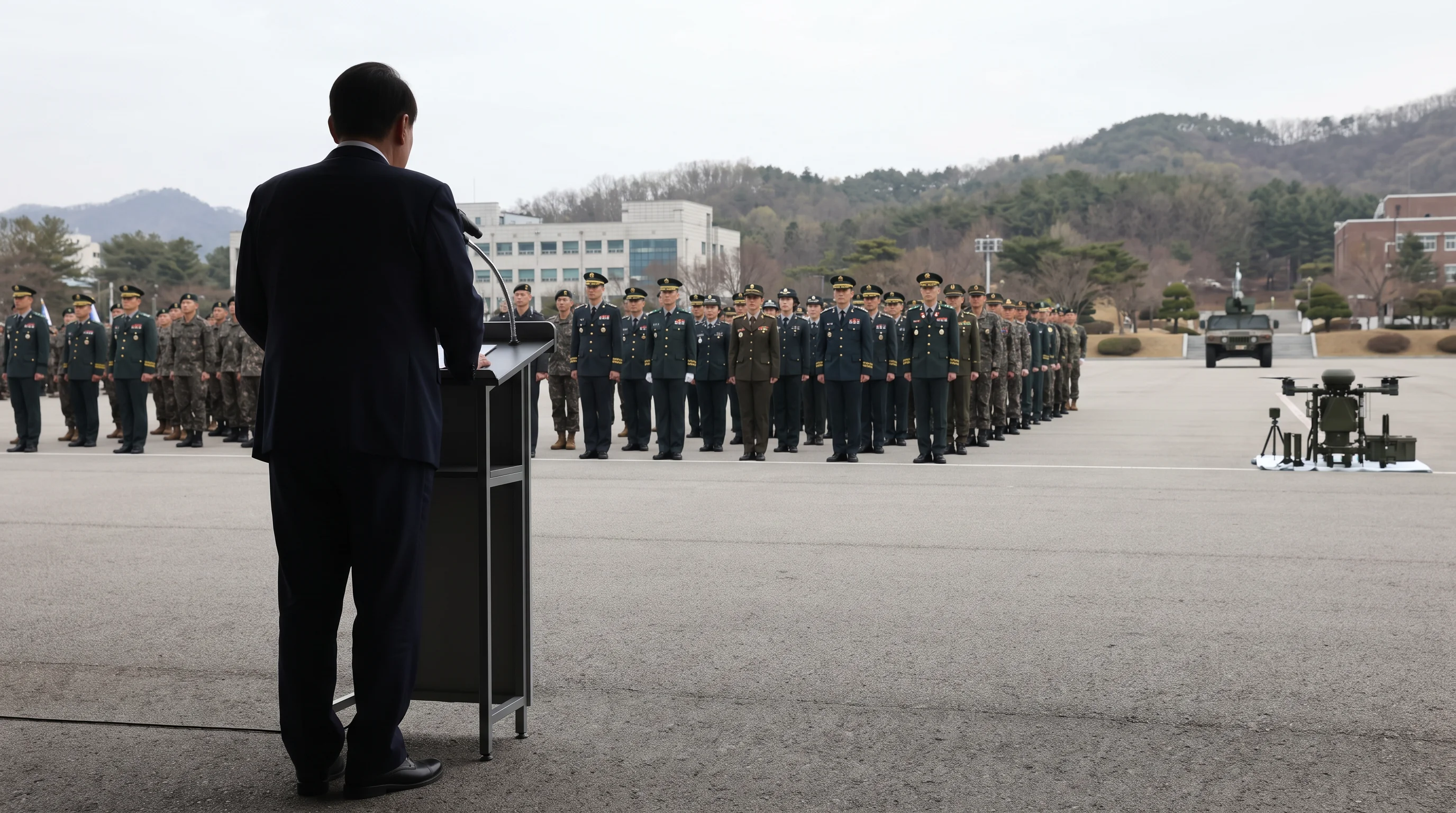
President Lee Jae Myung used an Armed Forces Day ceremony at Gyeryongdae on Thursday to reaffirm a policy of lowering military tensions with North Korea while urging Pyongyang to return to dialogue. He began by referring to soldiers injured in a recent land-mine explosion in the Demilitarized Zone, saying the incident remained painful and offering encouragement to service members.
Lee said the government would continue taking practical steps to reduce military tensions between the two Koreas and would work patiently to untangle the breakdown in relations. The message placed tension management and the restoration of communication alongside the military’s responsibility to respond to security incidents.
The mine incident tests the de-escalation line
The wording he used for the mine explosion was deliberately cautious. Lee referred to it as an “unexpected accident” rather than publicly assigning responsibility to North Korea. The presidential office has said the government will determine its response after the investigation is completed, while the military has provisionally assessed the incident as linked to North Korea and signaled that corresponding measures could follow.
That creates an immediate policy test. The government has to establish what happened in the DMZ and decide what response is warranted without allowing the incident to trigger a broader cycle of escalation. The balance between accountability for the blast and the administration’s stated goal of reducing military tension will be watched closely in the coming days.Lee also called on North Korea to join efforts to rebuild trust and restore suspended dialogue. He did not announce a timetable or a new negotiating format, but the appeal made clear that Seoul intends to keep its de-escalation policy in place while waiting to see whether Pyongyang responds.
The practical impact will depend on what follows the speech. The government has not yet detailed the next tension-reduction measures, and the final investigation into the mine incident could affect the pace and tone of those steps. North Korea’s response, if any, will also determine whether the call for renewed dialogue produces a channel for communication or remains a unilateral signal from Seoul.
The ceremony also highlighted military capability and service. A domestically developed anti-drone interception system called Cheongwang was demonstrated, and decorations were presented in honor of Lt. Col. Kim Oh-rang and Sgt. Jeong Seon-yeop. The program combined recognition of military sacrifice with a display of new defense capabilities.
Dialogue remains open, but the next steps matter more than the speech
At a lunch after the ceremony, Lee also reiterated his goal of completing the transfer of wartime operational control, arguing for stronger national responsibility over military command. Taken together, the remarks presented several parts of the administration’s security policy at once: maintaining deterrence, managing immediate risks along the border, pursuing greater command autonomy and leaving room for renewed inter-Korean talks.The next concrete signals will come from the mine investigation, the government’s decision on any response, and the specific steps Seoul takes to lower tensions. Whether North Korea answers the dialogue appeal, and whether military measures on either side reinforce or undermine that opening, will show how far the government can move from a statement of intent to a sustained change in inter-Korean relations.