

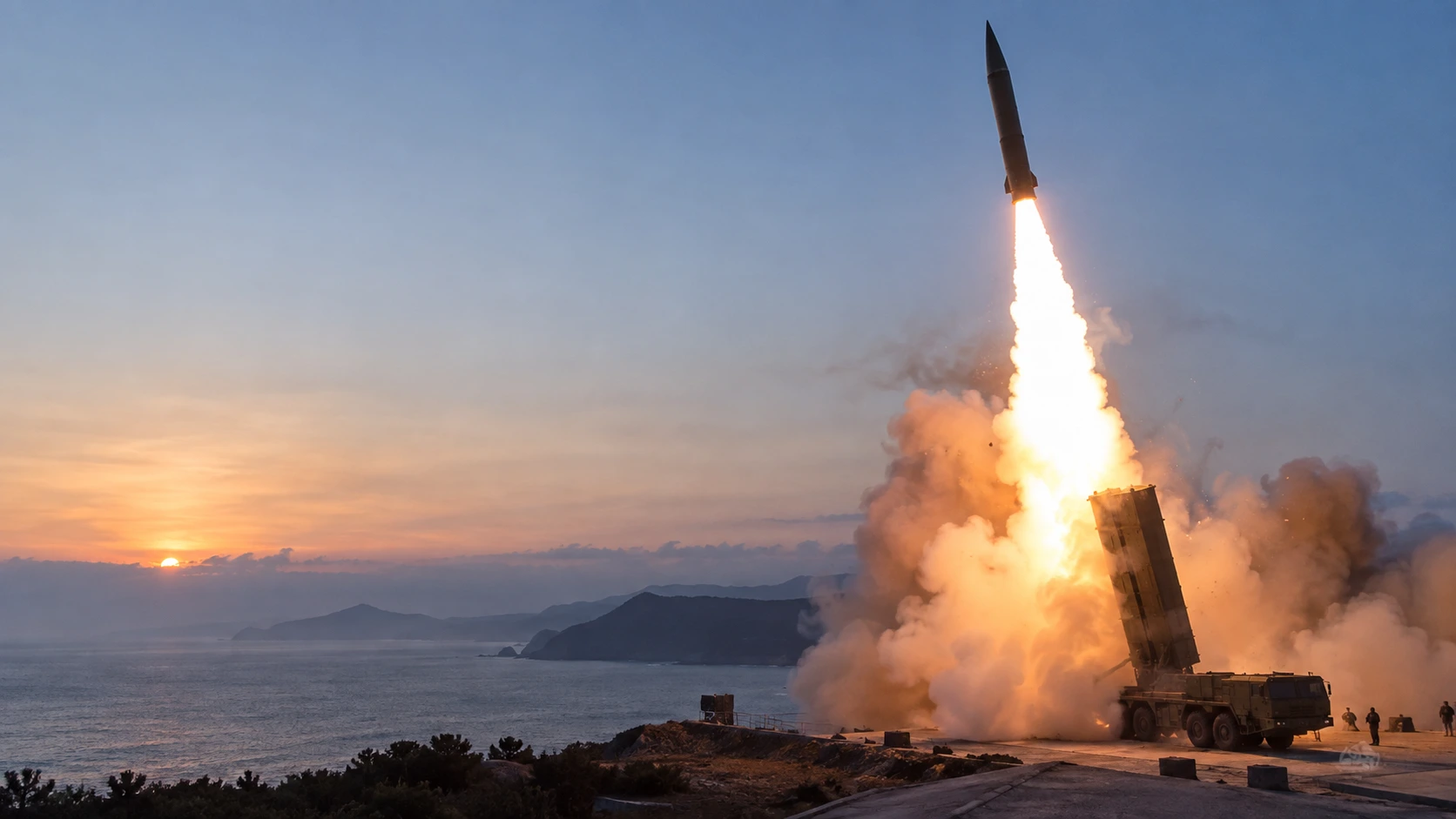
North Korea said it conducted a training launch of an intermediate-range strategic missile into the East Sea early on October 3, adding a new weapons claim to an already tense period on the peninsula. South Korea’s Joint Chiefs of Staff detected one ballistic missile launched from the Wonsan area at about 6:30 a.m. and assessed that it flew more than 700 kilometers. Japanese authorities separately reported a flight distance of about 680 kilometers.
- Launch time
- About 6:30 a.m. on October 3
- Launch area
- Wonsan, on North Korea’s east coast
- South Korean assessment
- One ballistic missile flew more than 700 kilometers
- North Korean description
- Intermediate-range strategic missile training
The disclosure was unusual because Kim Yo Jong, a senior North Korean official and the sister of leader Kim Jong Un, announced the exercise on the same day it occurred. She said the head of state had personally observed the training, language indicating Kim Jong Un was present. MBC reported that releasing results immediately through Kim Yo Jong represented a departure from North Korea’s customary handling of missile tests.
A launch paired with a technical message
Kim claimed the missile could alter its trajectory at low altitude and had incorporated artificial intelligence, allowing at least four flight patterns to be configured. She also cited the different South Korean and Japanese distance assessments as evidence that their tracking systems had lost the missile after an initial phase of flight. According to her account, the weapon used a wave-like trajectory intended to complicate interception.
Those assertions remain North Korean claims rather than independently established capabilities. The available reporting confirms the launch and the distance assessments released by South Korean and Japanese authorities, but it does not provide outside technical data demonstrating artificial intelligence guidance or proving that allied sensors lost track of the missile. A difference between publicly announced flight distances does not by itself establish a tracking failure.
The launch was North Korea’s 15th ballistic missile event of the year and came 13 days after its previous launch, according to MBC. It also followed a mine explosion in the Demilitarized Zone that had already intensified disputes between the two Koreas. Pyongyang denied responsibility for planting the mine and dismissed Seoul’s account as fabricated, while Kim Yo Jong sharply rejected South Korean calls for dialogue and measures to reduce military tension.
Security reviews and allied coordination
South Korea’s National Security Office convened an emergency security review with the Defense Ministry and the Joint Chiefs of Staff. Officials examined the military response, assessed the launch’s implications for national security and ordered a review of readiness that considered both the missile firing and the recent mine incident. The government called for an immediate end to launches that raise tensions.
Diplomatic coordination followed the military assessment. South Korean, US and Japanese officials held a telephone consultation to exchange information and discuss possible responses. The participants were Baek Yong-jin, director general for Korean Peninsula policy at South Korea’s Foreign Ministry; David Wylezol, the US State Department official responsible for Japan and Korea; and Ariyoshi Takashi, a senior official in Japan’s Foreign Ministry. The three governments maintain a channel for rapidly sharing assessments after North Korean ballistic missile launches.
The timing and presentation suggest that Pyongyang sought to do more than demonstrate range. By pairing the launch with immediate commentary from Kim Yo Jong, a reference to Kim Jong Un’s presence and claims about defeating tracking systems, North Korea framed the event as both a weapons exercise and a political warning. The message emphasized continued hostility toward Seoul while challenging the credibility of South Korean and Japanese surveillance.
Attention now falls on whether technical information from South Korea, the United States or Japan clarifies the missile’s trajectory and whether North Korea publishes imagery or additional specifications. Further launches, shifts in allied readiness and official findings concerning the DMZ mine incident would help show whether this episode remains a contained demonstration or develops into a broader cycle of military pressure.