

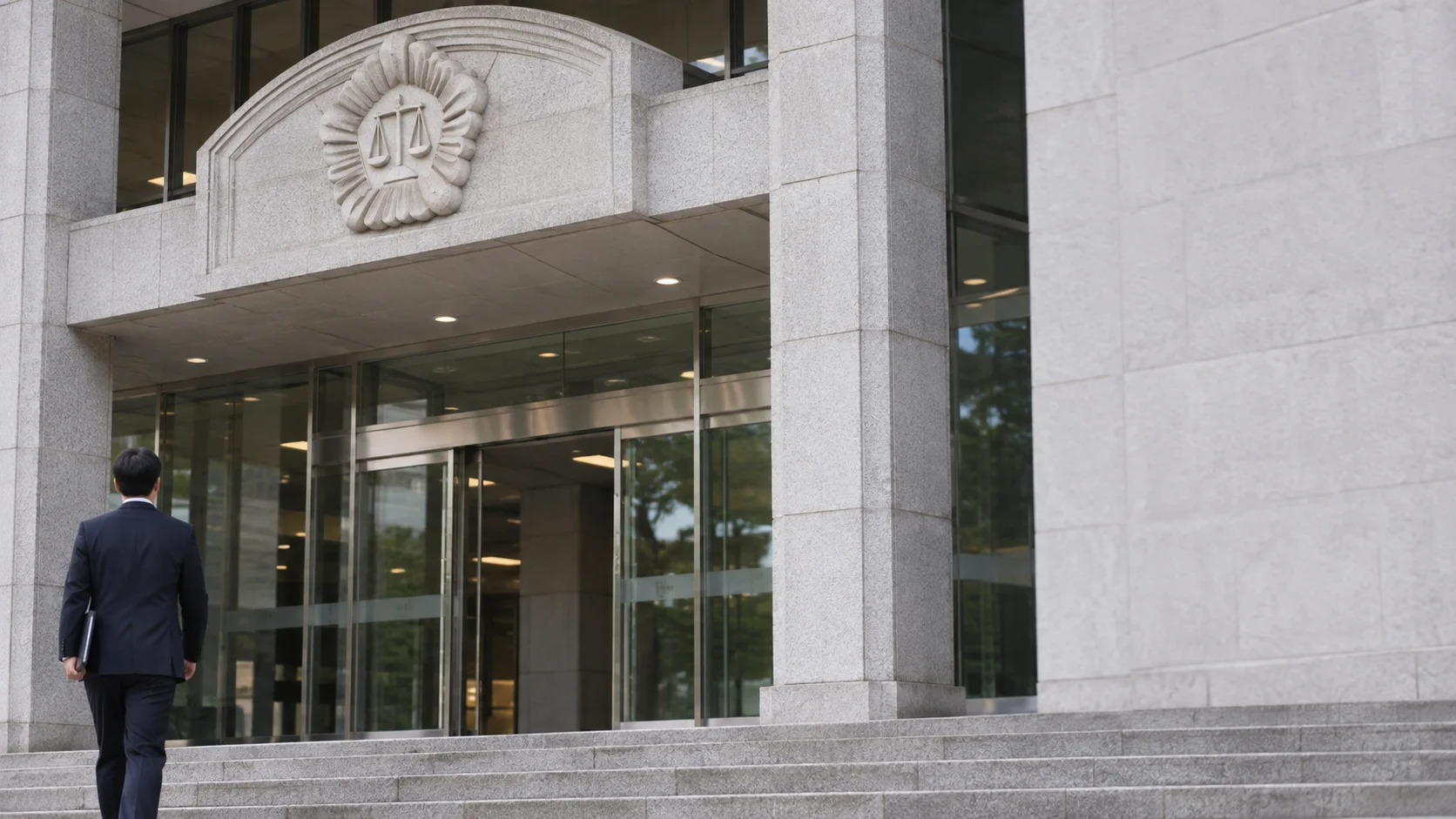
South Korea’s Supreme Court will rule on former Prime Minister Han Duck-soo’s insurrection-related case on Nov. 19, one day before his detention period expires. The full bench scheduled the decision for 4 p.m., turning a date originally announced as its second deliberation session into the day of judgment. The timing prevents Han’s release solely because the court had not ruled before the maximum detention period in his appeal ended at midnight as Nov. 20 begins.
The judgment will be the Supreme Court’s first final assessment of whether the Dec. 3 martial law declaration constituted insurrection under criminal law. It may therefore establish a legal reference point for other proceedings arising from the declaration, including the case against former President Yoon Suk Yeol. If the justices reject the appeals, Han’s case will become the first final insurrection conviction connected to the martial law episode.
A first final ruling on the martial law case
Han was prosecuted on allegations that he participated in the martial law process by proposing a Cabinet meeting and later attempting to obtain ministers’ signatures, conduct prosecutors said was intended to make the declaration appear to have undergone Cabinet review. The case requires the court to determine when a Cabinet member’s conduct crosses from involvement in an official process into participation in insurrection, and how the offense of performing an important role in insurrection should be interpreted.
- Ruling date
- Nov. 19 at 4 p.m.
- Detention deadline
- Midnight as Nov. 20 begins
- Appellate sentence
- 15 years in prison
- Trial sentence
- 23 years in prison
The lower courts agreed that Han bore criminal responsibility but differed over the extent of that responsibility. The trial court found active participation and sentenced him to 23 years in prison, ordering his detention. The appellate court maintained convictions on major allegations but acquitted him on parts of the case, including some claims tied to omissions in the Cabinet review process, and reduced the sentence to 15 years. Both the special prosecutor’s team and Han appealed.
The Supreme Court’s Second Division transferred the case to the full bench in August, citing the public importance of the issues and the need for historical and judicial assessment. A full-bench ruling involves the chief justice and the other Supreme Court justices, making the decision especially consequential for how lower courts approach related cases. The available evidence does not establish what result the court has reached or whether the justices will agree on every issue.
An unusual change to the court calendar
The scheduling change has drawn attention because Nov. 19 had previously been identified as a deliberation date rather than a judgment date. The Supreme Court said deliberations had been completed and a judgment date could therefore be set. During questioning at the National Assembly on Nov. 16, National Court Administration head Noh Kyung-pil cited completion of the written decision when explaining the change and said he did not recall a precedent for a deliberation date being used this way.
The ruling can affirm the 15-year sentence, overturn or modify the appellate judgment, or send disputed issues back for further proceedings, depending on the court’s conclusions. Its reasoning will be closely examined for the legal definition of insurrection, the treatment of actions by Cabinet members during the declaration process, and the required elements of important-role participation. Those findings, rather than the unusual scheduling alone, will determine how much guidance the judgment provides to the related trials that remain underway.