
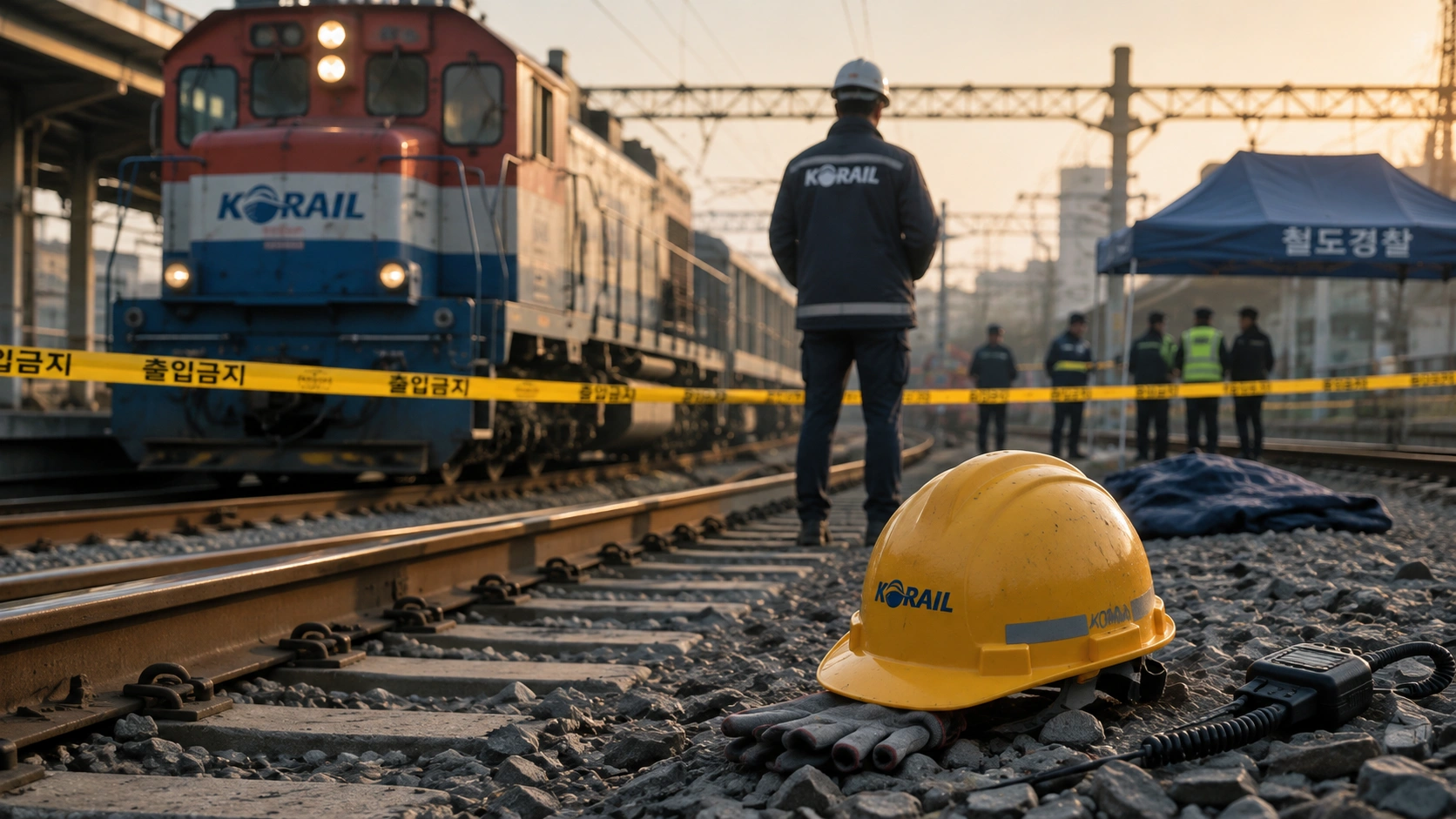
A Korail employee in his 50s was killed while carrying out shunting work at Uiwang Station on Saturday morning, prompting investigations by rail police, labor authorities and other agencies. The accident happened at about 7:20 a.m. inside the station yard, according to multiple Korean reports. The employee, described as a regular Korail worker, was struck or trapped by a train while working on shunting, the process of moving, connecting, separating or rearranging rail vehicles to form trains. Emergency responders arrived after a report that a worker had been caught under a train, but he had already died.
Korail halted the shunting operation after the accident, dispatched an initial response team and notified police, fire and labor authorities. The company apologized, offered condolences to the worker's family and said it would investigate the cause and prepare measures to prevent a recurrence. That immediate response matters, but it does not answer an unresolved part of the case: what happened in the sequence of movements inside the yard, and whether the safety rules designed for this kind of work were followed in practice.
Inside the rail-yard inquiry
Shunting is routine railway work, yet it places employees close to moving rolling stock in an environment where visibility, communication and timing have to work together. A failure in any part of that chain can leave little room to recover. One of the reports in the source material specifically says investigators are examining compliance with a two-person work requirement. That makes the inquiry more than a search for a single mechanical cause. It also puts work organization, communication and supervision inside the scope of what needs to be established.
For Korail employees who perform yard and train-formation work, the immediate concern is whether the investigation identifies a failure that can be corrected across similar operations. The reporting does not establish that the two-person rule was breached, and it does not quantify how often comparable shunting accidents occur. Those are important limits. The sources support an active investigation, not a conclusion about responsibility. Any broader judgment about staffing, training or management would be premature until the authorities reconstruct the accident and determine which procedures were in force at the moment it happened.
The most consequential development will be the findings from the rail police and labor investigation, especially the sequence of train movements, the worker's assigned task, who else was present and whether required safety procedures were observed. If the inquiry finds a procedural or organizational failure, the finding could matter beyond one station because Korail has already promised emergency safety measures and recurrence prevention. If it does not, investigators will still need to explain what hazard defeated the existing controls. Either way, the credibility of the response will depend on a specific account of how the accident occurred and what changes follow from it.