

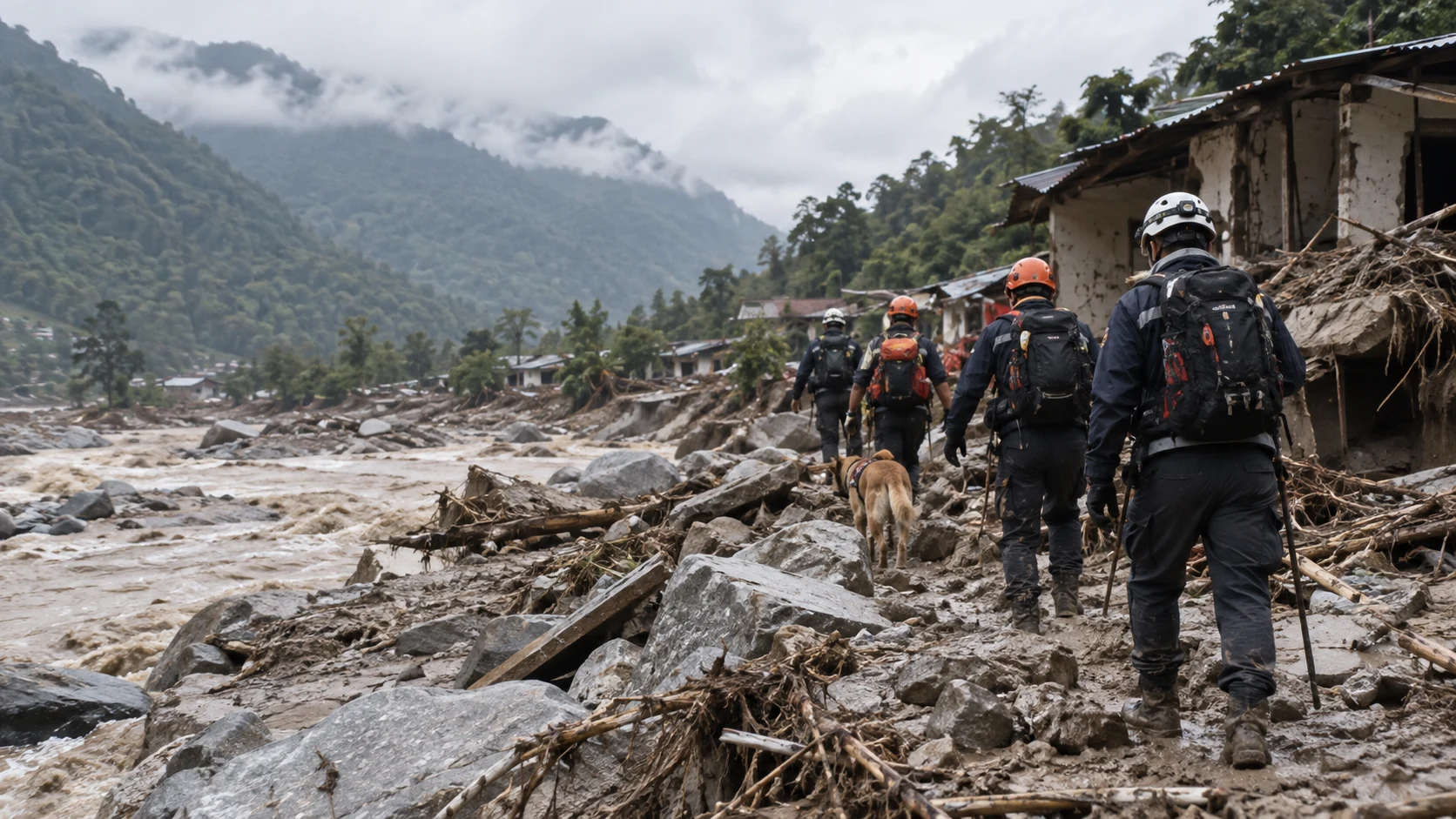
Nepal has agreed to support a ground search in the area where nine Koreans remain missing after catastrophic flooding, giving South Korea's emergency team access to terrain that families have been pressing authorities to examine. Korean officials said they secured Nepal's cooperation after days in which search teams had been unable to carry out the kind of on-foot operation they wanted in the relevant area. No missing Korean has yet been reported found.
The change matters because the search is now entering a different operational phase. Korea's overseas emergency relief team, known as KDRT, has already been working amid difficult post-flood conditions, but a search from the ground can reach places that aerial observation, tunnel work or searches along accessible routes cannot fully cover. A Korean rapid-response official in Kathmandu said the team was coordinating the details with the Nepali military and expected a search could begin once field conditions permitted.
Access changes the search operation
The nine Koreans have remained out of contact since the flooding, making the passage of time increasingly important for both search planning and the families waiting for information. Korean reports described the disaster as entering its thirteenth day. The new access does not mean the missing people have been located, and officials have not presented it as a breakthrough in the outcome. It is instead a concrete expansion of where Korean responders may look.
Nepal's cooperation is significant because local authorities control access, security and the support needed to move search personnel through damaged terrain. Search teams operating after floods can face unstable roads, debris, landslide risk and disrupted communications, so permission alone does not guarantee that every planned area can be reached immediately. Coordination with Nepali forces will determine the practical boundaries of the operation.
The test moves from permission to execution
For Seoul, the priority is to turn the diplomatic agreement into a workable search plan without overstating what it can deliver. The government has sent emergency personnel and maintained a joint rapid-response effort, while Korean media continue to follow multiple search locations and methods. Families are likely to focus on whether the teams can now examine specific places they believe may hold clues rather than on broader statements that the search remains active.
The shift also illustrates why the rescue effort has become more than a routine consular response. Nine citizens remain missing in a major overseas disaster, and Korea's ability to obtain access, coordinate with another country's military and keep families informed is now part of the government's performance test. Each additional day without a result raises the pressure for clearer explanations of what has been searched and what remains inaccessible.
The next meaningful update will be whether the promised ground search actually begins and what areas it covers. Until then, the new agreement should be read narrowly: Nepal has opened a path for a more direct search where the Koreans went missing, but the outcome remains uncertain. The operational value of the decision will depend on weather, terrain, local support and whether responders can turn access into a systematic search.