

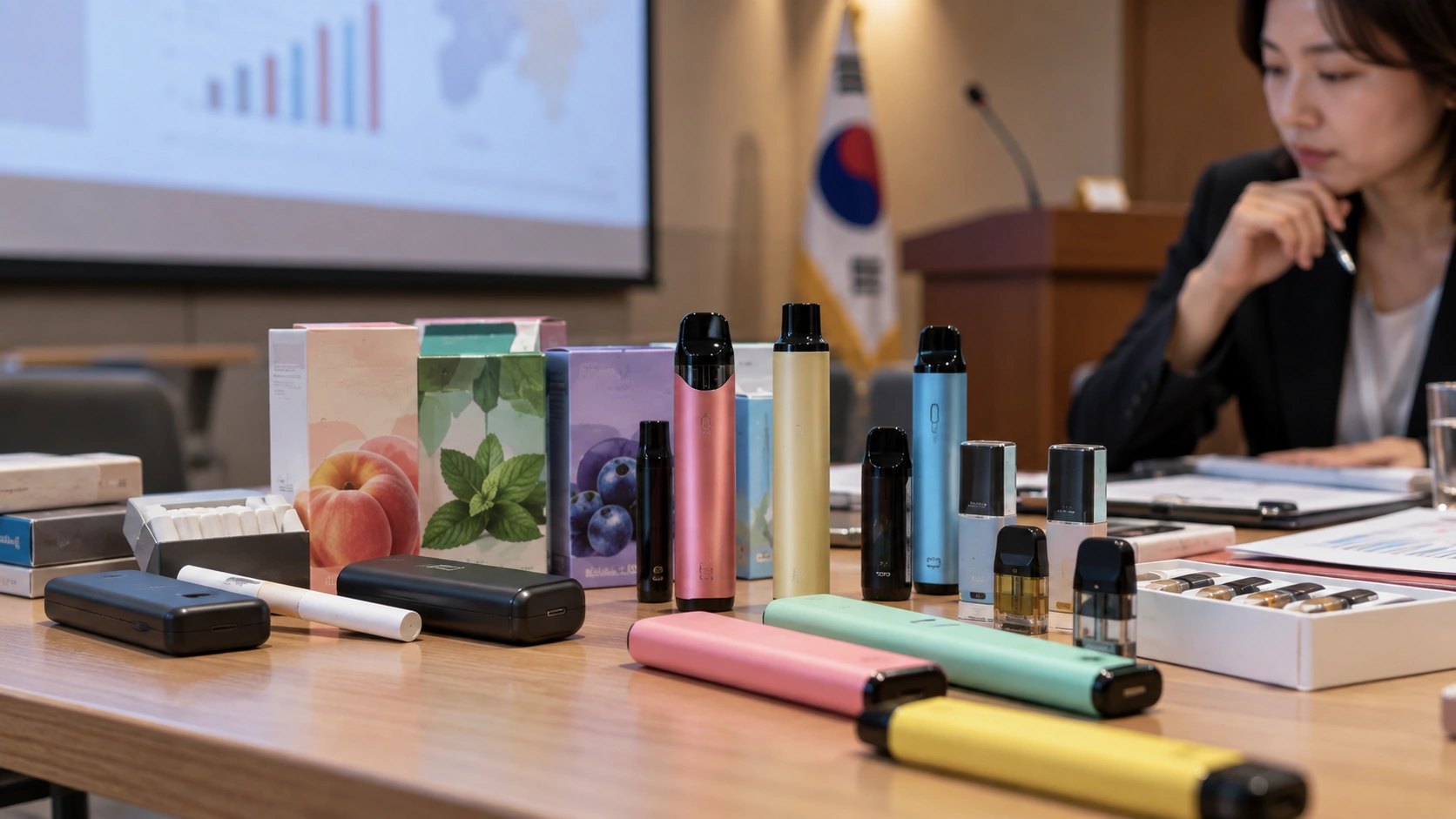
Korea's disease-control agency is putting flavored tobacco at the center of its annual tobacco-harm symposium, highlighting evidence that flavors can lower the barrier to first use and become part of the pathway to repeated smoking, especially among younger people.
The Korea Disease Control and Prevention Agency scheduled the 2026 Tobacco Harm Expert Symposium for September 18 in Seoul, bringing together public-health officials, researchers and local smoking-cessation staff. This year's program focuses on flavored tobacco, including product design, marketing, patterns of use and possible regulatory responses.
First use is the central warning
KDCA cited data from the seventh Youth Health Panel Survey showing that 80.2 percent of Korean adolescents with experience using tobacco products used a flavored product the first time. The rate was 82.7 percent among boys and 75.1 percent among girls. The agency also pointed to World Health Organization warnings that flavoring can encourage initiation and continued use.
The policy issue is broader than taste. Flavor can be built into ingredients, product formats, packaging and marketing, so regulation has to decide what counts as a flavored tobacco product and which parts of the sales environment should be covered. The symposium is examining differences by age, sex, product type and flavor, alongside evidence on health effects.
KDCA says the discussion is intended to connect accumulated research with future tobacco-prevention and regulatory policy. The policy test is whether the evidence presented at the symposium is translated into concrete proposals, including definitions, marketing restrictions or other measures aimed at reducing initiation among adolescents and young adults.