

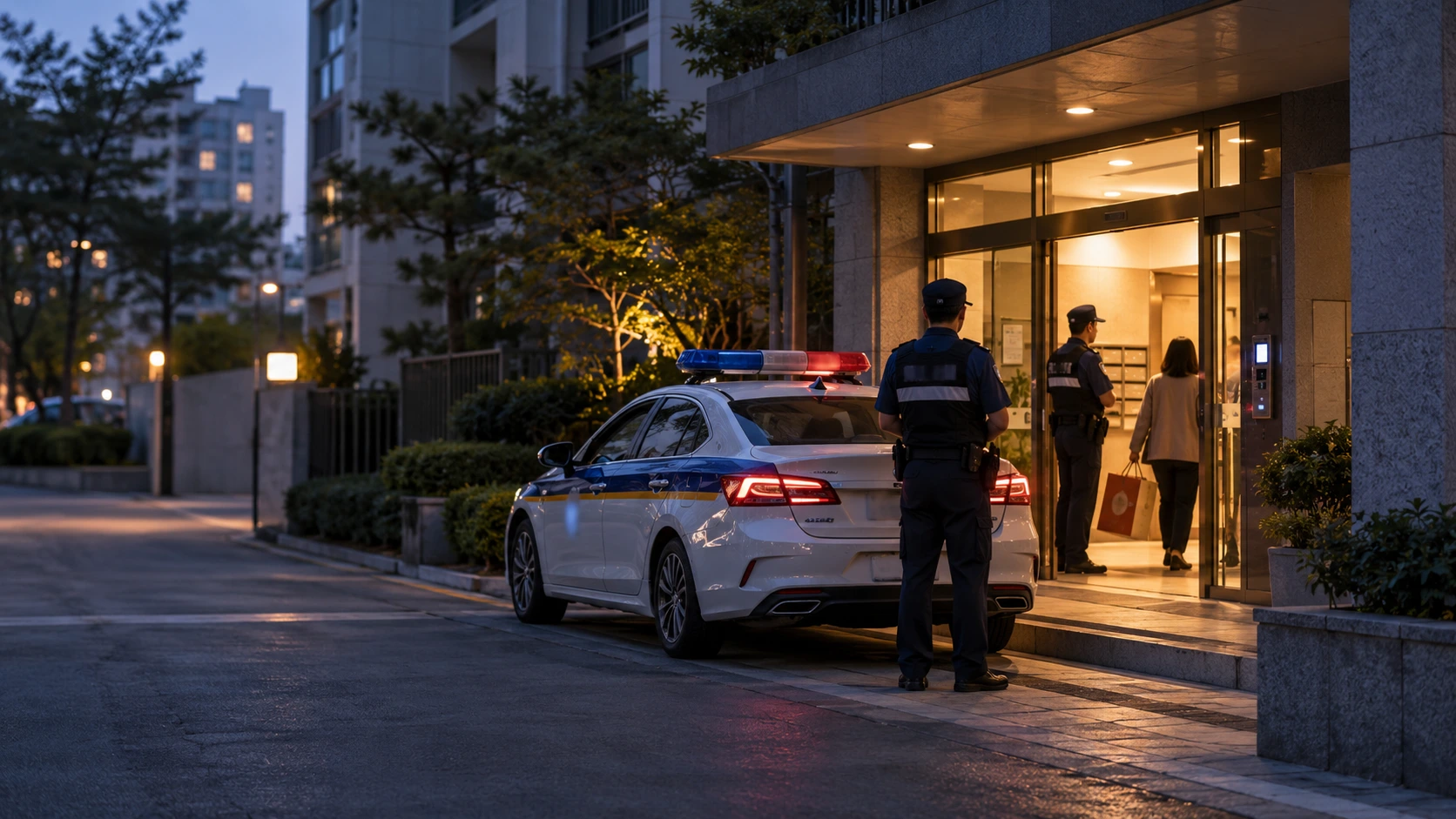
Chuseok brings millions of families together, but police data show that the holiday also produces a sharp and recurring increase in domestic-violence calls. During the seven-day Chuseok holiday last year, police received 8,017 reports through the 112 emergency line, an average of 1,145 a day.
That daily rate was 44.5% above the ordinary average of 792 domestic-violence reports a day across the full year. In simple terms, the holiday period produced about 353 more reports each day than the normal daily baseline. Over a week, that difference represents thousands of additional calls reaching police during an already concentrated travel and family period.
The gap is not a one-off spike. The holiday daily average cited in the data rose from 914 in 2021 to 915 in 2022, 937 in 2023, 1,049 in 2024 and 1,145 last year. From the first figure in that sequence to the most recent, the holiday daily average increased by more than 200 reports. That steady rise is more important than any single year's percentage because it shows the same pressure returning across successive holidays.
A recurring holiday risk pattern
The pattern matters because it turns a predictable national holiday into a recurring period of elevated risk inside homes. Police received 289,368 domestic-violence reports over the full year, but Chuseok compressed a much higher rate of incidents into a short period when relatives and partners are often spending more time together.
The figures do not establish a single cause for the increase. They show when reports rise, not why every individual case occurs. That distinction matters for prevention. A national pattern can justify extra preparation without pretending that all cases follow the same path or arise from the same trigger.
Police face both volume and protection pressure
For police and victim-support services, the holiday surge changes the operational problem. Authorities have said they will strengthen victim protection during this year's Chuseok and respond more strictly to perpetrators, including in crimes involving personal relationships. The challenge is not only handling more calls. It is identifying which reports require immediate separation, protection or follow-up before harm escalates.
The numbers also give authorities a measurable benchmark. If this year's daily average again approaches or exceeds last year's 1,145 reports, the five-year upward pattern will continue. If it falls, the comparison will still need context: fewer calls can reflect less violence, but call volume alone cannot prove that victims are safer.
That is why the response has two dimensions. Police must absorb a predictable increase in emergency demand, while victim-protection systems have to make sure high-risk cases are not lost inside the larger volume. The same dataset that shows a holiday spike can therefore be used to plan staffing and to judge whether protection measures are reaching people when pressure is highest.
The rising five-year pattern makes Chuseok a planning problem rather than a surprise. This year's holiday will provide the next factual test of both the trend and the response built around it.