

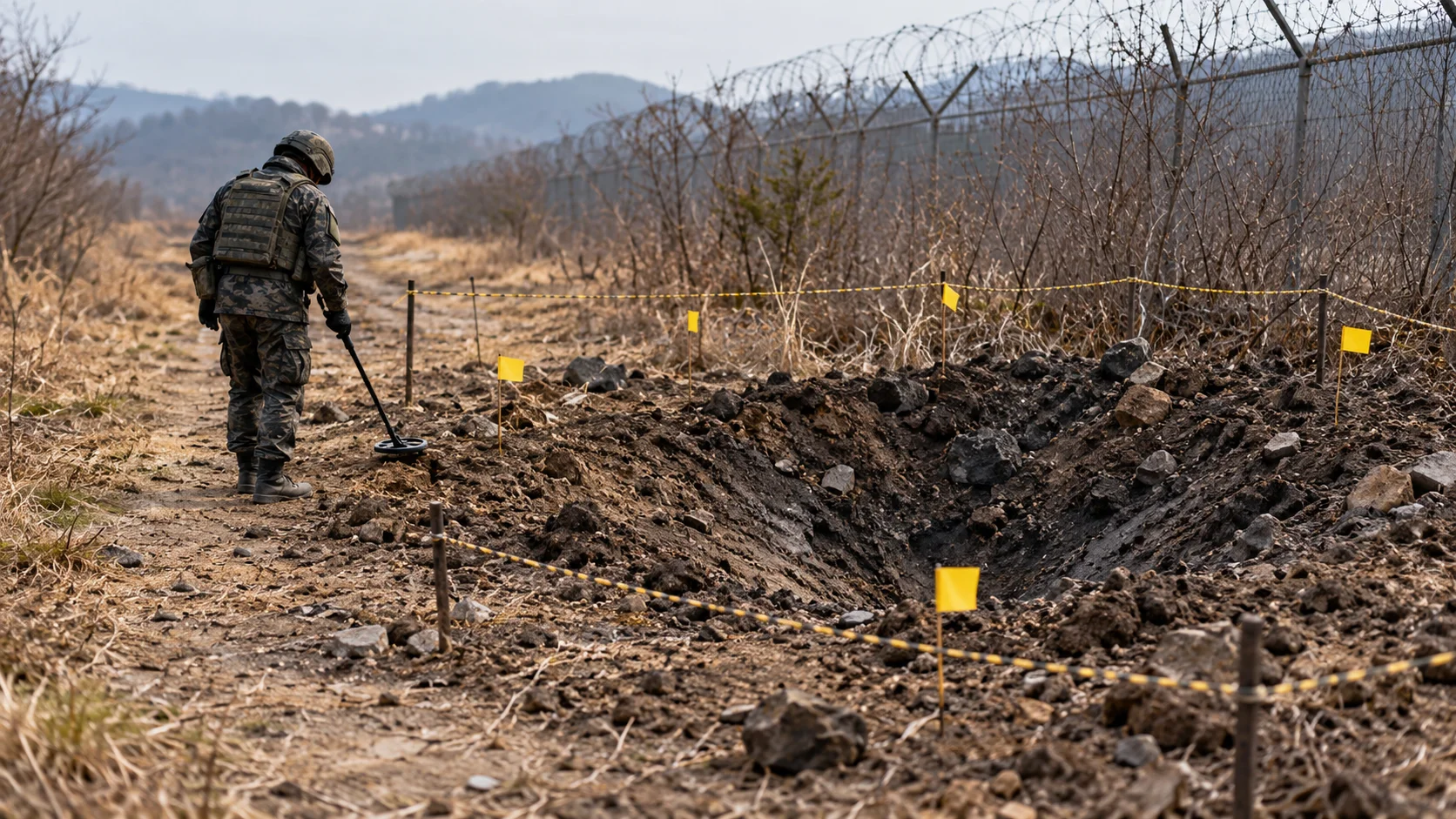
South Korea's military says a North Korean mine is now the most likely cause of the blast that injured personnel in the western Demilitarized Zone last week. The assessment follows an on-site investigation that found two blast craters and evidence that officials say does not match South Korean mines.
Investigators reached within two meters of the blast site and found two craters matching soldiers' accounts of two separate explosions. One soldier was injured in the first blast, and a battalion commander approaching to secure the area encountered a second explosion about a minute later.
Soldiers also told investigators that a North Korean plastic anti-personnel mine was seen about one meter from the blast point. The military says an unexploded mine was found as the unit withdrew, adding another physical clue to the witness accounts.
Evidence behind the assessment
Forensic analysis strengthened the assessment. The National Forensic Service detected TNT-related material on equipment worn by injured soldiers, while fragments recovered from the scene were inconsistent with South Korean mines.
The military says the evidence makes its own mines an unlikely explanation, but final attribution has not yet been announced. A joint analysis with the United Nations Command is expected to determine whether the device was definitively North Korean.
Attribution and response
If that conclusion is reached, the military says it could consider corresponding measures and hold North Korea responsible. A confirmed North Korean mine would make the incident a broader question of patrol safety, responsibility and response along the heavily fortified border.