

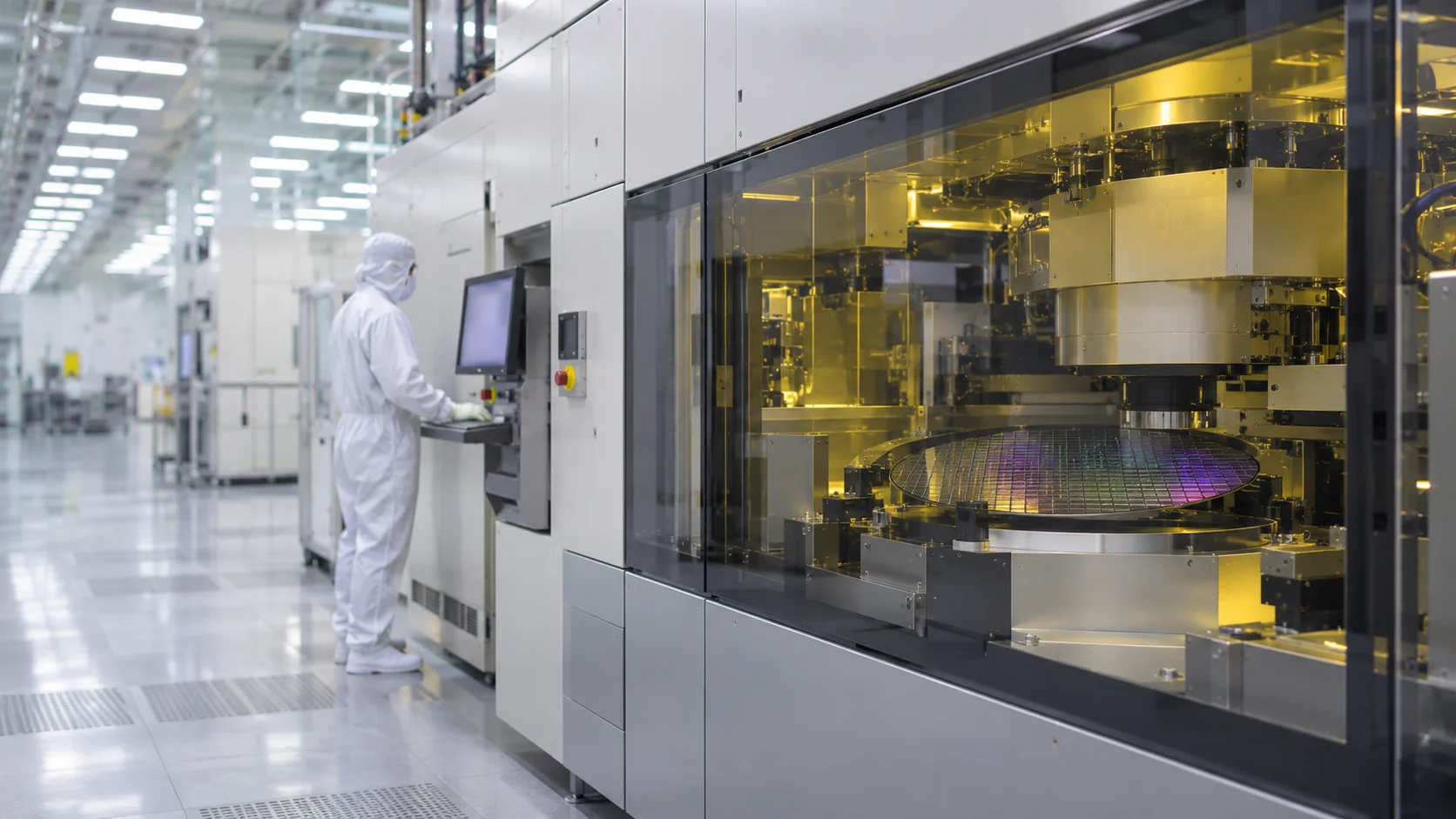
The sharpest image of South Korea's week was a falling stock market. By Friday, both the Kospi and Kosdaq had lost more than 11 percent in five trading sessions, even as new trade figures showed extraordinary strength in semiconductor exports. The apparent contradiction was real: Korean companies were selling more abroad while investors reassessed the price and risks of future growth.
Elsewhere, the National Assembly passed a bitterly contested special prosecutor bill as the new criminal justice system struggled with everyday case handoffs. Separate disclosures exposed the personal records of presidential travelers, financial customers, merchants and employees. Regional medical shortages and new workplace protections added another, more immediate question: how quickly can a national decision improve the services and safeguards people actually use?
Korea's market selloff ran against a strong export economy
The week began with an uncomfortable piece of context. The Kospi had already lost 16.19 percent in October, one of its steepest monthly declines, despite robust earnings from Samsung Electronics and SK Hynix. Investors were increasingly questioning whether American technology companies could maintain their planned spending on artificial intelligence infrastructure. Those concerns traveled through the Korean chip supply chain, but the available evidence cannot assign every market move to a single US company or political event.
The selling deepened during the new week. By the November 6 close, the Kospi stood at 5,059.69, down 11.71 percent from the previous Friday, while the Kosdaq had fallen 11.06 percent. The Kospi briefly traded below 5,000 during Friday's session, triggering a 20-minute market-wide trading halt after a sufficiently sharp intraday decline. The weekly market tally also recorded a weaker won, lower Korean government bond yields and a rise in gold. Each points to greater risk aversion, although the figures alone do not prove why investors changed positions.

The trade reports supplied a different measure of the economy. October exports reached a reported $115.3 billion, with semiconductor shipments at $56.4 billion. A separate Bank of Korea release showed September's current-account surplus reaching $61.46 billion. The services account, however, remained in deficit. Strong chip demand, exceptional export receipts and weak equity prices can coexist because they measure different things: completed sales and external payments on one side, expectations about future returns on the other.
That divide complicates the government's fiscal debate. President Lee Jae-myung took a proposed 820.9 trillion won 2027 budget to parliament with promises of broader growth, while the opposition questioned the size and allocation of new funds. The semiconductor sector may be generating revenue and taxes, but that does not settle how much fiscal room belongs to debt reduction, regional services or future industries. The market panic made the question more urgent without answering it.
Parliament moved quickly while the new justice system struggled with procedure
One month after South Korea separated prosecution from investigative functions, case handoffs were growing more cumbersome. Between October 2 and 29, prosecutors requested supplementary police investigation in 12,465 cases. In an earlier October sample, prosecutors did not submit 36.2 percent of police detention-warrant requests to court, compared with 22.2 percent during January to September. The figures do not isolate the reform's effect on every case. Reporting from working prosecutors and police nevertheless described a specific bottleneck: a missing item of evidence or a small correction can now require a formal return to police rather than direct prosecutorial work.
That procedural pressure matters to suspects and victims alike. One burglary case reported during the week turned on an omitted time of sunset, potentially relevant to the offense charged. Securing an ordinary factual correction had become more complicated. Judges were also confronting a different verification problem: in a Supreme Court survey, 196 respondents to one question said they had encountered nonexistent legal precedents in filings. The survey on fabricated citations did not establish that every bad citation came from generative AI, but it revealed additional checking work inside courts already managing procedural change.
At the legislative level, the pace was faster. After an opposition filibuster lasting more than 24 hours, the National Assembly passed a special prosecutor bill on November 6 by 167 votes to one among lawmakers present. The People Power Party boycotted the final vote and argued that the inquiry into allegedly manipulated investigations under the Yoon Suk Yeol administration could interfere with existing cases. The Democratic Party said the inquiry was necessary to establish whether official powers had been misused. The bill provides a defined investigative mechanism; the rival claims about its motive and constitutional implications remain disputed.
Former President Yoon meanwhile defended his December 2024 martial-law declaration in his appellate closing statement. The court is scheduled to rule in January 2027. The week's institutional picture was unusually concrete: lawmakers created new investigative authority, the prosecution overhaul was producing measurable friction, and courts were dealing with the quality of the evidence before them. These are separate processes, but all three affect how readily legal decisions can be reached and trusted.
Data exposure spread across very different kinds of institutions
At the start of the week, a passenger file from the presidential aircraft was reported to have remained downloadable for months. It contained personal details for 168 people, including the president, first lady, staff, security personnel and journalists. The presidential office and foreign ministry said they were responding, and police opened an investigation. The available accounts did not identify who uploaded the file or establish the source of the exposure.
Financial institutions and workplace systems produced their own disclosures. Mirae Asset Securities reported two intrusions affecting 39,055 people: roughly 3,800 customer account records in a mobile service and personal information associated with 35,255 current or former workers and contractors in a separate groupware system. The company reported no confirmed financial loss. Those two categories of information should not be combined into a claim that all 39,055 customers had accounts or passwords stolen.

The Daeguro public delivery app breach affected settlement account details for about 25,000 merchants and login credentials for around 250 present and former staff. The risk reaches the payment information small businesses depend on, although no related financial loss had been confirmed. Separately, HYBE disclosed employee and partner-personnel data exposure through connected document and expense systems. These incidents came from different organizations, systems and reported attack paths; a shared perpetrator or vulnerability has not been demonstrated.
One apparent cyber headline belonged in a different category. Crypto exchange GOPAX stopped trading and transfers after receiving an attack threat and moved assets toward offline storage. It reported no confirmed breach or theft at that stage. The distinction matters: a disclosure, a confirmed intrusion and a precautionary shutdown call for different responses. For users, the common practical concern is knowing what information or access was actually affected, rather than treating every alarm as the same kind of hack.
Regional medical schools advanced, but access gaps are already here
The government selected Sunchon National University and Gyeongkuk National University for new regional medical schools, allocating 60 and 40 annual student places respectively. The selection is intended to strengthen medical education and public health services in Jeonnam-Gwangju and North Gyeongsang. Preparing buildings, teachers, training hospitals and a path to keeping graduates in underserved areas will take years. The first entering class at Gyeongkuk is targeted for 2030.
Current access figures explain why those years matter. In the Haenam medical region, only 10.9 percent of obstetrics care was used within a one-hour journey in the reported 2024 administrative data, compared with 87.7 percent in parts of Gwangju. Another analysis identified three North Gyeongsang counties with no practicing obstetrics and gynecology specialist in 2025. Its longer-range projections depend on doctors retiring at a specified age without replacement and should be read as scenarios, not fixed outcomes.
Even existing hospital capacity appeared fragile. The police search of Ajou University Hospital's pediatric emergency center led seven specialists to threaten resignation and prompted the provincial police agency to express regret. The Ajou dispute raised a question that more university places cannot answer on their own: how should investigators collect evidence at an essential medical facility without disrupting care? Officials were drafting guidance, but the outcome for the specialists remained unresolved in the reported material.
Other policy proposals addressed the cost of treatment rather than where it is available. The Health Ministry proposed lowering covered-service copayments for registered rare and severe diseases from 10 percent to 7 percent, potentially affecting about 1.36 million people. The measure was still open for public comment through November 16 and did not cover every medical expense. In Incheon, parents of adults with developmental disabilities asked for workable guardianship, housing and trust arrangements after parental care ends. The needs are different, but both show how much household security depends on the details of long-term care systems.
Workplace protection moved from legal promises toward enforcement
Cabinet-approved decrees set out new workplace duties on reemployment, sexual harassment and childcare-related working hours. The obligations come in stages. Existing older-worker reemployment assistance for certain large employers will expand to workplaces with at least 500 staff in July 2027 and 300 in July 2029. Separate harassment-penalty and childcare-notification provisions are scheduled to start November 27, 2026. A qualifying approved childcare-hours request must receive written or electronic notice within 14 days.
The announcement changes who is covered and when. It does not guarantee another job to every older employee, and employers below the future thresholds are not suddenly covered this November. That distinction matters because implementation takes place in company personnel procedures long after the legislation appears in a headline.
Enforcement was more immediate elsewhere. The labor ministry decided to place 777 habitual wage-defaulter employers under one-year credit restrictions, potentially limiting loans and public support. It also began inspections at 100 workplaces for excessive hours and unpaid overtime, with particular attention to younger workers. The sanctions and inspections are distinct measures, but both put costs on practices that workers may struggle to challenge individually. Repayment, corrections and compliance will be more informative than the number of inspections announced.
A stalking killing exposed the limits of temporary protection
The killing of a woman in Seoul's Eunpyeong District drew attention to a protection order that had already expired. Her former partner, a suspect in the murder case, had been subjected to temporary measures and electronic monitoring following a stalking report. The monitoring requirement ended about two weeks before she was killed. Investigators still needed to clarify the sequence of events, and the available reports did not establish why the measure was not extended.
Regional data placed that case against a longer record of reported threats. Stalking reports in Gangwon increased from 574 in 2021 to 1,328 in 2025, though changes in reporting and enforcement may affect that comparison. Police were considering broader electronic-monitoring and access-restriction measures. The underlying problem is continuity: a person at risk can remain vulnerable when a court order expires, even if the earlier intervention was legally proper. The investigation and policy debate must still establish which safeguards would have made a difference in this case.
Worth remembering
Five Gangneung childcare teachers were charged over alleged infant abuse
Prosecutors charged five teachers, three of them in detention, in a case involving 14 children reported as victims. Parents described hundreds of suspicious scenes on surveillance footage; those counts remain allegations rather than confirmed criminal acts. The trial will determine individual responsibility.
Thirteen Incheon Airport facilities were flagged for seismic risk
A preliminary review identified possible vulnerability at 13 older airport facilities during earthquakes of magnitudes 6.1 to 6.5. That result calls for detailed inspection, not a finding that all airport buildings are unsafe. The airport plans further evaluations and reinforcement decisions.
Two Goryeo-era shipwrecks were identified off Taean
The Mado 5 and Mado 6 discoveries yielded cargo tags and objects that help reconstruct shipments of rice and regional goods toward the Goryeo capital, including a voyage dated to the early thirteenth century.
The Danwon High School 4.16 Archive gained UNESCO regional recognition
The 235,220-record collection preserves the everyday lives of students lost in the 2014 Sewol ferry disaster and the public and family response. It joined UNESCO's Asia-Pacific Memory of the World list, separate from the international register.
Samsung Lions took a 3-1 Korean Series lead
After losing the opener to KT Wiz, Samsung won three straight games, including a 10-5 Game 4 victory. As of the week's final published result, one more win would secure the Lions' first championship since 2014.