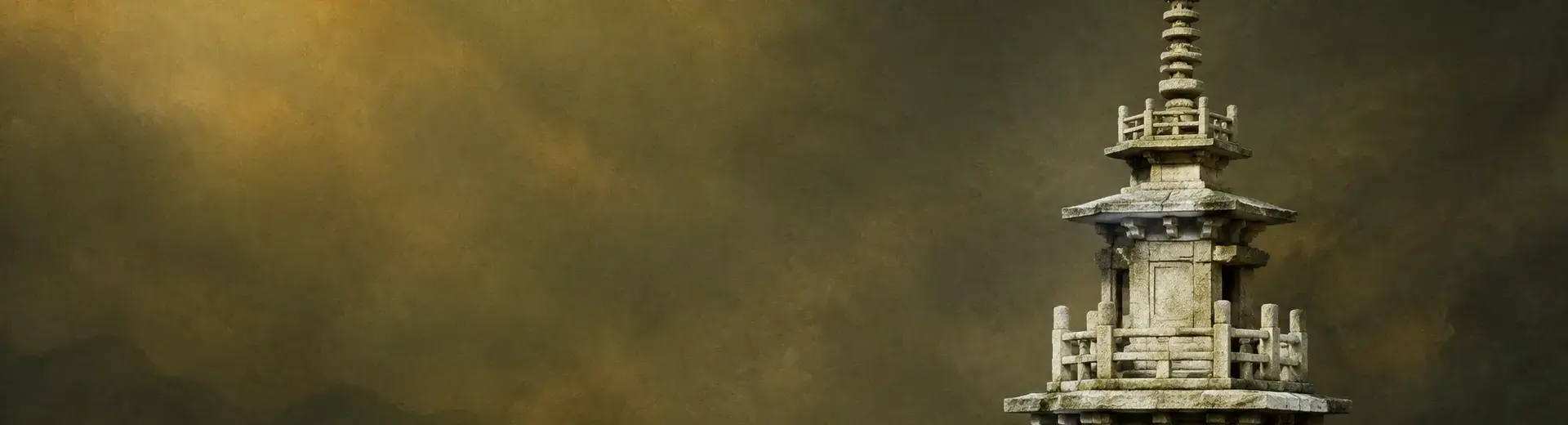

Pak Kyongni Literature Park
The preserved Wonju home where novelist Pak Kyongni finished Toji anchors a literary park, garden and five-storey interpretation centre
Author biography, personal objects, Toji character displays, original house, garden walks and literature interpretation
Original low-rise residence and garden, fiction-inspired outdoor areas and a separate five-storey Literature House
The survival of the author's actual writing rooms gives this memorial its strength; the newer museum makes the epic's huge cast approachable
The house a housing scheme almost erased
A garden and vegetable plot survive where a housing project could have erased the house in which Pak Kyongni finished Toji. The novelist moved to Wonju's Dangu-dong in 1980. Her writing room, the grounds she tended and the house remain at the centre of the park
On 15 August 1994, Pak completed Toji, twenty-five years after the epic novel began appearing in 1969. Its fourth and fifth parts had been written during her years in Wonju. The date matters beyond a literary anniversary: the study in which that long project ended belongs to a place that visitors can encounter today
It nearly disappeared. In 1989 the property was drawn into a residential land-development district. Cultural figures urged its preservation, and work on a literature park began in September 1997. The grounds were completed in May 1999. The intervention retained an actual working writer's home, garden and kitchen plot, a different kind of document from the replica interiors often built for literary tourism
A novelist's garden becomes a fictional map
Across roughly 11,438 square metres, the grounds combine Pak's preserved house, study and self-tended garden with places named for settings and characters in Toji. Pyeongsari Madang evokes the novel's village setting, Hongi Dongsan takes its name from the child Hongi, and Yongdurebeol represents another part of the fictional landscape. These names translate part of a sprawling novel into a walkable site. The grounds even include a pond linked to her grandchildren, a small trace of the domestic life that existed before the memorial
Toji, commonly translated as The Land, spans five parts and sixteen volumes, following interwoven families from late nineteenth-century Korea into the middle of the twentieth century. The saga makes land, family fortunes and changing social relations part of one long story. Readers who know its characters can recognise names outdoors; newcomers gain more from starting with the novel's character displays in the Literature House. The original residence and the wider, deliberately arranged park answer distinct questions: how Pak worked, and what fictional world she created
The site was first called Toji Literature Park. In 2008 the name became Pak Kyongni Literature Park, partly because visitors confused it with the separate Toji Culture Center. The change also shifted attention from one book to its author
A five-storey guide to a vast novel
The Literature House opened in 2010 beside the older home. The second-floor exhibition pairs photographs and a timeline of Pak's life with her personal belongings. The third enters the book itself through images of its historical setting, a chart mapping relationships among characters, selected scenes and video. That relationship chart is a particularly practical aid for a novel spanning so many lives. English captions for the chart and the second-floor timeline have not been confirmed, nor has an English-language guided tour. Visitors who depend on translations should contact the park before travelling rather than assume the exhibitions are bilingual
A resource room on the fourth floor supports research into her writing; the fifth houses a seminar space. The book café and outdoor literary grounds offer another way to use the site. A visit can move between the tangible domestic evidence of decades of work, the named fictional landscapes and a modern display that makes the novel's people legible
The old house is the rare part of this combination: it connects the long writing process to the very rooms and vegetable beds Pak used. The museum's five floors give the interpretive framework, while the park preserves ordinary details that would have vanished with the abandoned redevelopment
Before you go
Staffed exhibitions and explanation run 10:00–17:00, with a lunch interval from noon to 13:00; Monday and designated holidays are closure days. Individual viewing and explanations are free, but groups requesting guidance must reserve by phone. Indoor photography is prohibited. Bus 16 runs from the intercity/express terminal area to the park's named stop; bus 19 connects Wonju Station without a transfer. With the preserved residence and five-storey museum on the same grounds, both deserve time during the visit
- Hours
- Tue–Sun 10:00–17:00 for exhibits and guided explanation, excluding a 12:00–13:00 lunch interval. Closed Mondays, Jan 1 and Seollal/Chuseok holidays
- Admission
- Free entry and free guided explanation; groups seeking a guided visit need telephone booking
- Access
- 1 Toji-gil, Dangu-dong, Wonju. No indoor photography or food in exhibitions. Groups book by phone, 033-762-6843 or 033-737-2820. The onsite lot has 18 spaces
- Transit
- City bus 16 goes from opposite Wonju intercity/express bus terminal to 박경리문학공원 (about 13 min). Bus 19 connects Wonju Station to the park without transfer (about 41 min). Check departures