

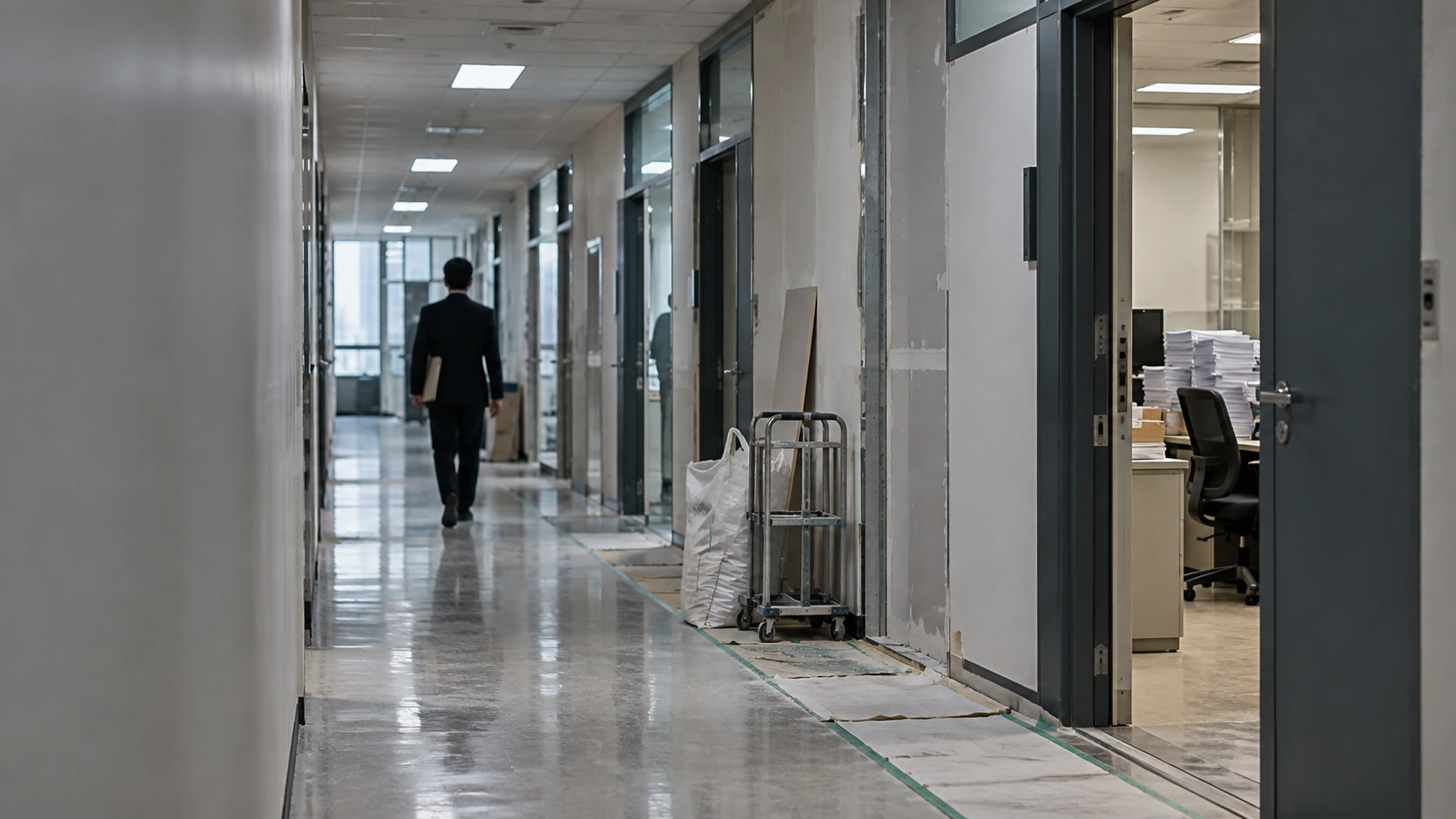
Korea spent the week watching policies that had been debated for months move into situations where procedures mattered more than promises. On October 2, the Prosecution Office and the Serious Crimes Investigation Agency opened under a criminal justice structure that separates prosecution from investigation. Within hours, the transition was visible in unfinished offices, improvised complaint receipts and conflicting courtroom responses to the status of dispatched prosecutors.
Security policy faced a different implementation test. The investigation into the September 21 DMZ blast moved from suspicion toward physical evidence of North Korean mines south of the Military Demarcation Line, while President Lee Jae Myung kept his commitment to reducing military tensions and restoring dialogue. By the end of the week, North Korea had rejected that approach again and launched a ballistic missile accompanied by unverified claims about artificial intelligence and evasive flight. Financial institutions were also dealing with a widening series of intrusions, while economic data pointed in several directions at once.
Prosecution reform met its first operational test
The new criminal justice structure had already begun taking shape before opening day. The Justice Ministry kept many senior prosecutors in corresponding posts, favoring personnel continuity while the legal division of labor changed. Under the new model, prosecutors focus on indictments, maintaining cases in court and judicial oversight. Direct and supplementary investigation powers move elsewhere, leaving prosecutors to request additional investigative work when they believe a referred case is incomplete.
That design entered service with practical pressure already visible. Reporting before launch cited leadership vacancies, staffing reductions and roughly 165,000 unresolved cases. The Serious Crimes Investigation Agency was still completing its organization and personnel arrangements, while the Prosecution Office had to establish how case transfers, additional-investigation requests and courtroom responsibilities would work under live conditions.
Opening day made those questions concrete. At the Serious Crimes Investigation Agency, some offices were still under construction. In one reported case, a citizen filing a complaint could not receive a standard receipt, so an official stamped the cover of the complaint instead. The issue was small in form but important in function: the new system depends on citizens knowing where a filing entered the process and which institution is responsible for it.
Courtrooms exposed a more consequential uncertainty. In a trial concerning alleged favoritism in the relocation of the presidential residence, the Seoul Central District Court questioned whether a prosecutor dispatched to a special counsel team under the former prosecution service still had valid authority after the institutional change. The court ended the hearing after about 12 minutes and moved the scheduled conclusion to October 16. In a separate appeal involving Seoul Mayor Oh Se-hoon, a court raised a similar issue but allowed an assistant special prosecutor to continue the argument. Daegu's new prosecution and investigation bodies also reported civil-petition system errors, incomplete facilities and computer systems, extending the implementation problem beyond Seoul.
President Lee described the overhaul as the end of an era in which prosecutors concentrated investigative and indictment powers and said stronger police oversight must follow. The People Power Party argued that splitting the system could disrupt investigations and create public-safety gaps. The first useful evidence will come from ordinary case handling: whether complaints are accepted consistently, records move without delay, courts receive properly authorized representatives and victims do not lose time between institutions.
DMZ evidence hardened while Seoul kept a de-escalation line
The western DMZ mine investigation changed substantially over the week. On September 28, the military said a North Korean mine was the most likely cause of the September 21 blast that injured South Korean personnel. Investigators identified two crater-like marks, found forensic traces that did not match South Korean mines and collected testimony about a brown plastic anti-personnel mine of a type associated with North Korea.
A follow-up inspection added another piece of physical evidence. Investigators found an additional North Korean plastic mine near the blast site. South Korean and United Nations Command personnel agreed that the newly found mine and the blast points were south of the Military Demarcation Line. Their descriptions of how the device had been positioned differed slightly, which matters when assessing deliberate placement, but both sides agreed on the location.
By October 1, the United Nations Command said the incident constituted an armistice violation. North Korea rejected responsibility and called the South Korean account a staged provocation. Separate South Korean defense data released during the week said North Korean troops had crossed the Military Demarcation Line more than 50 times in August and September, mostly on the eastern front. Pyongyang disputed Seoul's characterization of those crossings.
The accumulated evidence raised the cost of Seoul's de-escalation policy without displacing it. At the Armed Forces Day ceremony, Lee said the government would keep taking practical steps to reduce military tensions and urged North Korea to help restore dialogue. He also kept the response to the mine incident tied to verified findings rather than announcing an immediate retaliatory measure.
North Korea then launched a ballistic missile from the Wonsan area on October 3. South Korea assessed that it flew more than 700 kilometers, while Japan reported about 680 kilometers. Kim Yo Jong announced the exercise the same day and claimed the intermediate-range weapon could alter its trajectory at low altitude and used artificial intelligence. Those technical claims remained unverified. South Korea, the United States and Japan exchanged assessments, and Seoul's National Security Office reviewed readiness in light of both the missile and the recent mine incident.
The week sharpened a genuine policy tension. Seoul continued to signal that it wants lower military risk and renewed communication, while the physical and operational picture along the border became more difficult. Further mine findings, the frequency of boundary incidents, technical assessment of the missile and any renewed communication channel will show how sustainable that balance is.
Financial hacking became a sector-wide problem
A customer-data incident at Shinhan Bank developed into a broader financial-security problem within days. Shinhan said information linked to about 25,000 customers had been exposed, including names, phone numbers, income information and data used in loan applications.
Police then opened a preliminary inquiry covering Shinhan, KB Kookmin, Hana and BNK Busan Bank. Reporting also described attempted intrusions at Woori and NH NongHyup where customer data exposure had not been identified at the time. Investigators were examining whether the attacks shared routes or operators and whether an autonomous penetration tool helped identify vulnerabilities. References to artificial intelligence remained provisional: reports described signs of an AI-assisted tool, while police had not established that AI independently directed the attacks.
The problem then widened beyond major commercial banks. Hyundai Capital identified exposure of information belonging to 146 housing-loan agents after an attack on a public-facing search page. Yegaram Savings Bank estimated that names, birth dates and contact details for about 40,000 customers had been exposed from a server. Some reporting identified common internet protocol addresses across incidents, giving investigators a reason to compare infrastructure and access patterns without proving that every intrusion came from one actor.
By October 4, financial authorities had moved to a sector-wide response. The Financial Services Commission called in executives and industry leaders from banks, insurers, securities firms, credit companies, savings banks, mutual finance, virtual assets and fintech. The story had changed from several firm-level breaches into a test of whether common weaknesses were being exploited across different parts of the financial system.
Korea's economic indicators pointed in different directions
Economic releases during the week described different reference periods, so they need to be read together with care. August activity data showed a broad monthly setback: all-industry production fell 1.3 percent from July, mining and manufacturing output dropped 4.8 percent, automobile production fell 24.8 percent and equipment investment declined 9.5 percent. Some of the sharp auto movement was linked to holidays and other temporary scheduling effects.
At the same time, the fiscal and export outlook became much stronger. The national tax revenue forecast was raised to a record 478.6 trillion won, 63.2 trillion won above the estimate used for the supplementary budget. Officials linked much of the increase to stronger semiconductor corporate profits and stock-market transaction taxes. The government also said annual exports were on track to exceed $1 trillion for the first time and that growth in the 3 percent range was possible.
Corporate sentiment was less buoyant. The Bank of Korea's manufacturing business sentiment index fell 4.3 points in September to 99.5, the largest monthly decline in four years. The index had spent four months above 100 before dropping below the line where pessimistic responses outnumber optimistic ones.
Households saw another mixed picture. September consumer prices were 2.9 percent higher than a year earlier. Fresh-food prices fell, but petroleum products rose 14.8 percent. In Seoul, apartment prices rose for an 86th consecutive week, setting a new record for the series, yet the citywide weekly gain slowed to 0.09 percent and the three Gangnam districts had been declining for eight weeks.
The combined picture was more complicated than either a boom or a slump. Export and revenue channels were strong, monthly domestic activity weakened, and households still faced pressure from energy and housing. September and October activity data will show which of those signals are durable and which reflected temporary timing effects.
US investment promises became project-level negotiations
South Korea's large investment framework with the United States became more concrete during the week, but the projects inside it were at different stages. Korean officials described a $200 billion strategic investment framework that includes about $120 billion for nuclear power. One proposed project in Texas would build a 6,472-megawatt combined-cycle gas plant with a stated investment of $22.3 billion to supply power to nearby AI data centers.
The nuclear plan is potentially larger, with eight large reactors under discussion, including two Korean-developed APR1400 units. Sites, commercial terms, financing and the division of responsibility among companies were still unresolved. The figures represent an industrial opening and a negotiating framework rather than eight construction projects already locked in.
Alaska LNG remained less settled. Seoul said it was reviewing participation on commercial grounds, while US President Donald Trump pressed South Korea to reach an agreement and said the country could face a higher financial burden if it did not. Reports did not identify the specific charge he said could be doubled. Trump also announced an $8.4 billion enhanced oil recovery project tied to South Korea's trade commitments, but public confirmation from Seoul of a finalized bilateral agreement was unavailable and key project details were missing.
The week's investment news therefore became a lesson in separating headline totals from executable projects. The Texas power plan had moved furthest toward a defined project, the reactor program had scale but still needed sites and terms, and the Alaska and oil-recovery proposals remained subject to major commercial or diplomatic clarification. For Korean companies and taxpayers, those differences will matter more than the combined headline number.
Worth remembering
Daegu-Gyeongbuk became Korea's first robot-specialized industrial complex
The national designation links Daegu, Gumi and Pohang around a humanoid supply chain covering components, finished robots and field testing. Planned private investment attached to the robot complex totals about 5.38 trillion won through 2032.
Korea passed 15 million international visitors through August
Cumulative arrivals reached about 15.05 million in the first eight months of 2026, up 21.6 percent from a year earlier. Tourism-related card spending reached about 14.018 trillion won, up 48.5 percent.
Namwon was selected for a national public medical school
The Health Ministry selected Namwon in North Jeolla Province for a graduate medical school scheduled to begin classes in 2030, with 100 doctors a year and a 15-year public-service requirement for graduates.
Animal-cruelty offenders could be barred from keeping animals
The National Assembly passed an amendment allowing courts to prohibit certain defendants prosecuted for animal cruelty from keeping animals for one to five years when prosecutors seek the measure and a court finds a risk of reoffending.
South Korea extended several Asian Games title streaks
South Korea beat Japan 1-0 in the men's football final to become the first team to win that tournament four times in succession. Korea also won a fifth consecutive baseball gold, while An Se-young won a second straight women's singles badminton title.
Foot-and-mouth disease returned at another Yecheon cattle farm
A new case at a 98-cattle farm in Yecheon raised South Korea's reported 2026 outbreak count to 14. Ten cattle tested positive during surveillance in an area already under restrictions.