

South Korea spent the week making large commitments while confronting the practical limits of government policy. President Lee Jae Myung postponed a near-term bid to enter a major Pacific trade pact, then announced a green industrial financing program measured in hundreds of trillions of won. Defense officials disclosed a new hypersonic weapon test, and engineers sent another Nuri rocket into orbit. Each development carried a different kind of ambition, and each left an important question about what happens after the announcement.
Closer to daily life, financial data breaches exposed weaknesses in systems that households are expected to trust. Courts and prosecutors continued to dispute institutional boundaries. Regional reporting documented medical transfers, staffing shortages and neglected infrastructure. These developments were not a single crisis, but they showed the distance between national capacity on paper and the services people encounter when something goes wrong.
CPTPP accession slowed as the farmland debate reached ordinary families
The week began with a dispute about how quickly South Korea should move toward the Comprehensive and Progressive Agreement for Trans-Pacific Partnership. The potential economic gains, particularly for manufacturers seeking access to more markets, have long been set against concerns from agriculture and fisheries about increased import competition. The government had appeared to be approaching a procedural window for an application. By Thursday, that timetable had changed.
President Lee instructed ministries not to submit an accession application before the end of 2026. The presidential office said a public-hearing notice would have needed to be published by mid-October for the issue to reach a November ministerial meeting. Officials were told to rebuild confidence with farmers and fishing communities before advancing the process. The instruction delays an application; it does not permanently rule out membership.
Another agricultural argument helped explain why consultation has become politically consequential. A nationwide review of farmland ownership and use had generated a surge of questions from elderly farmers who feared inherited plots, fallow fields or customary arrangements with neighbors might trigger enforcement. The Agriculture Ministry subsequently outlined a proposed special law to exempt certain non-speculative situations from disposal requirements. That proposal still requires legislation, and the definition of protected cases matters to people whose livelihood depends on arrangements more complicated than the usual owner-farmer rule.
The connection between the two debates is political rather than a proven causal chain. Both exposed an implementation problem: economic reform becomes much harder when affected communities cannot see clearly how the rules will apply to them. For CPTPP, the next measurable step is a credible consultation process and a revised decision timetable. For farmland, it is the text and eventual treatment of the proposed exemptions.
Green industrial policy acquired a trillion-won scale, with delivery still ahead
On October 7, the government presented its Korean Green Transformation strategy, known as K-GX. The decade-long framework envisages more than 1,000 trillion won in public spending and climate-related finance through 2035, including 200 trillion won in fiscal commitments and at least 790 trillion won through state-backed policy finance institutions. Officials also described private investment that could broaden the initiative.
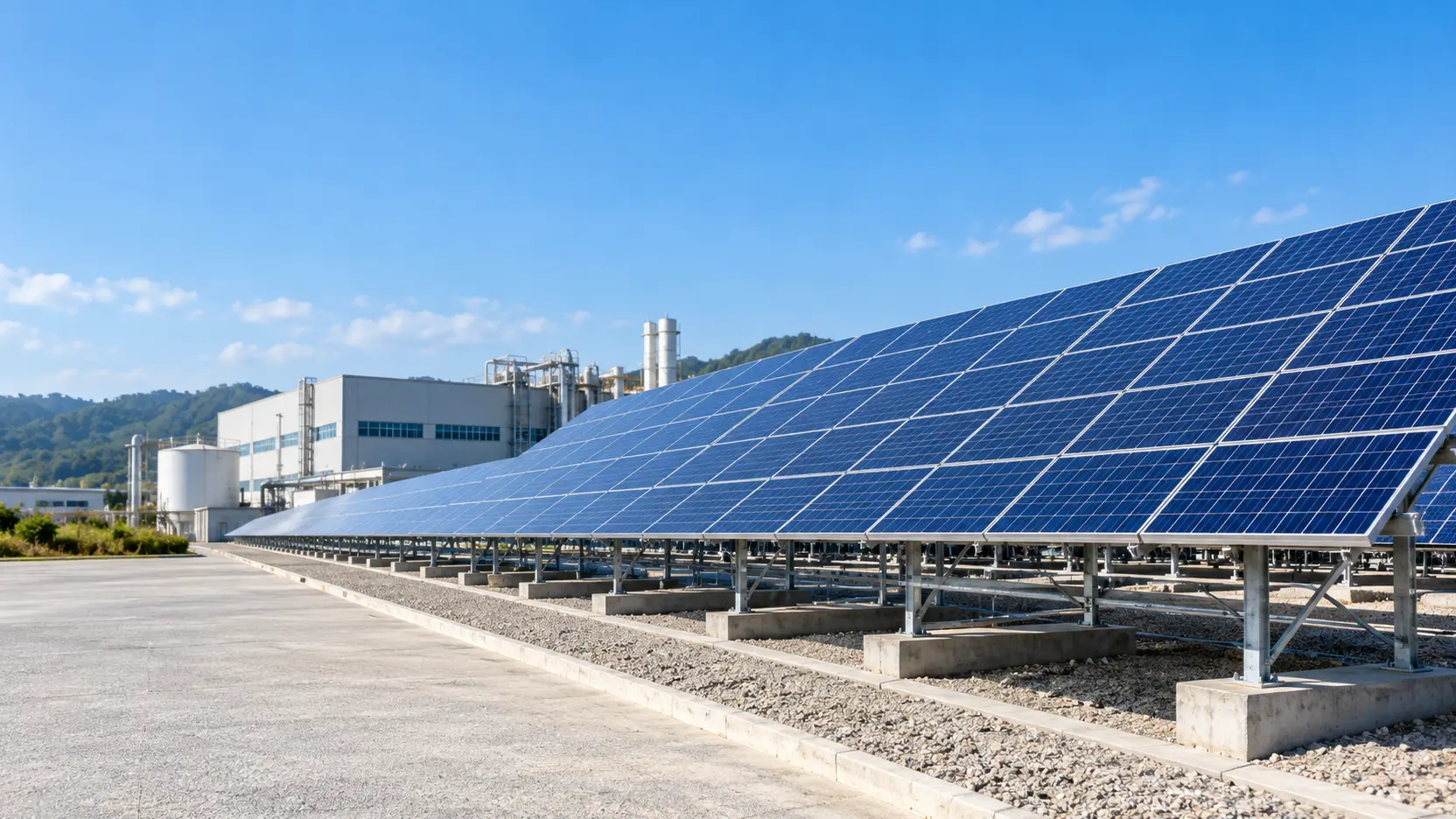
The industrial focus is substantial. Steel, petrochemicals, oil refining and cement face expensive changes in production methods, while renewable power, electric vehicles, batteries and climate technology will need new infrastructure and markets. The government is targeting 100 gigawatts of renewable capacity by 2030 and plans to lay the groundwork for green government bonds by the first half of 2027.
The announced total is a financing framework spread across years, not money already spent or projects already approved. Its significance will depend on annual budgets, lending rules, commercial demand and whether companies can obtain permits, equipment and grid connections. Smaller manufacturers and regions outside the largest industrial centers may find it harder to finance the required conversion. Government assurances that they will receive more attention can be tested against the eventual distribution of funds.
Trade caution and the green program therefore moved at different speeds during the same week. CPTPP accession was delayed for further political agreement. K-GX received a headline financial direction but still needs the detailed machinery of investment. Korea's next challenge is to make those industrial ambitions measurable in operating factories, power capacity and export opportunities.
DMZ accusations escalated as Seoul displayed new deterrence capabilities
A mine explosion that injured South Korean troops in September continued to define the military confrontation along the border. On October 5, Seoul's military said its investigation identified fragments associated with a North Korean antipersonnel mine about ten meters south of the Military Demarcation Line. South Korea called for the removal of mines south of the boundary. Pyongyang rejected the accusation and warned of forceful action if clearance operations entered territory it considered its own.
The disagreement reached a United Nations committee on October 8. South Korea cited its field investigation and scientific analysis, while North Korea challenged the account and accused Seoul of manipulating the incident. The location of the device, responsibility for its placement and the conditions under which clearance teams may operate remain consequential facts. Each side's public statement needs to be distinguished from independent verification.
At the same time, South Korea gave a rare public demonstration of a different military capability. President Lee observed a domestically developed hypersonic glide vehicle test on October 8. Officials said the vehicle separated from a booster, changed course during flight and reached a designated target. The presidential office later released detailed imagery of the weapon and launch, emphasizing deterrence and maneuverability. Those descriptions establish what officials reported about the test; public evidence alone does not establish the full operational performance of a deployed system.
These developments should not be mistaken for a single coordinated response. The mine dispute began earlier, and the weapon program reflects a longer defense effort. Their simultaneous prominence showed the difficult environment for a government that also says it wants to reduce inter-Korean tensions. Future border incidents and independent technical assessments will determine whether public declarations of readiness translate into a more stable security situation.
Financial breaches became a test of protection beyond the security budget
A series of attacks on South Korean financial firms moved from individual incident reports to a wider concern about connected weaknesses. Seven institutions were identified across banks, savings banks and consumer finance. Reporting put the affected population above 60,000, with exposed information including names, contact details and financial circumstances that could support convincing phishing attempts.
Investigators compared internet addresses, methods and infrastructure used against the different companies. Some reports raised the possibility that automated or AI-assisted tools helped carry out the attacks. That role was not conclusively established, and common technical indicators do not by themselves prove one operator was responsible for every intrusion. There was also a critical difference between confirmed data breaches and attempted access: three internet-only banks recorded approaches associated with the wider campaign without a reported customer data leak.
The management problem extended beyond identifying an attacker. Banks had invested heavily in security staff and monitoring, yet exposed public-facing systems still presented possible entry points. Disclosure rules also came under scrutiny. Regulatory reporting and direct notification requirements do not always make smaller breaches readily visible to a broader public, and some institutions took days to detect the attacks.
For households, the immediate risk is that stolen details can make a fraudulent call or message sound unusually personal. For institutions, the durable test is whether they inspect the systems people actually use, share actionable warning signs, shorten detection times and communicate promptly when information is exposed. The week's evidence supports urgency, but not claims that artificial intelligence autonomously masterminded the campaign.
Nuri's fifth flight made space capability a practical industrial question
On October 7, the domestically developed Nuri launch vehicle flew for a fifth time from the Naro Space Center. The mission carried a record payload of 15 satellites, including a five-satellite cluster, and reached its planned orbital deployment phase. Reporting on the precise number of secondary satellites successfully separated differed in the initial accounts, so the strongest uncontested conclusion is the success of the principal mission and the expanded payload complexity.
One launch cannot establish the economics of a commercial space industry. But the flight provided a more concrete benchmark than a development roadmap: the vehicle completed another launch, handled multiple payloads and demonstrated a platform for more varied missions. Officials want more frequent flights and greater private-sector participation. Reliability over repeated launches, payload prices and the time between missions will determine how competitive Korea's space transport system becomes.
The contrast with the green program is instructive without implying that the two are causally linked. K-GX announced a ten-year financial direction, while Nuri supplied one discrete operational result. Both now face the slower work of making technological capability repeatable and economically useful.
Judicial authority and prosecution backlogs tested institutional change
Chief Justice Cho Hee-dae's appearance at a National Assembly audit gave a continuing constitutional dispute a new public account. Earlier in the week, Cho argued that ordinary witness testimony about his recommendation authority and presidential consultations would conflict with judicial independence. At the October 6 hearing he declined to take the witness oath, then described how he had responded to a request from the martial law command in December 2024.
Cho said he told judicial officials not to provide personnel or names because the request was unconstitutional. Lawmakers questioned both the substance and the timing of the disclosure. His account is a statement by a senior official about his own conduct, and the parliamentary confrontation does not itself resolve disputes about appointment powers or judicial accountability.
The new prosecution and investigation structure faced pressure of a different kind. Unresolved prosecution cases reached 186,307 at the end of September, according to reported agency data, up by nearly 46,000 in three months. The scale of the backlog matters as staffing, responsibilities and case-transfer procedures are revised. A reform's legal design can be judged on paper; its effect on victims and defendants depends on whether cases move and decisions arrive on time.
There were also local accountability questions, including a Jeju police officer's pending dismissal over false missing-person case closures. Such incidents remain distinct from the judicial debate, but each demands operational follow-through rather than a declaration that a system has been fixed.
Emergency care exposed the distance between coverage and access
One case from Gyeonggi Province put a human scale on Korea's uneven distribution of medical services. A high-risk pregnant woman in Anseong was reportedly unable to secure acceptance at 25 hospitals before being transferred by helicopter roughly 150 kilometers to Jeonju. She delivered by cesarean section about six hours after calling emergency services. The Health Ministry described the transfer as an example of the emergency coordination system finding a receiving hospital; the number of hospitals contacted also raises an unavoidable question about how quickly suitable care can be reached.
Separate information from pediatric hospitals supplied a broader workforce measure. In a survey of 71 hospitals, 74.6 percent reported shortages of pediatric specialists needed to maintain current services. The survey reflects participating association members, not a census of all medical institutions. Still, it identifies a concrete constraint: staffing rather than the mere presence of a hospital building can determine available treatment.
The week also brought influenza warnings in Daegu, especially for children, as sentinel surveillance showed earlier seasonal spread. The cases are not evidence of one common administrative failure. They do point to different ways capacity is tested: emergency transfer networks must work in minutes, specialist staffing has to remain sustainable for years, and public health guidance needs to reach families before a surge worsens.
Worth remembering
A portable battery fire evacuated a Jeju Air flight at Cheongju
Cabin crew contained a burning battery before departure, but smoke prompted evacuation of approximately 168 people. Reports gave slightly different passenger totals. The event illustrated how quickly a small device can create an aircraft cabin emergency.
Suspected food poisoning at Gimje Horizon Festival reached 523 cases
The reported count rose after festival visitors became ill, many after eating food from one vendor. Health authorities investigated the outbreak and local organizers faced demands for clear information and support for patients.
Many low-rated bridges had no recorded repair work
Of 115 bridges rated inadequate or poor in a government review, 62 had no recorded repair or reinforcement from 2022 through June 2026. The number identifies a maintenance backlog; it does not establish that all the structures faced an immediate collapse risk.
Long-overdue debt was canceled for 183,000 borrowers
The New Leap Fund reported 1.5968 trillion won in debt cancellation, mostly on loans overdue for more than a decade. Beneficiaries still need to confirm their individual records and any separate credit or seizure changes.
Busan's film festival gained a stronger international platform
The Busan International Film Festival entered its second competitive year with an A-list designation and a new Academy submission pathway associated with its leading prize. It was a cultural development with significance beyond the immediate festival program.
BTS and BLACKPINK appeared among Kids' Choice Awards nominees
K-pop's international entertainment reach was evident in the nominations, including three for BTS. A nomination is a milestone in visibility, not an award already won.
A new Youth Future Savings application window opened
The October 7 to 16 application period offered eligible young adults a three-year savings product with government matching support. Eligibility, contribution terms and application dates require attention from prospective applicants.