


Several developments that looked separate day by day began to describe the same country from different angles: a government trying to change how the state works, an export economy running far ahead of domestic confidence, a housing market caught between supply and affordability, and public institutions being forced to confront weaknesses that individual incidents had exposed.
By the end of the week, a few lines had become clearer than when the first headlines appeared, while other events stood on their own and still belonged in the record.
The government started by changing people, then proposed a different state
President Lee Jae-myung opened the week with a reshuffle across six ministries, replacing leadership in areas including the economy, justice, defense and housing. Taken by itself, that was a familiar political story: an administration changing personnel in search of momentum.
By midweek, the scale looked larger. The government proposed a record 820.9 trillion won budget for 2027, then followed with a sweeping public-sector overhaul that would reduce the number of public bodies, consolidate power and port operators, and split Korea Land and Housing Corp.

Regional reporting added another dimension. Cities and provinces were already competing over where reorganized institutions should be located and how a second round of public-body relocation could affect local economies. A merged utility can alter jobs, investment and regional influence. A divided LH could change how housing policy itself is delivered.
Whether that becomes durable reform will depend on what survives legislation, labor negotiations and regional resistance. The ambition was unmistakably larger by the end of the week than it looked at the start.
Housing policy is trying to solve supply, affordability and stability at the same time
Housing appeared almost everywhere this week, and the policies did not always point in the same direction. Lee called for faster supply alongside a public-buying backstop that could step in if prices fell sharply. The government also reversed a planned reduction in a property-tax deduction for some single-home owners, while regulators increased scrutiny of project-finance sites tied to future housing supply.
Then came the resistance. Gwacheon officials and residents pushed back against housing plans involving the racecourse and former military land. At the same time, broader reporting showed that the problem extended beyond how many homes can be built. Among Seoul apartment tenants renewing leases in July without using the statutory renewal right, 88 percent paid a higher jeonse deposit. The average increase was about 46.8 million won from two years earlier.
Separate reporting showed a widening mortgage divide across Seoul, with buyers in some expensive southern districts relying far less on loans than purchasers elsewhere. Korea wants more supply, lower barriers for renters and buyers, protection against destabilizing price falls and enough project-finance stability to keep construction moving.
The next test is whether new supply actually changes access to housing for people who are currently carrying the heaviest financing burden.
A Jeju policing failure exposed a wider gap in missing-person investigations
The Jeju controversy first looked like a serious but local failure. A woman was found 104 days after disappearing, and police later said her cause of death could not be determined. Then a wider review triggered by an officer accused of falsely closing a case found 25 additional cases requiring examination.
The broader reporting made the issue harder to contain as one officer's misconduct. Chungbuk receives more than 2,000 missing-person reports a year, yet only four police stations there were reported to have dedicated teams. Gyeongnam reporting counted more than 200 unresolved cases over four years. Other coverage highlighted a structural weakness around adult disappearances, which do not always benefit from the same alert and tracking infrastructure used in cases involving children or other protected groups.
By the weekend, police were discussing broader metropolitan missing-person units and expanded authority to access location and transit information in adult cases before evidence of a crime has emerged.
A daily news cycle can easily fragment this kind of issue into separate local stories. Across a week, the institutional pattern becomes much easier to see.
Exports broke records while the domestic economy still looked uneven
By September 5, Korea's cumulative exports had reached about $709.4 billion, already above the previous full-year record with months still left in 2026. Semiconductor strength also helped produce a record July current-account surplus of $42.08 billion.
The currency told a related story. The won strengthened sharply over two months even as dollar deposits climbed to a record, suggesting that households and companies still wanted foreign-currency liquidity despite the reversal in the exchange rate.
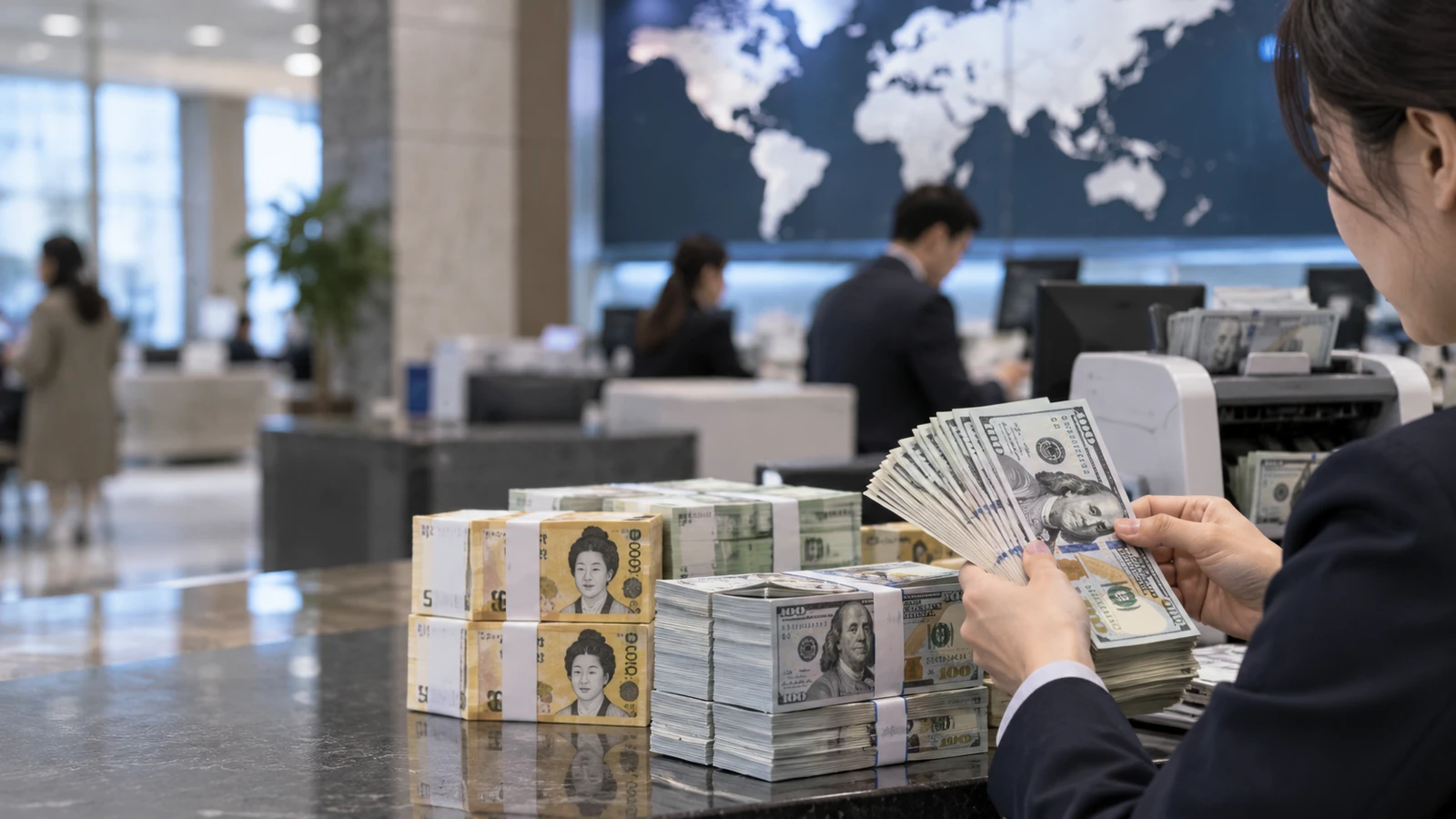
Yet the week's domestic indicators were less comfortable. Korean bank bad loans were approaching 19 trillion won. Insurance-policy loans were nearing 48 trillion won, with notable borrowing among people in their 50s and 60s. Smaller businesses continued to report conditions far weaker than those enjoyed by semiconductor exporters.
The export record remains substantial, but it needs context. Korea can be exceptionally strong as an exporting economy while households, renters and smaller firms experience a much weaker one. The divergence is becoming part of the economic story, rather than a footnote to it.
Korea is also renegotiating what a longer working life should look like
A series of labor stories looked unrelated when read separately. Together, they pointed toward a larger argument about how work should change as Korea ages. The Labor Ministry issued new guidance narrowing when bonuses and core management decisions become mandatory bargaining issues, while leaving room for employment effects to become labor disputes.
Lee then met the leaders of Korea's two major labor federations and backed an effort to reach a 2026 agreement on extending Korea's retirement age. A higher retirement age would affect older workers, payroll structures, youth hiring and pension planning at the same time.
Hyundai's wage dispute, a Samsung union-related blacklist case and wider arguments over bargaining rights all added pressure from different directions. Together, they kept three questions in view: how long people should remain in regular employment, what employers must bargain over, and how much flexibility companies should retain when restructuring.
Worth remembering
Han Hak-ja was sentenced to two years in prison
A Seoul court's first-instance ruling found the Unification Church leader responsible for political-funds and improper-solicitation violations, marking a major judgment in the long-running controversy over the church's political relationships.
Nine Koreans remained missing after the Nepal floods
Korean responders joined Nepalese forces, but weather, dangerous terrain and changing access restrictions repeatedly limited helicopter and ground searches.
A tugboat capsized near Busan
One crew member was confirmed dead and six remained missing as rough conditions complicated one of the week's largest domestic maritime searches.
Kumho Museum of Art announced its closure after 38 years
The museum is due to close in July 2027, ending an institution whose young-artist programs supported generations of emerging artists and helped fill the space between art schools, commercial galleries and major public institutions.