

Korea ended August with two policy directions moving at once. The government was preparing a much larger fiscal program for 2027, while the Bank of Korea raised rates again. At the same time, a police scandal that began with one missing-person case widened into a national accountability problem, and the government's regional-growth agenda became more concrete.
The week was less about a single event than about institutions being pushed to do more: spend more selectively, police themselves more closely, redirect industry away from Seoul and manage a higher cost of money.
Fiscal policy expanded just as the Bank of Korea tightened again
The government spent much of the week outlining a 2027 budget above 800 trillion won, with more money directed toward AI, youth support, regional projects and public safety. By the weekend, it had also announced a 43.3 trillion won youth-support package and plans for relief on long-delinquent pandemic-era small-business debt.
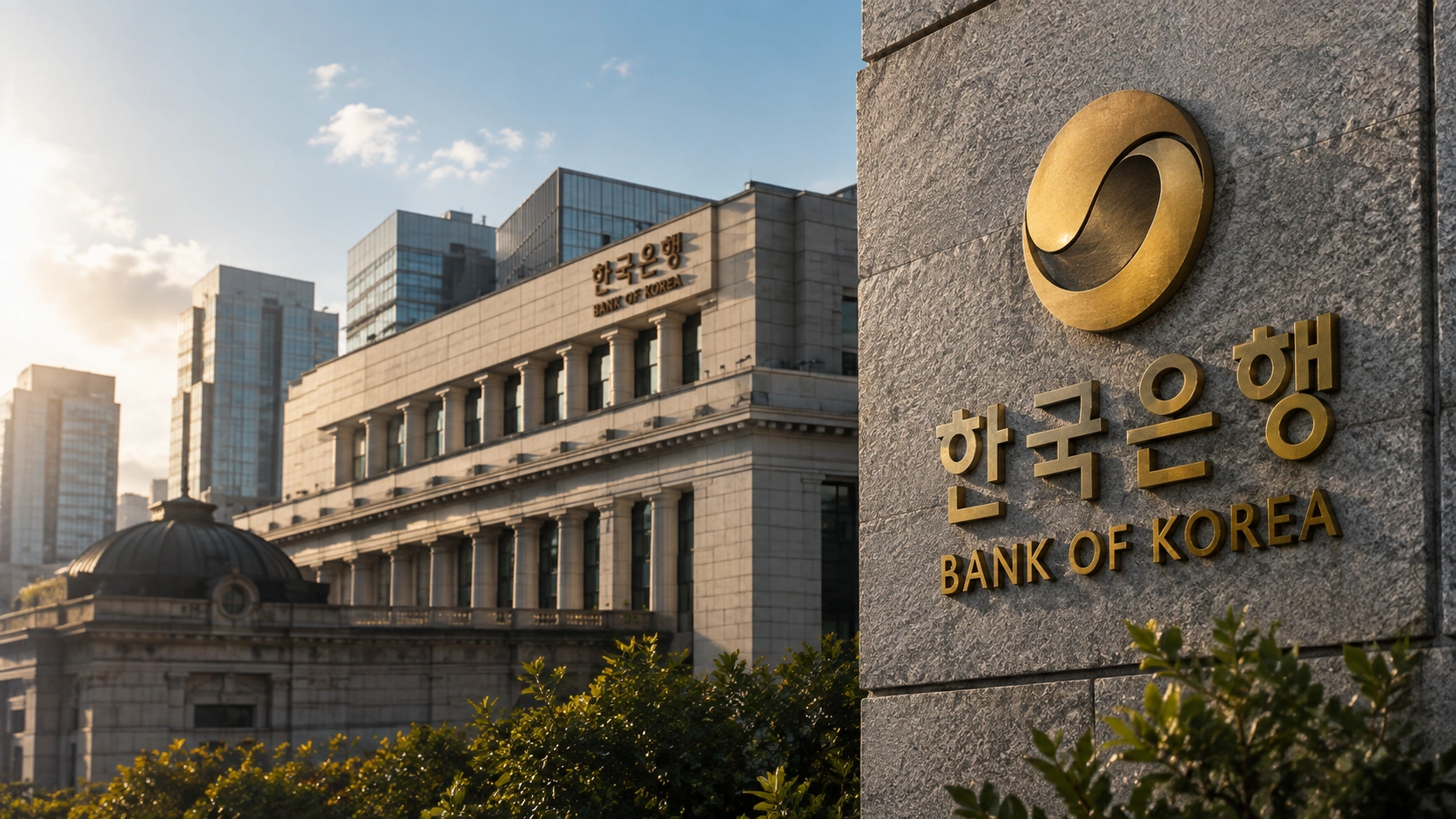
Then monetary policy moved the other way. On August 28, the Bank of Korea raised its base rate to 3%, its second consecutive increase, citing inflation, stronger growth and financial-stability risks.
That combination is not inherently contradictory. Fiscal policy can target specific priorities while monetary policy restrains broad demand. But for households already carrying large mortgages, small businesses refinancing debt and developers dependent on project finance, the distinction is academic only up to a point: borrowing costs still rise.
The Jeju missing-person scandal stopped being a local policing story
A presumed body was found in the Jeju case that had already raised questions about a falsely closed missing-person report. The discovery prompted a nationwide review of closed cases, and the following day KORInform reported that regional forces were reviewing thousands of files while commanders and supervisors came under scrutiny.
The scale mattered. By August 26, the issue was no longer whether one officer had mishandled one disappearance. It was whether closure procedures, supervision and specialist capacity were reliable enough across multiple police forces.
By the weekend, the response had become institutional: national audits, suspensions, tighter discipline and debate over how police powers should expand only alongside stronger controls. The later reform discussion grew directly out of this week.
Regional policy moved from slogans toward prices, industries and infrastructure
The government's 5+3 regional-growth strategy became more tangible. Seoul assigned priority industries to regional blocs, while a new electricity-pricing design proposed industrial power discounts of as much as 10% outside the capital region. The goal is simple to state but difficult to execute: make it cheaper and more attractive for companies to invest where population and private capital have been weaker.
That policy was reinforced by infrastructure decisions. The Daegu-Gyeongbuk metropolitan railway cleared a feasibility review, while regional governments pushed airport, semiconductor and mobility projects as anchors for wider economic zones.
The important change was the use of operating costs and transport links, not only subsidies, to alter industrial geography. Whether the price differences are large enough to change corporate location decisions remains the harder question.
Several disputes were really arguments about who gets to control institutions
The second special prosecutor ended a 180-day investigation after indicting 58 people, while unresolved cases moved back into the wider justice system. The Justice Minister's resignation was accepted just as the government prepared for an October prosecution overhaul.
A separate conflict opened between the presidency and the judiciary. Lee declined to advance one Supreme Court nomination and asked Chief Justice Cho Hee-dae for a new candidate, extending an unusual dispute over how the appointment process should work.
These were different stories, but they shared a practical consequence: institutions that normally rely on convention and procedural boundaries were being forced to define those boundaries more explicitly.
Korea's industrial strategy became more international and more state-backed
SK hynix began work on a more than $4 billion HBM project in Indiana, putting advanced memory production closer to major US AI customers. At home, the government selected SK Telecom, KT and Kakao consortiums for nationwide free AI services, turning a broad AI-policy ambition into a public deployment program.
There was also a reminder that industrial strength does not remove market risk. Samsung shares fell 8.7% after investors judged its enormous shareholder-return plan less generous than expected, pulling the wider KOSPI lower. Corporate Korea could be flush with cash, globally ambitious and still vulnerable to expectations set even higher.
Worth remembering
Nine Koreans were reported missing after the Nepal floods
The disaster at a hydropower site near the Tibet border began a search operation that would continue into the following weeks under severe access and weather constraints.
A Korail worker died during shunting work at Uiwang Station
The fatal rail-yard accident brought renewed attention to whether required two-person work procedures were being followed.
An Se-young won her second world badminton title
The victory restored the world No. 1 to the top of the women's singles championship and capped a strong Korean tournament.
Muan was chosen as the candidate site for Gwangju's military airport relocation
The decision moved a long-running regional infrastructure dispute forward, although major procedural and political hurdles remained.